Symptoms of Heart Valve Disease
Quick Facts
- Heart valve problems don’t always cause symptoms.
- Symptoms can appear suddenly or develop over time. They don’t always show how serious the problem is.
How can I tell if I have symptoms of valve disease?
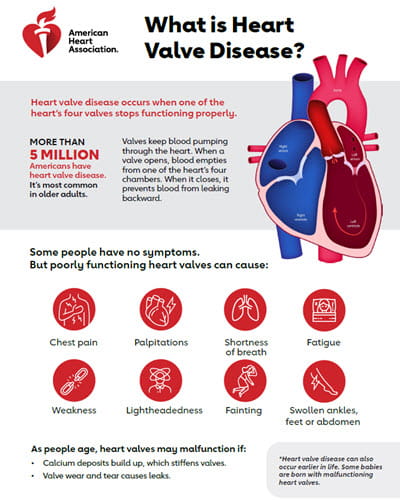
Some physical signs of heart valve disease include:
- Chest pain or palpitations (rapid rhythms or skips)
- Shortness of breath, fatigue, weakness or inability to maintain regular activity level
- Lightheadedness or fainting
- Swollen ankles, feet or abdomen
Some people don’t have symptoms but still need treatment. Others may notice symptoms that start suddenly or get worse quickly if the condition is severe. Symptoms don’t always show how serious the valve problem is.
A valve problem can be serious even if you don’t have symptoms. It can also be minor but still cause uncomfortable symptoms. Tell your healthcare professional if you notice any new or unusual symptoms.
In some cases, the disease progresses slowly, and symptoms are easy to miss. But it can still cause serious damage. That’s why it’s important to watch for small changes over time, especially if you are at risk.
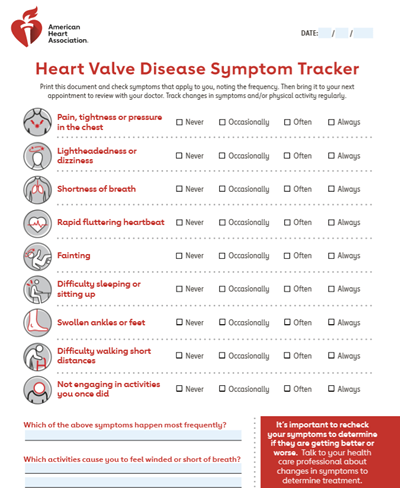
View our Valve Disease Symptom Tracker (PDF) (also available in Spanish (PDF)) so you can track your symptoms over time. A change in symptoms is important to discuss with your healthcare professional.
Recognizing the Symptoms of Worsening Heart Valve Disease
Know the signs of shortness of breath
Clues can be subtle: Sleeping in the recliner
A 75-year-old man was diagnosed with a heart murmur many years ago. He recently visited his son for a few days.
- Each night, he would go to bed in the guest bedroom. The next morning, his son would find him sleeping in the family room recliner.
- His son asked if the bed was uncomfortable. He told his son it was hard to get a deep breath lying flat. The recliner seemed to help. He insisted it wasn’t a problem.
- His son thinks he might need to urge his dad to check in with his doctor.
Would you notice this behavior as a possible sign of worsening valve disease or another heart condition?
Notice if you’re having trouble keeping up
Lack of awareness can delay treatment: Lagging behind
If you are born with a bicuspid aortic valve, the valve may not fully open because it has two flaps instead of three.
- Two friends have enjoyed being running buddies, keeping pace with each other for over two years.
- Over the last few weeks, one of them hasn’t been able to keep up.
- Even walking leaves her winded on some days, and she scolds herself for lagging behind.
- She knows she has a bicuspid valve and wonders if that’s why she’s losing her stride despite her efforts to stay fit.
Would you simply train harder, or would you make an appointment with your healthcare professional?
These two situations describe people who may be missing clues of worsening heart valve disease or another heart condition. It can be easy to adjust to a situation little by little as it worsens over time. That’s one reason it’s important for people with heart valve disease to have regular check-ups.
Track how your symptoms are changing
Ask yourself about symptoms. When doing so, don’t think in terms of only “yes” or “no.” Consider the degree to which you have symptoms.
What causes you to become short of breath? Is it walking three miles? Or has that walk gotten shorter over time? Maybe you now feel breathless after going to the mailbox.
Do you ever feel lightheaded? Do you ever notice a sudden urge to lie down until you feel steady? How often do you have this feeling?
What about chest pain or unusual swelling in the feet or ankles? It’s important to track your symptoms and remind yourself to review them regularly. Most valvular heart problems progress slowly. With good notes, you’ll likely be able to see evidence of your condition if it begins to worsen.
What if I’m just out of shape?
It can be hard to tell the difference between everyday habits and heart symptoms. That’s why it’s important to see a healthcare professional regularly. They rely on what you notice to guide your care. The more you track your symptoms, the better you can take part in your care and support your health.