Total Anomalous Pulmonary Venous Connection (TAPVC)
Quick Facts
- Total anomalous pulmonary venous connection (TAPVC) is a congenital heart defect in which the pulmonary veins do not connect normally to the left atrium.
- TAPVC requires surgical treatment early in infancy.
What is total anomalous pulmonary venous connection?
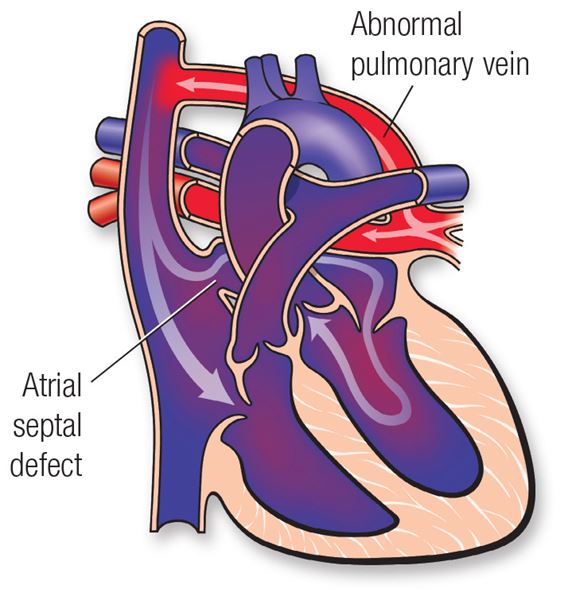
Total anomalous pulmonary venous connection (TAPVC) is a defect in the veins leading from the lungs to the heart.
In TAPVC, the blood does not take the normal route from the lungs to the heart and out to the body. Instead, the pulmonary veins connect abnormally to the systemic venous circulation or the right atrium, causing oxygen-rich blood from the lungs to return to the right side of the heart rather than the left side.
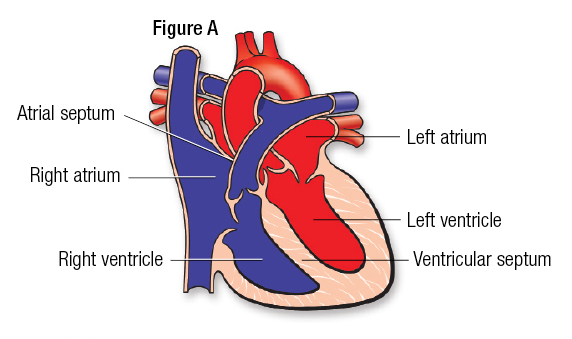
The heart has four chambers. The upper two chambers are the atria, and the lower two are the ventricles (Figure A). The chambers are separated by a wall of tissue called the septum. Blood is pumped through the chambers, aided by four heart valves. The valves open and close to let the blood flow in only one direction.
What causes TAPVC?
In most children, the cause isn’t known. Some children with TAPVC also have other heart defects.
How does it affect the heart?
In TAPVC, oxygen-rich blood from the lungs flows to the right side of the heart instead of the left. There, it mixes with oxygen-poor blood from the body.
Some of this mixed blood must pass through a hole between the upper chambers (an atrial septal defect) to reach the left side of the heart and be pumped to the body. From there, it goes to the left ventricle, then out through the aorta to the body. The rest of the blood flows through the right ventricle and back to the lungs.
Because the blood going out to the body doesn’t have as much oxygen as it should, a child may look bluish.
How does TAPVC affect my child?
Symptoms may appear soon after birth, but in some children, they may not become apparent until later. This often depends on whether there is narrowing or obstruction along the pathway that carries blood from the lungs back to the heart.
Where there is severe blockage, babies may:
- Breathe faster
- Have more trouble breathing
- Look bluish because their blood has less oxygen
How is TAPVC treated?
TAPVC needs surgery in early infancy. During open-heart surgery, the pulmonary veins are connected to the left atrium, and the hole between the upper chambers (atrial septal defect) is closed.
TAPVC in children: What families need to know
What activities can my child do?
Children with repaired TAPVC may need to limit activity based on how they feel. Most can be active, but some competitive sports may carry a higher risk. This is more likely if there is leftover narrowing in the pulmonary veins or problems with heart rhythm. Your child’s pediatric cardiologist will help you understand what level of activity is safe.
What will my child need in the future?
When TAPVC is repaired in early infancy, the long-term outlook is usually very good. Still, your child will need regular checkups with a pediatric cardiologist. As they grow older, they will need lifelong follow-up with a cardiologist who specializes in adult congenital heart disease.
Follow-up care helps watch for any remaining problems, such as narrowing in the pulmonary veins or abnormal heart rhythms. Some children may need medications, heart catheterization or, in some cases, more surgery.
What about preventing endocarditis?
Some children with TAPVC may be at increased risk for endocarditis, an infection of the heart, depending on their heart anatomy and repair. Ask your child’s pediatric cardiologist whether antibiotics are recommended before certain dental procedures. This can help lower the risk of infection. See the Endocarditis section for more information.
TAPVC in adults: What to expect
Symptoms often appear soon after birth, but in some people, they may be milder and noticed later. This can depend on whether the veins from the lungs are narrowed or blocked as they drain into the heart.
It’s rare for someone to reach adulthood without treatment. Adults who do usually have only mild symptoms. They may include shortness of breath and a reduced ability to exercise.
If TAPVC was repaired in childhood, what can I expect?
TAPVC is usually repaired with surgery in early infancy or childhood. During surgery, the veins from the lungs are connected to the left side of the heart, and the hole between the upper chambers is closed.
The outlook after surgery is usually very good. Most people have excellent long-term outcomes, although some may develop complications later in life. In rare cases, the veins can become narrowed where they were reconnected, or heart rhythm problems can develop.
If TAPVC is still present, should it be repaired in adulthood?
It’s rare for TAPVC to go unrepaired in childhood. When it is found in adults, most people can have surgery to correct it.
Ongoing Care
What will I need in the future?
People with a history of TAPVC should have regular checkups with a cardiologist who specializes in adult congenital heart disease. The long-term outlook is excellent. Most people do not need medications or more procedures. Talk with your cardiologist before any non-heart surgery or other invasive procedures.
Medical Follow-up
Your cardiologist may use these noninvasive tests to check your heart:
- Electrocardiograms (EKG)
- Holter monitors
- Exercise stress tests
- Echocardiograms
- Cardiac MRI
- Computed tomography (CT)
These tests can help show if more treatment is needed. Medications may be needed if problems such as abnormal heart rhythms occur.
Activity Restrictions
Most adults with repaired TAPVC can be active. Some competitive sports may carry a higher risk, especially if there is narrowing in the pulmonary veins or heart rhythm problems. Your cardiologist can help you decide what level of activity is safe for you.
Pregnancy
Many women with repaired TAPVC can tolerate pregnancy well if there is no significant pulmonary venous narrowing, heart function is normal and heart rhythm problems are well controlled. A checkup by an adult congenital heart disease specialist before pregnancy is recommended.


