Healthy Food Facts: Your Guide to Balanced Eating
Quick Facts About Healthy Eating
- Sodium: Choose more foods with little or no added salt, such as vegetables, fruits, beans and whole grains, instead of counting every milligram. Because most sodium comes from packaged and restaurant foods, comparing labels and cooking more meals at home can help.
- Added Sugar: Choose foods and drinks with little or no added sugar most often instead of focusing first on teaspoons or grams. Water, fruit and unsweetened foods can satisfy hunger and thirst without extra sugar.
- Saturated Fat: Build meals around foods with healthier fats, such as nuts, seeds, avocados and fish, instead of tracking every gram. Choose foods high in saturated fat less often.
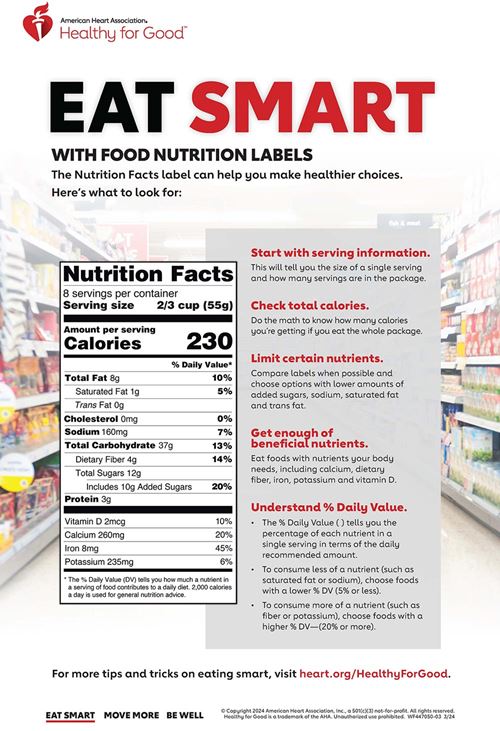
- Read the Nutrition Facts and ingredient list on packaged food labels to choose those with less sodium, added sugars and saturated fat.
- It is possible to follow a heart-healthy dietary pattern regardless of whether food is prepared at home, ordered in a restaurant or online, or purchased as a prepared meal.
Healthy Recipes

How to Spot a Fad Diet
Join Healthy for Good™

What Is a Balanced Diet and Why It Matters
Making small, simple changes to your overall eating pattern can help you and your family stay healthy. Learn the basics of good nutrition and making healthy food and drink choices.
Eating healthy can help reduce your risk of heart disease, stroke and many other diseases and conditions. The good news is, a healthy eating plan doesn’t have to be hard or require you to give up all the foods you love. And it can be easy, affordable and delicious.
- What should I eat to be healthy?
You can build a personalized healthy eating plan by choosing a variety of nutrient dense foods from these food groups most of the time:- Vegetables (e.g., leafy greens, root vegetables, tubers, stems, and legumes)
- Fruits (e.g., berries, citrus and tropical fruits, melons, and stone fruits)
- Whole grains (e.g., oats, whole wheat, brown rice, and corn)
- Healthy proteins (e.g., beans, dried peas, lentils, nuts, seeds, fish and seafood, low-fat or non-fat milk and other dairy, small portions of lean and unprocessed meats)
When cooking, use healthy oils to provide beneficial omega-3 and omega-6 fats.
- What should I make for dinner?
Explore easy, healthy dinner recipes at Recipes.heart.org. You’ll find quick, simple meals for busy weeknights, including family-friendly options, plant-based dishes, and budget-conscious ideas. You’ll also find ideas for breakfast, snacks, smoothies and desserts. Each recipe includes clear steps and nutrition details to make healthy eating simple. - What are healthy alternatives to favorite foods?
Eating healthier is about progress, not perfection. Small, simple changes can make a meaningful difference over time. Instead of giving up your favorite foods, try adding healthier foods alongside them and exploring new recipes you enjoy. When possible, look for ways to reduce your sugar, salt, saturated fat and alcohol while still keeping meals satisfying and flavorful. - How can I make sense of the nutrition facts on packaged food?
Start by comparing Nutrition Facts labels across similar products. Look for options that are higher in fiber and lower in sodium, added sugars, and saturated fat. Paying attention to serving size can also help you understand how much you are actually consuming. Over time, these small label-reading habits can help you make more informed, heart-healthy choices. - What is a plant-based diet?
Heart-healthy plant-forward eating features plenty of vegetables, fruits and whole grains and prioritizes beans, peas, lentils, nuts and seeds as protein sources, with room for fish, seafood, and smaller portions of other lean and unprocessed animal protein sources if desired. -
What is a healthy kids diet?
A healthy diet for kids includes a variety of nutritious foods and positive mealtime habits. Making foods fun, familiar, and part of everyday routines helps build a lifelong healthy relationship with food. Small, consistent habits like these help support healthy eating:- Invite children to help plan meals or choose fruits and vegetables at the store so they feel involved and excited about what they eat.
- At meals, include at least one food everyone enjoys to create a positive experience.
- Offer fruits or vegetables as easy, ready-to-eat snacks, especially when kids are hungry before dinner.
- Encourage curiosity by letting kids explore and try new foods at their own pace, even if it starts with just one bite.
- Help children learn to listen to their bodies by stopping when they feel full, rather than finishing everything on their plate.
Does my body need salt?
Your body only needs a little bit of sodium — less than 500 mg a day — to work the way it should. But most of us get way more than that.
- How much salt should I eat?
The average American eats over 3,300 mg of sodium a day. That’s more than double the recommended limit of 1,500–2,300 mg. - Why is salt bad for you?
Too much sodium can raise your blood pressure and increase your risk for heart disease and stroke. The good news? Cutting back — even by just 1,000 mg or a half-teaspoon a day — can make a real difference for your heart. - How do I reduce sodium intake?
Over 70% of the sodium we eat doesn’t come from the salt shaker. It comes from processed, packaged, prepared, foods commonly found in grocery stores and restaurants. So even if you don’t think you eat a lot of salt, it might be sneaking in. - Should kids have salt?
Our taste preferences for salt are shaped by what we eat early in life. Kids may not prefer so much salt if they’re given foods with less sodium from an early age. Just like adults, most of the sodium that children eat comes from processed, packaged and prepared foods. You can help your kids eat less sodium today to help prevent heart disease tomorrow.


How does your body react to natural vs added sugar?
It all comes down to how fast sugars get absorbed. For example, your body spends more time digesting an apple than regular soda. The apple contains fiber, so the natural sugar absorbs more slowly. Because the added sugar in soda hits your system all at once, your body absorbs those sugars much more quickly.
- How many grams of sugar per day?
For heart health, limit added sugars to no more than 6% of calories each day. This does not include naturally occurring sugars in whole foods such as fruits and vegetables. A teaspoon or packet of sugar is 15 calories and 4 grams of sugar. Women and kids are advised to have no more than 25 grams (6 tsp) a day and for men, no more than 36 grams (9 tsp). Sugar-sweetened beverages, desserts and sweet snacks frequently contain excessive amounts of added sugar. - Is sugar addictive?
Our bodies turn sugar and other carbohydrates into glucose that energizes red blood cells, the central nervous system and the brain. So sugar is fuel — sweet, tasty, irresistible fuel. One way to cut back on added sugars is to swap sugary drinks for water and unsweetened or lower sugar seltzer, tea or coffee. Over time, your palate will adjust, and you won’t even miss the sugary taste. - What are healthy alternatives for sugar?
Instead of adding sugar to beverages, breakfast or baked goods, enjoy the sweetness from the natural sugars found in fruits. When baking, swap half the sugar for an equal amount of unsweetened applesauce. Consider ginger, allspice, cinnamon or nutmeg as flavorful substitutes for sugar in coffee or tea.
Does my body need fats?
Yes, it does. Dietary fats are essential to give your body energy and to support cell function. Dietary fats also help your body absorb some nutrients and is a component of important hormones.
- What are healthy fats?
Eating healthy fats in place of unhealthy fats can help lower ‘bad’ cholesterol and reduce inflammation. Healthy fats are in foods including nuts, seeds, avocados, and vegetable oils. Fish and seafood like salmon and tuna have healthy omega-3 and omega-6 fats. The best sources of omega-3s are the ones you enjoy the most because you’ll eat them more often. - What About Margarine?
Stick margarine behaves like a solid fat and should be limited. Soft or spreadable margarine in a tub is usually higher in unsaturated fats and can be a better alternative to butter or stick margarine when desired for spreading on foods like toast. - How much fat should I eat each day?
The most important type of fat to watch out for is saturated fat, which should be less than 6% of total calories. For example, if you eat about 2,000 calories a day, the recommended limit is less than 120 calories, or less than 13 grams, of saturated fat a day. Saturated fat is often found in fatty meats, full-fat dairy foods, desserts and sweet snacks. - What is saturated fat?
Saturated fats are found in animal-based foods such as beef, pork, poultry, full-fat dairy products, eggs and tropical oils, such as coconut and palm. Saturated fats can raise your ‘bad’ (LDL) cholesterol levels, increasing your risk of heart disease. - Why are Omega-3 and Omega-6 essential?
Omega-3 and Omega-6 are both polyunsaturated fatty acids (or PUFAs) that your body needs but can’t produce itself. You must get these essential fats through food, and they are important for many functions in the body, including cell function. Oils that contain PUFAs are typically liquid at room temperature, such as olive, canola and other non-tropical vegetable oils.
Whole Foods vs Processed Foods
“One of the reasons most ultra-processed foods are unhealthy is they fall into categories health professionals have long worried about,” said Dr. Christopher Gardner of the American Heart Association. “Most are high in saturated fat, added sugars and sodium, and low in fiber, vitamins and minerals. The extra thing they have are cosmetic additives and ingredients of rare or no culinary use.”
-
What are ultra processed foods?
Ultraprocessed foods are foods that have been heavily modified from their original form and often contain added ingredients such as preservatives, sweeteners, flavorings, and colors. Many are high in saturated fat, added sugars, and sodium and are commonly referred to as "junk food." However, not all ultraprocessed foods are unhealthy. Some, such as whole-grain breads, low-sugar yogurt, and nut spreads, can provide nutritional benefits and fit into a healthy eating pattern. -
How can I avoid processed foods?
Focus on choosing nutrient-dense foods such as vegetables, fruits, whole grains, nuts, legumes, fish and lean proteins[EC14.1], while limiting processed meats, added sugars, and high-sodium foods. Making simple swaps, such as choosing whole-grain bread instead of white bread and fruit instead of chips or cookies, can help you build a healthier eating pattern. -
How can I better understand what is in the food I buy?
Take a look at both the Nutrition Facts label and the ingredient list on packaging. Ingredients are listed in order of quantity, and it's important to know that added sugars, sodium, and saturated fats can appear under different names, so checking labels carefully can help you make healthier choices. -
Are food packaging claims just marketing?
Not necessarily. Many food packaging claims, such as “low sodium,” “reduced fat,” or “good source of fiber,” are regulated by the FDA and have specific definitions. However, it's still important to read the Nutrition Facts label and ingredient list because a claim on the front of the package does not tell the whole nutritional story.
Learn how to eat smart with food nutrition labels
How much protein should be in a daily diet?
Rather than focusing on hitting a specific number, protein needs can generally be met by eating a balanced diet that includes a variety of protein sources, with an emphasis on plant based options like beans, lentils, nuts, seeds, and soy, along with seafood and healthy choices of animal protein if included.
- What are plant-based protein sources?
The food sources of protein that tend to support heart health are the ones with little saturated fat and often more unsaturated fats and fiber. What foods fit the bill? Beans, peas, lentils, nuts and seeds are great everyday choices, as well as plant-based foods like tofu and tempeh that are low in saturated fat, sodium and added sugars. Fish and seafood are wonderful to enjoy regularly. Choose fat-free or low-fat dairy. And if you eat meat, choose lean, minimally processed options and keep the portions small and less frequent. - How much protein do I need?
It is recommended that people eat 10 to 35% of their daily calories from healthy protein sources. If you follow a 2,000 calorie diet, this is a range of 50 to 175 grams of protein each day. How much you need depends on factors like sex, weight or activity level. - What does protein do for your body?
Protein is essential for building muscle and keeping strong – especially as a person ages. - Is milk or meat bad if I have high cholesterol?
The best way to lower your cholesterol through your diet is to cut back on foods high in saturated fat. Knowing which fats raise LDL cholesterol (saturated) and which ones don’t (unsaturated) is key to lowering your risk of heart disease. A heart-healthy eating plan can help you manage your blood cholesterol level. - Is red meat, beef or pork healthy?
In general, red meats like beef, pork, and lamb contain more saturated fat than skinless poultry, fish, or plant-based proteins. Saturated fat can raise blood cholesterol levels and increase the risk of heart disease. If you choose to eat meat, choose leaner cuts and unprocessed varieties. - What are lean meats?
Including lean proteins, such as skinless poultry, fish and lean cuts of pork and beef will provide nutrients, vitamins and minerals for your body. Pay attention to portion sizes: one serving of cooked meat is about 3 ounces, roughly the size of a deck of cards. - How much cheese, yogurt or milk should I have?
Adults can have 2-3 cups of fat-free or low-fat dairy products daily. Children can have 2-2.5 cups, while teens and older adults can have up to 3 cups. - What milk is best for kids?
Research shows that what children drink from birth through age five has a big impact on their health – both now and for years to come. Provide plain, pasteurized cow’s milk with no added caloric sweeteners, low-calorie sweeteners, or flavorings. Experts agree that infants under 12 months should not drink cow’s milk, from 12-24 months children may be introduced to plain, pasteurized whole milk and then transition to low-fat or skim milk at age two.
Fiber & Plant-Based Foods = Good Gut Health
-
What is fiber?
Fiber, a carbohydrate, is the material in plant-based foods that cannot be broken down and passes through your gut undigested. -
Why is fiber essential for gut health and digestion?
Eating fiber keeps your gut balanced and healthy. Fiber also benefits our digestive health, controls blood sugar and lowers cholesterol. It also can help with weight management and keep you feeling full.Fiber helps flush out toxins, adds bulk to stool, helps prevent constipation and feeds beneficial gut bacteria, supporting a healthy microbiome. A strong microbiome aids digestion, immunity and reduces inflammation.
-
What is a gut microbiome?
A gut microbiome is the collection of tiny living organisms, such as bacteria, fungi and viruses, that live together and help keep that environment healthy and balanced. Your gut microbiome is a control center for the immune system. When you eat too much processed food, drink excessive alchohol and don’t exercise, the microbiome breaks down. -
Can eating more plant-based foods improve your gut microbiome
Plant-based foods provide fiber and prebiotics — a nondigestable fiber that feeds good bacteria -- that increase microbiomes, which is a key marker of gut health. A healthy microbiome supports digestion and immunity and reduces inflammation. Eating an extra plant-based meal a day can make a difference. -
What is inflammation?
Inflammation is your body’s built-in defense system. It jumps into action when you’re sick or hurt, helping you heal and fight off infection. That short-term kind of inflammation is a good thing. It’s part of how your body protects itself. But when inflammation stays around too long, it can start to harm healthy tissues and raise your risk for long-term health problems. When your lifestyle habits are in balance — good food, enough movement, solid sleep and less stress — your body stays calm. But when daily pressures pile up, poor eating, stress and lack of movement can keep your body in a constant state of “high alert.” When inflammation gets out of balance, it can raise your risk for heart disease, diabetes, kidney disease and other chronic conditions. -
How does diet affect inflammation in the body?
Eating a balanced diet with a variety of fruit, vegetables, whole grains, beans, nuts, seeds and fish may help lower inflammation. Aim to eat:- Fruit = 2 cups a day
- Vegetables = 2½ cups a day
- Whole grains = 3 servings a day
- Beans, nuts and seeds = 5 ounces a week
- Fish (fatty preferred) = 2 servings a week
Limit or avoid sugary drinks; salty foods; refined carbs; and processed or fried foods because they may raise inflammation.
-
Should I include fermented foods in my diet?
The science remains uncertain on the specific nutritional benefits of certain fermented foods on the market today. But probiotic-containing fermented foods such as yogurt, sauerkraut, kefir, kimchi and kombucha contain live microorganisms with potential to restore balance to the digestive system. Choose prebiotics and probiotics from food sources rather than supplements. -
How much daily fiber do I need ?
Most adults need 25–30 grams a day. -
What are good sources of fiber?
- Fruit
- Vegetables
- Whole grains
- Beans (legumes)
- Nuts
- Seeds
You can find added fiber in a lot of processed foods but many whole foods are naturally rich in fiber and they are an important part of a heart healthy diet.
-
What is the best way to get enough fiber at meals?
- Emphasize filling your plate with fruit and vegetables,.
- whole grains such as oats, quinoa, brown rice and beans, nuts, and/or seeds.
- Drink plenty of water to avoid digestive discomfort.
- If you are increasing the fiber in your day, try doing so gradually.
Alcohol & Heart Health
If you don’t drink, don’t start. If you drink, limit yourself to one drink per day for a woman, two drinks for a man. Drinking too much alcohol — especially more than 2 drinks a day or binge drinking — can take a serious toll on your heart. It’s linked to high blood pressure, heart disease, stroke, irregular heartbeats, and even heart failure. Over time, heavy drinking can weaken your heart muscle and make it harder for your body to function the way it should.
-
How does alcohol impact health?
Alcohol affects multiple organs and increases the risk of serious health problems, including high blood pressure, stroke, irregular heart rhythms, and heart failure. Even moderate drinking can raise blood pressure in some people, and heavier or binge drinking significantly increases cardiovascular risk. The American Heart Association advises that if you don’t drink, don’t start—and if you do, limit intake. -
Can red wine lower or raise my blood pressure?
Red wine is not a proven way to improve heart health, and no research shows a direct cause-and-effect benefit from drinking alcohol. In fact, alcohol—including red wine—can raise blood pressure, especially when consumed regularly or in higher amounts. If you drink, moderation is key, and it’s better to get heart healthy nutrients from foods like grapes or berries instead. -
How much alcohol can I drink if I had a heart attack?
After a heart attack, alcohol use should be discussed with your health care professional because it can affect recovery, medications, and future risk. In general, the American Heart Association emphasizes lifestyle changes and limiting alcohol to no more than one drink per day for women and two for men—if drinking is allowed at all. In some cases, avoiding alcohol completely may be recommended as part of heart-healthy living. -
How much alcohol is too much?
Too much alcohol includes both heavy drinking and binge drinking, which sharply increase the risk of heart disease, stroke, and other conditions. For adults who choose to drink, that means more than one drink per day for women or two for men—or consuming several drinks in a short time (binge drinking). Staying within or below these limits helps reduce health risks.
Healthy Weight Loss Tips
The benefits of maintaining a healthy weight go far beyond improved energy and smaller clothing sizes. Working with a dietitian can help you with a plan to lose one to two pounds per week. To lose weight, start by tracking everything you eat. You need to reduce your calories by 500 calories per day to lose about one pound a week or cut 1,000 calories a day to lose about two pounds a week. Although some people can modify their lifestyle and lose weight on their own, many need extra help. A social support system can help encourage your progress and keep you on track.
- How much should I weigh?
A healthy weight can look different from person to person and depends on factors like height, age and overall health. One tool that can help estimate a healthy weight range is Body Mass Index (BMI). Another helpful measure is waist size. Carrying more weight around the waist may increase the risk of health conditions such as high blood pressure, type 2 diabetes, and heart disease[EC4.1]. If you have questions about your weight, your healthcare team can help you understand what is right for you. - How can I not feel hungry while losing weight?
Feeling hungry while trying to lose weight is common. Eating more high-fiber foods like vegetables, fruits beans, whole grains, and leafy greens, may help you feel fuller longer and stay satisfied between meals. This can make healthy eating habits easier to maintain over time. - Is eating or activity more important for weight loss?
Both healthy eating and physical activity are important for weight loss and maintaining a healthy weight. People who successfully maintain weight loss typically improve their eating habits and increase their physical activity, so the best approach is to balance both rather than focus on just one. - How can I lose weight in a healthy way?
A healthy way to lose weight is to focus on small changes that can add up over time. Choosing healthy foods, being physically active and building habits you can stick with may help you reach and maintain a weight that supports your health. Focus on lasting changes rather than fad diets or quick-fix plans. - What are ways to stop food cravings?
One way to manage food cravings is to satisfy the texture or flavor you're craving with healthier alternatives, such as avocado or yogurt instead of ice cream, unsalted nuts or popcorn instead of chips, and vegetables or fruits instead of high-calorie snacks. Choosing nutritious substitutions can help curb cravings while supporting healthy eating habits. - Do fad diets work?
Healthy eating isn’t about quick fixes or all-or-nothing solutions. Popular diet plans claim to help you lose weight and improve health. A balanced eating pattern based on the best science is key to managing weight successfully over the long term and having a healthy heart.
Thanksgiving Dinner Ideas


