Top journal editor's impact builds lasting legacy
By Katherine Shaver
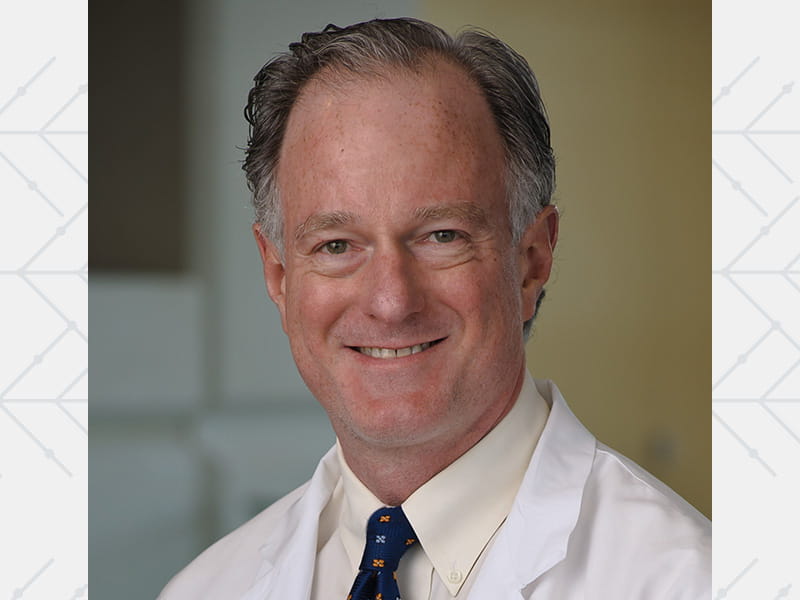
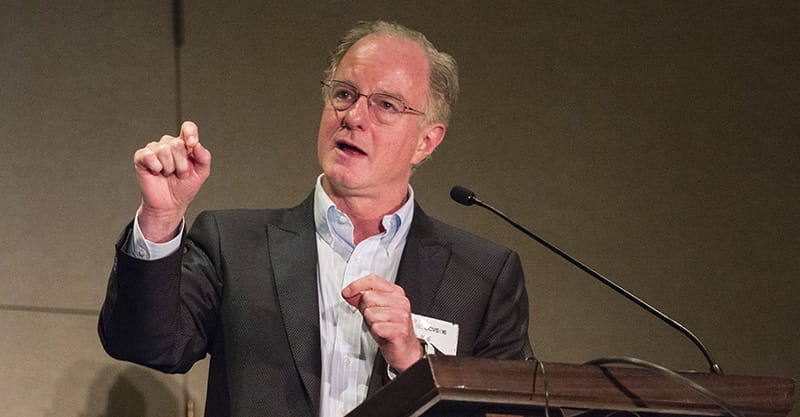
For 10 years, research papers published in Circulation, the American Heart Association’s flagship journal, have had to withstand the scrutiny of Dr. Joseph Hill and his international team of cardiologists and scientists.
Every week, about 100 papers are submitted for review. Six make the cut.
The tough calls are made in weekly virtual meetings, where Hill and associate editors from 17 countries hash out which studies provide the freshest, most scientifically rigorous insights. While discussing cutting-edge research, they often share personal news and friendly jokes.
“It’s the highlight of my week,” Hill said. “The conversation is incredibly erudite, listening to these people who have clearly given these papers incredible attention and thought. Yet we're all regular people, too.”
That camaraderie is what Hill said he’ll miss most after June 30, when his tenure as Circulation’s editor-in-chief ends.
Hill, who is also a professor of internal medicine and molecular biology at UT Southwestern Medical Center in Dallas, is a 2026 recipient of the Gold Heart Award, the Heart Association’s highest volunteer honor. The award recognizes Hill’s editing leadership as part of a lifetime of contributions to cardiovascular research and health. Beyond that, Hill held — or still holds — several leadership roles in the Association. He will receive the honor June 23 at the Association’s National Volunteer Awards ceremony in Irving, Texas.
American Heart Association CEO Nancy Brown noted Hill’s prolific research career, which includes hundreds of published peer-reviewed articles. Generations of researchers have benefited from his mentoring and shared expertise, she added.
“Joe has expanded the journal’s global reach while bolstering its reputation as the premier source of timely, groundbreaking cardiovascular science,” Brown said. “His dedication, tenacity and fierce commitment to accuracy are all hallmarks of his remarkable legacy.”
After serving for 21 years as chief of UT Southwestern’s Division of Cardiology and now as director of the Harry S. Moss Heart Center, Hill sees patients and teaches medical students, residents and fellows. He also leads research, primarily focusing on new ways to treat heart failure.
Cases of heart failure have “exploded” in recent years, Hill said, largely because far more people now survive acute heart attacks, arrhythmias and cancer treatments — all of which can leave their hearts permanently damaged.
Hill’s research explores how the heart remodels in response to stress, shedding light on molecular and cellular mechanisms that underlie heart disease. His work has been credited with expanding our understanding of cardiovascular biology as well as improving clinical care.
As a Heart Association volunteer, Hill’s impact has touched numerous mission-critical areas. He has been a member and president of the Dallas and SouthWest Region boards of directors. Nationally, he has served on both clinical and research-focused scientific councils and has worked on and led multiple committees. He’s also shaped the content shared with peers at leading international meetings, including for Scientific Sessions, the Association’s premier cardiovascular science meeting.
After earning his medical degree and a doctorate in pharmacology from Duke University, Hill specialized in cardiology as a way to combine his research interests with the human side of seeing patients.
In 2015, when the editor-in-chief position at Circulation was opening up, Hill received a call from Dr. Eugene Braunwald, widely considered the “father of modern cardiology.” Braunwald, who had mentored Hill during his clinical training in medicine and cardiology, encouraged him to apply.
Hill, who had a longstanding appreciation of accurate scientific writing, agreed.
“People will tell you that I’ve always been a real stickler for getting it right,” Hill said. “As an editor, I have probably dialed it up another notch over the last 10 years.”
Sifting through 100 research papers each week to find six worthy of publication requires teamwork, as manuscripts make their way through a gauntlet of cardiologists, scientists and peer reviewers. By the time a paper reaches the pages of Circulation, it has passed muster with six to 10 experts.
“It’s redundant, and it's work-intensive,” Hill said. “But this strategy has been powerfully effective for us.”
Under his leadership, Circulation’s “impact factor” — a measure of how often a journal’s articles are cited in other research — has more than doubled from 19 to 41, cementing it as the most influential journal in cardiovascular health.
While Hill said he’s proud of that impact, he notes that it doesn’t reflect how Circulation also helps doctors treat patients, even if they don’t cite its papers. “We made the journal, I will argue, uniquely informative, friendly, interesting and exciting,” he said.
In addition to incorporating more reviewers from around the world, Hill expanded the number of special themed issues. He made the “Go Red for Women” issue annual and added others focused on cardiovascular surgery and disparities in cardiovascular medicine.
Hill said he’s still not sure how he’ll spend the 20-plus hours per week he’s devoted for so long to Circulation. One idea: “Maybe I should just go back to a real life where I could actually take a Sunday afternoon off.”
When medical students ask how he defines “success,” he responds, “Your family is far and away the most important thing.”
Christopher and Teddy, his two grown sons with his wife, Beverly, are now pursuing medical degrees of their own. Hill suspects they picked up on his enthusiasm during family dinners. “I think,” Hill said, “they heard that Dad, when he’s at the end of his career, is going to look back and say, ‘I made the world a better place — or at least I tried.’”