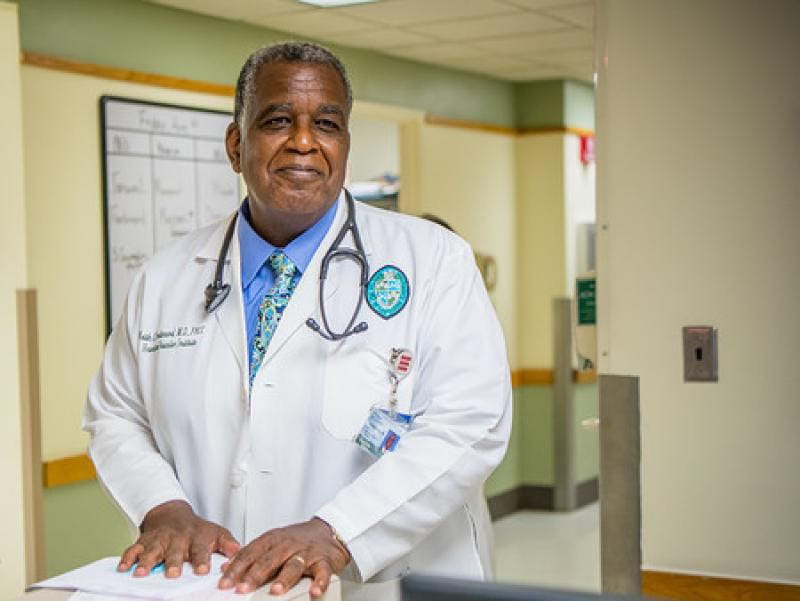
Keith C. Ferdinand: Never far from the Ninth Ward
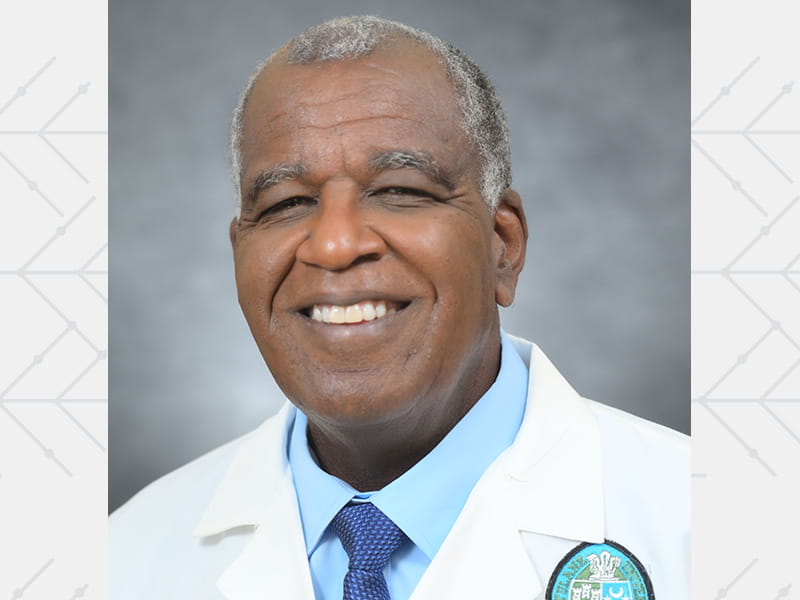
Dr. Keith C. Ferdinand grew up in the lower Ninth Ward of New Orleans, an area far from where tourists venture, and a neighborhood many of his schoolmates never left. Some friends died from trauma or chronic illness. Others died while incarcerated.
It wasn’t a place where a medical career tends to be a dream, and certainly not an option.
“My story,” said Ferdinand, professor of medicine and director of preventative cardiology at the Tulane University School of Medicine, “is the opposite of the one many physicians tell. I was not a little kid with a plastic stethoscope.”
Instead, he was a child who preferred history and art to any science class. Yet his loving parents, extended family and supportive teachers recognized another spark in him, too. “They saw in this little boy an opportunity to make a difference,” he said.
His “Eureka moment” pointing him to medicine and to service came while he was a biology student at the University of New Orleans.
“I felt being a physician would be the highest calling,” said Ferdinand, a graduate of Howard University School of Medicine. “It would be a direct line between utilizing my education and making a difference to be a change agent. It wasn’t an emotional decision as much as a tactical one.”
That decision has led to a lifetime of care, of learning, of living what he has set as his mission: “To help people help themselves; to empower them to access better healthcare and to better understand how to live a healthy life and how to navigate our very complicated, tortuous, twisted healthcare system.”
For his service, the American Heart Association has named Ferdinand its 2026 Physician of the Year. He will be honored June 23 at the Heart Association’s National Volunteer Awards ceremony in Irving, Texas.
Ferdinand’s achievements in the cardiovascular health realm are numerous and widely recognized. He has long been active in the Heart Association’s Scientific Council on Hypertension. He collaborated with Dr. Eduardo Sanchez, the Association’s chief medical officer for prevention, and others to help shape broadly impactful blood pressure initiatives. And just last fall, he was instrumental in launching three “Smart Health” stations in New Orleans to help diverse populations get resources for care.
Stacey E. Rosen, M.D., FAHA, the American Heart Association’s volunteer president, noted Ferdinand’s drive to shape preventive cardiology and equitable care.
“Keith takes his expertise in unraveling the challenges that face so many patients a step further,” Rosen said. “He’s passionate about reaching people in communities with the care they need to solve for critical problems like diabetes, high blood pressure and stroke.”
Ferdinand didn’t dream of being a cardiologist. But as he moved into what he calls “the art of medicine,” the statistics on the disparities among different populations in heart disease and stroke gnawed at him.
“If you look at the main cause of death and disability, it’s cardiovascular disease,” he said. “Take a further look, and there’s health insecurity. That’s why I made a targeted, purposeful decision to be a cardiologist.”
But the heart’s inner workings didn’t mesmerize him as much as disparities in care horrified him. As chief resident in the emergency department at Charity Hospital in New Orleans (which closed after Hurricane Katrina’s ravages, in 2005), he saw patients in the throes of strokes, uncontrolled diabetes and heart failure.
“To a large extent, these were preventable,” he said.
What he saw and learned spurred him on, leading him to work with the National Institutes of Health, the Centers for Disease Control and Prevention and the Association for Black Cardiologists.
His specialties include high blood pressure, high cholesterol and triglycerides, nuclear cardiology and cardiovascular diseases in racial and ethnic minorities. He has been an integral part of the Association for Black Cardiologists and the American Society of Hypertension, and is the past chair of the National Forum for Heart Disease & Stroke Prevention. He was vice chair of the writing committee for the American Heart Association’s 2025 High Blood Pressure Guideline, a document that influences care for hypertension worldwide.
Ferdinand said he drew energy and inspiration from mentors, including Dr. Gerald S. Berenson, whose chair at Tulane he holds, and whose research showed that cardiovascular disease starts in childhood — and that “decades of neglect and poor access to care led to what we were seeing in the emergency department.”
In 1983, after years in practice, Ferdinand and his wife, Daphne, a registered nurse with a doctorate in nursing, took out a substantial loan to open Heartbeats Life Center, a bustling cardiovascular clinic with 15 employees. But on Aug. 29, 2005, Hurricane Katrina destroyed Heartbeats and flooded the Ferdinands’ home beyond repair.
“I was sick to my stomach,” he said. “We had invested our life savings, and all that came crashing down.”
They moved to Atlanta, where Ferdinand taught at Emory University. But New Orleans was home, so he and Daphne returned and he began teaching at Tulane in January 2012. Last year, the university celebrated his lifetime of achievement by unveiling a portrait to honor him as a trailblazer in preventive cardiology.
Ferdinand also serves as president of Healthy Heart Community Prevention Project, a nonprofit health organization that aims to eliminate cardiovascular disease disparities in vulnerable communities. And while disparities still exist, he takes comfort and encouragement in every step forward and in his relationship with the Heart Association.
“Yes, coronary bypass surgery and the interventions we have are excellent, but it’s also important to investigate the outcomes in community settings, to address those and the care,” he said. “The American Heart Association gets it.”