Care Team and Treatment for Weight Management
Quick Facts
- Working with a team of healthcare professionals can help you manage your weight.
- If lifestyle changes aren’t enough, you may be advised to add a weight-loss medication.
- Surgery may be an option for people with significant obesity problems.

Your healthcare team
Effective weight care is a team effort. A weight-management care team may include one or more of these professionals:
- Cardiologists
- Dietitians and nutritionists
- Endocrinologists
- Mental health professionals
- Pharmacists
- Physical therapists
- Primary care providers
- Specialty surgeons
Weight is influenced by medical, emotional and environmental factors. Team-based care ensures treatment is safe, personalized and effective.
Conversations about weight
Open, respectful conversations with healthcare professionals create clarity and trust. Discussing goals, barriers and treatment options help to make sure recommendations align with personal values, preferences and daily life.
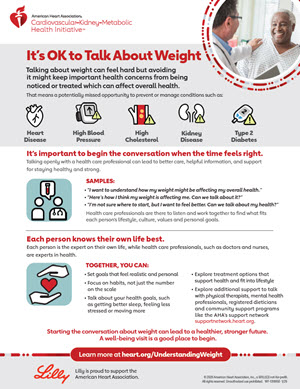
View fact sheet: It’s OK to Talk About Weight (PDF) | Spanish (PDF)
When weight-loss medications can help
Weight-loss medications may be appropriate when lifestyle changes alone are not enough or when weight is affecting health. These treatments can:
- Improve how the body uses insulin
- Lower appetite
- Support fullness
Medication is a tool, not a shortcut, and works best within a care plan.

View fact sheet: Understanding Medications That May Be Prescribed for Weight Management (PDF)
Surgery options for weight loss
Bariatric surgery may be considered for people with significant obesity or related health conditions. Procedures such as gastric bypass and sleeve gastrectomy have distinct benefits and risks to consider.
Combining treatments with lifestyle changes
Medical and surgical options are most effective when paired with nutrition guidance, physical activity and behavior strategies. Long-term success depends on consistent, supportive habits.
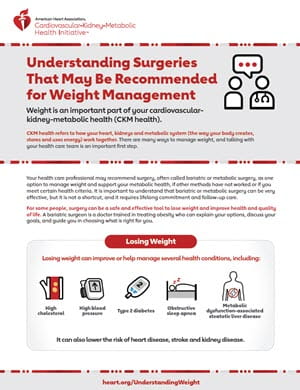
View fact sheet: Understanding Surgeries That May Be Recommended for Weight Management (PDF)
Ongoing support and follow-up care
Regular follow-up allows care teams to monitor progress, adjust treatment and protect health gains. Continued support plays a key role in long-term success.


