Peripheral Artery Disease and Diabetes
People living with diabetes have a higher risk of developing atherosclerosis, which is caused by buildup of plaque (hard deposits) in the blood vessels. Atherosclerosis is the most common cause of peripheral artery disease (PAD). PAD happens when blood vessels that carry blood to the legs or arms become narrowed or blocked. Having PAD also raises the risk of heart attack and stroke, so it’s important to understand how these conditions are connected.
PAD is a type of cardiovascular disease. This means it affects blood vessels and how blood flows through the body. PAD is similar to other blood vessel diseases:
- Coronary artery disease affects blood flow to the heart
- Carotid artery disease affects blood flow to the brain
Reduced blood flow to the legs can cause:
- Leg or hip pain when walking
- Feet or leg wounds that heal slowly
- Coolness or discoloration of the feet
- Numbness or weakness
- In severe cases, tissue damage (like gangrene) or amputation
Why does diabetes increase the risk of PAD?
Metabolic conditions such as diabetes raise the risk of PAD because high blood sugar causes inflammation which damages blood vessels over time. This damage makes it easier for fatty buildup to form in the arteries.
Other factors can raise the risk even more, including:
- Excess weight/overweight
- Not being physically active
- Smoking
- High blood pressure
- Unhealthy cholesterol or high triglycerides
- Family history of heart disease, stroke or PAD
- Long-lasting inflammation
- High blood pressure during pregnancy
- Chronic kidney disease
The more risk factors someone has, the higher their chance of developing PAD.
How PAD, heart disease and kidney disease are connected
PAD is not just a leg problem. It is often part of a larger issue with blood vessels in the body. When blood flow to the legs is affected, blood flow to the heart and kidneys can be affected too. That’s why healthcare professionals focus on caring for the heart, kidneys and metabolic health together. This connected approach is called cardiovascular-kidney-metabolic health (CKM health).
Preventing and treating PAD
Many risk factors for PAD can be managed or lowered, especially when you take steps to manage diabetes. Helpful steps include:
- Maintaining a healthy weight
- Eating a healthy diet
- Keeping blood sugar within a healthy range
- Being physically active on a regular basis
- Quitting smoking, if you smoke
- Managing blood pressure and cholesterol
- Wearing specialized footwear if recommended
- Taking medications exactly as prescribed
These steps can help prevent PAD, or lower the risk of serious complications.
Cardiovascular, kidney, and metabolic health are all connected. Poor health in one body system can increase your risk of having complications in the others.
The good news is that early action can make a difference. Working closely with your healthcare team and making healthy daily choices can help protect your legs, heart, kidneys and overall well-being.
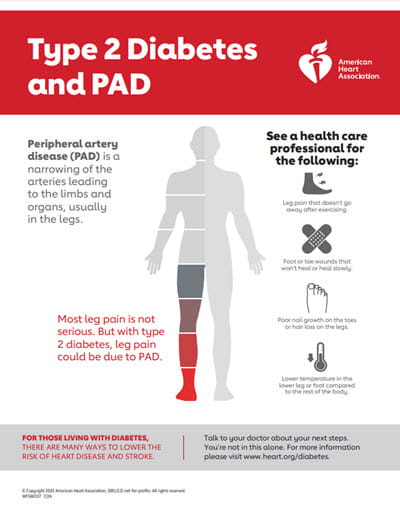
Fact sheet: Type 2 Diabetes and PAD (PDF)


