Kidney Disease and Diabetes
One of the common long-term complications of diabetes is kidney damage, also known as diabetic kidney disease. This condition is a result of vascular abnormalities that accompany diabetes and increases risk of death. The damage caused to the kidneys by Type 2 diabetes could lead to end-stage renal disease, the most advanced stage of kidney disease.
Chronic kidney disease basics
Kidney disease means the kidneys can’t filter waste products out of blood and make urine as they should. Chronic kidney disease (CKD) occurs slowly over many years and usually can’t be reversed.
- Early kidney disease, sometimes called renal insufficiency
You may have no signs or symptoms until the disease is advanced, but the damage is still being done. Blood tests to check kidney filtration rate and urine tests to check for protein in your urine are the only ways to find out if you have kidney disease at this stage. It’s important to be tested for kidney disease if you have diabetes so it can be detected and treated early to slow progression of the damage. Keeping your blood sugar and blood pressure under control are very important to slow the progression of kidney disease. Losing weight, getting regular exercise and not smoking are ways to help control blood sugar and blood pressure.
- Kidney failure, or end-stage renal disease
Kidney failure means damage to the kidneys has progressed to the point that they are not doing a good job of filtering wastes, such as urea and creatinine, from the blood so they can be excreted in the urine. The waste buildup can make you sick. You may have symptoms such as swelling of the ankles or face, vomiting, loss of appetite, fatigue, confusion and headaches. There also will be changes to urine and changes to urination frequency. Treatments for kidney failure may include hemodialysis, peritoneal dialysis or a kidney transplant. It’s important to work with your healthcare team to decide which treatment is best for you.
How does diabetes increase the risk for kidney disease?
High levels of blood sugar make the kidneys work harder to do their filtering job. Over time, this can damage your kidneys so they start to leak small amounts of protein (albumin) into the urine. The American Diabetes Association suggests that people with Type 2 diabetes have an albumin-to-creatinine ratio test at the time of diagnosis and once a year after that. Detecting albumin in a urine test indicates kidney damage.
An estimated Glomerular Filtration Rate (eGFR) test is a way to check your kidney health. An eGFR test is done through a simple blood test. The test checks your creatinine level. Learn more about the eGFR test (PDF)
Not everyone with diabetes develops kidney disease. The better you keep your diabetes and blood pressure under control, the lower your chance of getting kidney disease. Learn more about managing risks with an annual kidney screening (PDF).
How are cardiovascular disease and chronic kidney disease related?
People with CKD have an increased risk for cardiovascular disease mostly due to problems with the blood vessels. Cardiovascular disease is a leading cause of death for people with CKD.
These risk factors often linked with kidney disease are also associated with atherosclerosis and contribute to the risk of developing CVD and stroke:
- High blood pressure
- Diabetes
- High cholesterol
- Smoking
- Lack of physical activity
- Older age
- Family history of kidney failure
- Black-American, Asian-American, Latino/Hispanic-American, Native American or Pacific Islander
What should I do if I have diabetes?
Many of the risk factors for kidney disease and CVD are treatable. If you have diabetes, take these steps:
- Keep your blood sugar levels within normal range.
- Control your blood pressure.
- Manage your weight.
- Work with your healthcare team to monitor your urine albumin levels.
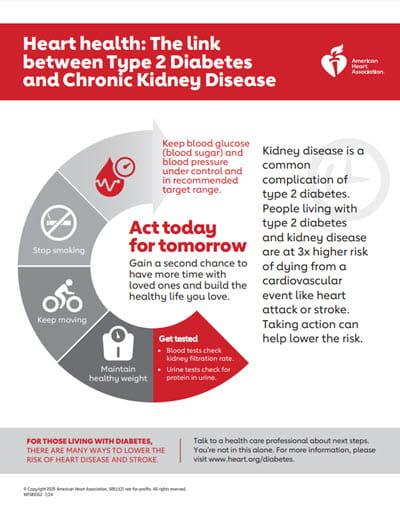
Fact sheet: The Link Between Type 2 Diabetes and Chronic Kidney Disease (PDF)


