Diabetes: What You Need to Know and Ways to Support Your Health
Diabetes Quick Facts
- Diabetes affects how your body uses blood glucose (sugar) for energy.
- More than 1 in 3 adults in the U.S. may have prediabetes, often without symptoms.
- Over time, high blood sugar can affect the heart, kidneys, eyes and nerves.
- Type 2 diabetes is the most common form of diabetes.
- Healthy habits, medications and regular care can help many people manage diabetes successfully.
- Diabetes and heart disease are closely connected.
What is diabetes?
- Diabetes is a health condition that affects how the body uses glucose (sugar) for energy. Glucose comes from the foods you eat and travels through your bloodstream to your cells.
- Your body uses a hormone called insulin to help move sugar from the blood into the cells. Insulin works like a “key” that unlocks your cells so sugar can enter. When the body doesn’t make enough insulin, or can’t use it well, sugar can build up in the bloodstream.
- Over time, blood sugar can cause problems, such as:
- Your cells don’t get the energy they need, so your body may feel tired or weak.
- Fat can build up in your blood vessels, making them narrow and slowing blood flow.
- Your organs can become damaged, including your eyes, kidneys, nerves and heart.
- Some people feel symptoms right away, while others may not notice changes for years. Learning about diabetes can help you better understand your health and treatment options.
Learn more about diabetes
- What is Diabetes?
- Diabetes Risk Factors
- 4 Questions to Ask Your Healthcare Professional About Diabetes and Your Heart (PDF)
- Diabetes and heart disease: what you need to know
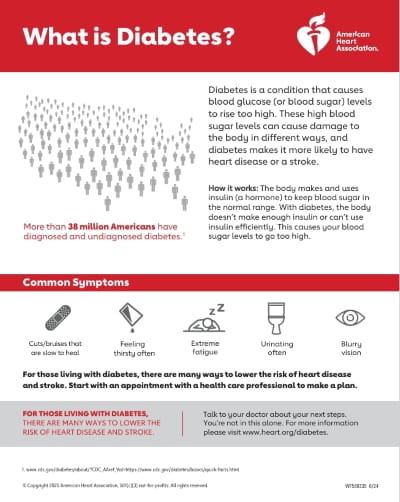
What is Diabetes Guide
This gives a simple overview of what diabetes is, explaining that it happens when blood sugar gets too high because the body doesn’t make enough insulin or can’t use it properly. It also describes how this can lead to long-term health problems if not managed.
 (link opens in new window)
What is prediabetes?
- Prediabetes means blood sugar levels are higher than normal, but not high enough for a Type 2 diabetes diagnosis. Many people do not realize they have prediabetes because it often does not cause noticeable symptoms.
- Fasting is a period of time without consuming food, typically used before blood tests to measure baseline levels of blood sugar. Fasting blood sugar levels between 100-125 mg/dL may be a sign of prediabetes. This can happen when the body begins having trouble using insulin effectively.
- The good news is that small healthy lifestyle changes can make a big difference. These steps can help lower your blood sugar, improve your health and lower your risk of developing diabetes and heart disease.
- Eat better: Adding more vegetables, fruits, whole grains and lean proteins.
- Move more: Finding ways to move your body regularly
- Quit tobacco: Lowering or quitting tobacco use.
- Maintain a healthy weight: Even a small amount of weight loss can help.
- Lower stress: Finding healthy ways to manage stress.
- Many people who commit to healthy habits are able to reverse prediabetes and prevent or delay Type 2 diabetes. Even people who already have diabetes can slow the disease and avoid complications by living a healthy lifestyle. You do not have to change everything at once. Small steps matter, and support can look different for every person.
Learn more about prediabetes
What are the different types of diabetes?
- There are three most common forms types of diabetes (PDF)(link opens in new window): Type 1 diabetes, Type 2 diabetes and gestational diabetes. Each affects the body differently, but all involve challenges with how the body uses insulin and blood sugar.
- Type 1 Diabetes, sometimes called insulin-dependent diabetes, happens when the body’s immune system attacks the pancreas, destroying the cells that make insulin. Without insulin, sugar stays in the blood instead of entering the cells for energy. People living with Type 1 diabetes need insulin every day because the body can no longer make enough on its own. Type 1 diabetes is often diagnosed in children or young adults, but it can develop at any age. Over time, high blood sugar can damage the eyes, kidneys, nerves and heart.
- Type 2 diabetes (PDF)(link opens in new window) is the most common type of diabetes. It develops when the body becomes resistant to insulin or cannot make enough insulin to keep blood sugar in a healthy range. Family history, stress, physical inactivity, sleep, nutrition and weight can all play a role. Type 2 diabetes is usually diagnosed in adults, but it is becoming more common in young people as well.
- Gestational diabetes develops during pregnancy, usually between 24 to 28 weeks. Pregnancy hormones can make it harder for the body to use insulin effectively, causing blood sugar to rise. It affects up to 14% of pregnancies and usually goes away after birth. However, it can increase the chance of developing Type 2 diabetes later in life, and it can happen again in future pregnancies.
- Understanding the different types of diabetes can help you feel more informed about symptoms, treatment options and long-term health.
Learn more
- Types of Diabetes (PDF)(link opens in new window)
- What is Diabetes?
- Diabetes Complications and Risks
Types of Diabetes
This infographic explains the main types of diabetes: Type 1, Type 2 and gestational diabetes (diabetes during pregnancy) and how they affect the body. It helps individuals understand who is affected, how each type is treated and why managing diabetes is important for heart health.
 (link opens in new window)
What are the signs and symptoms of diabetes?
- Diabetes symptoms can develop slowly, and some people may not notice changes right away. If diabetes is not treated, it can lead to serious health problems over time. That’s why it’s important to know the warning signs and to see a healthcare professional for regular checkups, even if you feel fine.
- Some common signs of diabetes include:
- Feeling very thirsty
- Urinating often, especially at night
- Feeling more tired than usual
- Blurry vision
- Increased hunger
- Cuts or sores that heal slowly
- Tingling or numbness in the hands or feet
- Frequent infections
- Unplanned weight loss
- When blood sugar becomes dangerously high, more serious symptoms can happen, including:
- Nausea or vomiting
- Stomach pain
- Fruity-smelling breath
- Confusion or trouble paying attention
- Feeling very sleepy
- Disorientation
- Seizures or loss of consciousness
- Diabetes does not always cause symptoms right away. If something does not feel right, talk with a healthcare professional. Early diagnosis and treatment can help lower the risk of complications over time.
Learn more about the signs and symptoms of diabetes
How is diabetes tested?
- Diabetes and prediabetes are diagnosed using blood tests that measure how much sugar is in the blood. These tests help you and your healthcare team better understand how your body is using insulin and managing blood sugar. There are three main tests used to check for prediabetes and diabetes.
- A1c Test (HbA1c or Glycosylated Hemoglobin Test)
- Normal: Below 5.7%
- Prediabetes: 5.7% to 6.4%
- Diabetes: 6.5% or higher
- Fasting Plasma Glucose Test (FPG)
- The fasting blood sugar test measures blood sugar after not eating for at least 8 hours. Results may fall into these ranges:
- Normal: Less than 100 mg/dL
- Prediabetes: 100-125 mg/dL
- Diabetes: 126 mg/dL or higher
- Oral Glucose Tolerance Test (OGTT)
- This test checks how your body processes sugar over time. Blood sugar is tested before and after drinking a sugary liquid. Results are based on the 2-hour blood sugar level and may fall into these ranges:
- Normal: Less than 140 mg/dL
- Prediabetes: 140-199 mg/dL
- Type 2 Diabetes: 200 mg/dL or higher
- Sometimes more than one test is needed to confirm a diagnosis. Learning your numbers can help you make informed decisions with your healthcare team and better understand your risk for heart disease, stroke or other complications.
Learn more
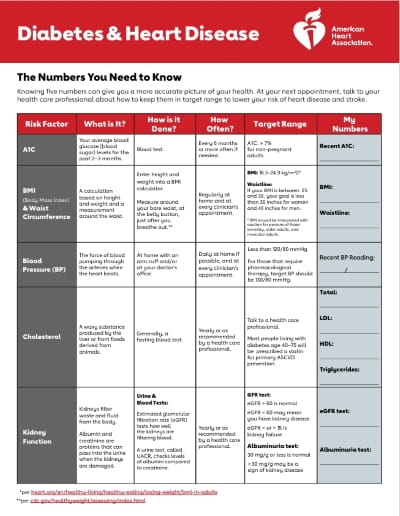
Diabetes and Heart Disease: The Numbers You Need to Know
This infographic helps people living with diabetes understand key health numbers like blood sugar (A1c), blood pressure, cholesterol, weight and kidney health, and why they matter. It encourages talking with your healthcare team and taking steps to keep these numbers in a healthy range to lower the risk of heart attack and stroke.
 (link opens in new window)
How can I manage my diabetes day to day?
Managing diabetes looks different for everyone. Many people find that small daily habits can help support blood sugar, energy levels and heart health over time. You do not have to do everything perfectly or all at once. Starting with one manageable step can make a difference.
- Eat Better (PDF)(link opens in new window) – Eating healthy foods can help keep blood sugar steady. Choosing vegetables, fruits, whole grains, beans and lean proteins, while limiting sugary drinks and minimizing ultra processed foods can prevent blood sugar spikes. Eating regular meals and watching portion sizes also helps keep blood sugar from going too high or too low. Healthy eating can look different across cultures, schedules and budgets.
- Be More Active (PDF)(link opens in new window) – Physical activity can help the body use insulin more effectively. Walking, stretching, dancing, biking or swimming may help support blood sugar and heart health, especially after meals. Consider adding moderate- to high-intensity muscle-strengthening activity (such as resistance or weights) on at least 2 days per week. Even short periods of activity can make a difference.
- Quit Tobacco (PDF)(link opens in new window) – Smoking and vaping can make it harder to control blood sugar and raise the risk of diabetes problems. Quitting tobacco can improve blood sugar control and protect your heart. Some people find it helpful to seek support, counseling or nicotine replacement tools when trying to quit.
- Get Healthy Sleep (PDF)(link opens in new window) – Sleep and stress can affect blood sugar levels more than people realize. Creating time for rest, relaxation or support can play an important role in overall wellbeing. Aiming for 7-9 hours of sleep each night helps your body use insulin more effectively.
- Manage Weight (PDF)(link opens in new window) – Reaching and maintaining a healthy weight can improve how your body uses insulin. Even small weight loss can help lower blood sugar.
- Control Cholesterol (PDF)(link opens in new window) – Healthy cholesterol levels help protect your heart. Heart health is important because people living with diabetes have a higher risk of heart disease.
- Manage Blood Sugar (PDF)(link opens in new window) – Keeping blood sugar in a healthy range is the main goal of diabetes care. Following your food, activity, medication plan and getting regular A1c tests, helps track how well your plan is working.
- Manage Blood Pressure (PDF)(link opens in new window) – High blood pressure is common with diabetes and can damage the heart and kidneys. Healthy habits and medications, if needed, help keep blood pressure under control.
Learn more about managing diabetes
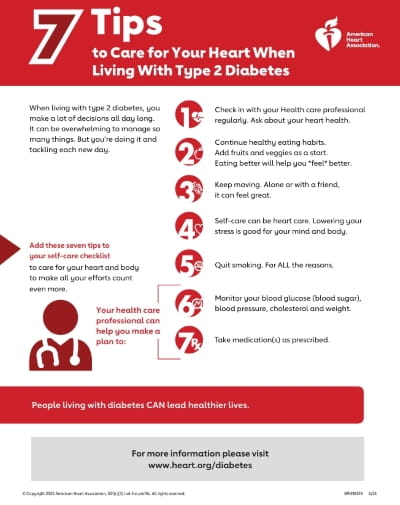
7 Tips to Care for Your Heart When Living With Type 2 Diabetes
This infographic is a simple guide that shares everyday steps like healthy eating, staying active, managing stress and checking your health numbers, to help protect your heart while living with diabetes. It encourages small, practical actions that support both heart health and blood sugar control.
 (link opens in new window)
How does diabetes affect overall health?
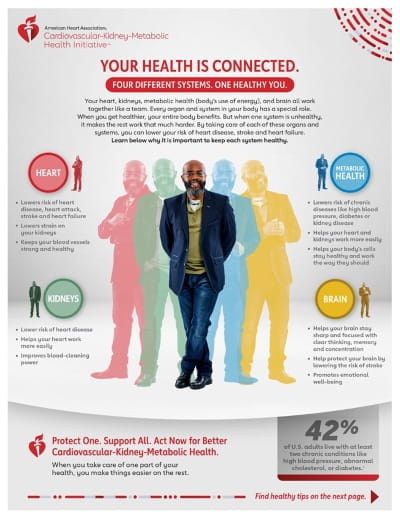
- Diabetes affects more than blood sugar. Your heart, kidneys and metabolic health (how the body creates, stores and uses energy) have different jobs, but together they affect your overall health. This is called cardiovascular-kidney-metabolic health (CKM health).
- When one area of your health isn’t working well, it can hurt other areas:
- High blood sugar over time can damage blood vessels, making them stiff and narrow. This increases the risk of heart attack and stroke.
- Diabetes can harm the kidneys, which filter waste from the blood. Over time, this can lead to chronic kidney disease.
- High blood pressure, high cholesterol and triglycerides or excess weight often happen alongside diabetes and may increase health risks.
- Understanding these connections can help you and your health care team take a more complete approach to health. Managing diabetes is about finding sustainable ways to support your body over time and lower the risk of long-term complications.
Explore More
- Take Care of Your Heart When Living With Type 2 Diabetes (PDF)(link opens in new window)
- Tips for Talking to Your Health Care Professional About Kidney Health (PDF)(link opens in new window)
- Cardiovascular Disease and Diabetes
- Kidney Disease and Diabetes
- Peripheral Artery Disease and Diabetes
Your Health is Connected
This infographic shows how conditions like diabetes, high blood pressure and kidney disease are linked and why managing them matters.
 (link opens in new window)