How serious are heart palpitations? Causes, symptoms and when to worry
By American Heart Association


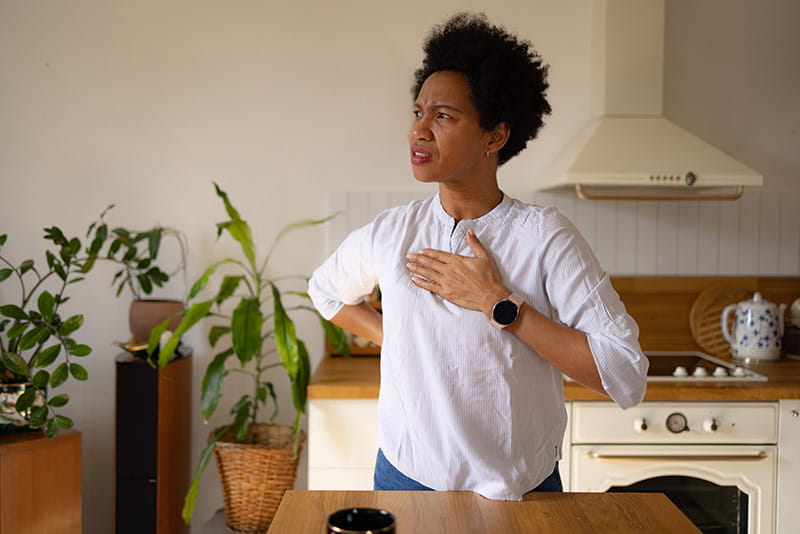
Heart palpitations – a sensation that your heart is pounding or racing – are a common reason people seek medical care.
But just because palpitations aren’t unusual doesn’t make them simple.
“There are a number of diagnoses that may fall into that broad term of ‘heart palpitations,’” said Dr. Larry R. Jackson II, an associate professor of medicine at Duke Health in Durham, North Carolina. As a cardiac electrophysiologist, he studies heart rhythm disorders.
Given the range of possible causes for palpitations, “you can’t jump to conclusions,” he said. But he did have answers for frequently asked questions about them.
What are heart palpitations, and what do they feel like?
Palpitations often are defined as an increased awareness of one’s heartbeat. They are considered a symptom, not a diagnosis.
People may describe palpitations as racing, pounding, fluttering or skipped heartbeats, Jackson said. They’re often felt in the chest, but also in the neck or throat.
The feeling may be caused by the heart beating slower, faster or more strongly than normal. It can last for seconds, minutes or even longer.
What causes heart palpitations?
A variety of things can trigger palpitations, Jackson said.
Sometimes, he said, the sensation of a skipped beat might be a premature contraction, where either the upper or lower chambers of the heart beat early. Triggers for this feeling of an “extra” beat include stress or anxiety, as well as exercise, excessive caffeine or problems with electrolytes such as sodium, potassium or magnesium.
Other triggers for palpitations may include medications, including nasal decongestants and treatments for asthma and ADHD, and illicit drugs such as cocaine and methamphetamine.
Palpitations also can stem from the realm of abnormal heart rhythms called arrhythmias – electrical malfunctions such as atrial fibrillation or ventricular tachycardia, Jackson said. “These are very real medical conditions that we diagnose and treat.”
But sometimes, the reason a person experiences palpitations is elusive.
Frequently, Jackson said, a doctor will prescribe outpatient heart rhythm monitoring to assess the heart’s electrical activity and find nothing unusual. “Many times, people are having absolutely normal heart rhythm when they’re complaining about heart palpitations.”
That doesn’t mean the palpitations aren’t real, he said. “But electrically, it’s just not emanating or coming from the heart. So it can be really difficult to explain sometimes.”
Are heart palpitations serious?
Most of the time, palpitations are not considered serious. But they shouldn’t be ignored. Untreated AFib, for example, can increase the risk of stroke.
However, if you’re feeling chest discomfort, shortness of breath, nausea or other symptoms of a heart attack, call 911.
What should someone do if they experience heart palpitations?
It depends.
Infrequent heart palpitations may warrant medical evaluation, Jackson said, but that’s not urgent. “One little thump in your chest that you feel that may be off, and you don’t have any other symptoms, and your quality of life is good – that’s not necessarily a problem.”
But if palpitations are lasting minutes to hours, “that’s a problem,” he said. And if palpitations bring new symptoms, such as lightheadedness, dizziness, shortness of breath, chest pain or the feeling “you’re about to pass out or actually pass out – that’s a big problem,” one that requires medical attention “sooner rather than later.”
That doesn’t mean it’s going to be anything life-threatening, Jackson said. “But any change from baseline should really precipitate an evaluation.”
How are heart palpitations treated?
Jackson said an evaluation would start with taking a medical history. A doctor will want to know how long symptoms have been going on, how frequently they occur, what times of day they are most prominent and whether there are triggers.
An overactive thyroid can trigger palpitations. Basic blood work during a physical exam can reveal relevant issues such as thyroid abnormalities, anemia or electrolyte imbalances. And an electrocardiogram, also known as an ECG or EKG, can help detect heart rhythm disorders.
After that, a whole range of responses is possible.
“It could be a very simple fix, or it may require medications or procedures,” Jackson said, depending on whether the problem is a simple electrolyte issue or a complicated arrhythmia.
But Jackson’s bottom line is easy to grasp. “If you’re having palpitations that are affecting your quality of life, the best thing to do is begin the process of getting them evaluated.”