Your Body, Connected. A Guide to Cardiovascular-Kidney-Metabolic Health


Quick Facts
- Cardiovascular-kidney-metabolic health (CKM health) is how your heart, kidneys and metabolic systems work together.
- When one system struggles, it can affect the others.
- CKM syndrome happens when there are problems with the heart, kidneys or metabolic system. Small lifestyle changes can help slow, stop or even reverse CKM syndrome symptoms.
How are my heart, kidneys, and metabolic health connected?
Your whole body works like a team. Your heart, kidneys, and metabolic system (the way your body creates, stores and uses energy) each have their own job, but they are all connected. When one part has trouble, it can affect the others.
Cardiovascular-kidney-metabolic health, or CKM health, is a concept that explains how these three systems work together. CKM health is about your overall health and taking action early so you can prevent poor outcomes like heart attack, heart failure, stroke or kidney failure.
When your CKM health is strong, that is a good sign to focus on maintaining your healthy behaviors and the connected health factors, which include:
- Blood pressure
- Lipids (cholesterol and triglycerides)
- Weight and waist circumference
- Blood sugar
- Kidney function
If you have challenges with any one of these, you may be at risk for CKM syndrome.
Learning how your body systems connect can help you:
- Spot health problems earlier
- Take small manageable steps to stay healthier longer
- Make smart choices about food, exercise and health checkups
- Avoid more serious problems later, like heart attacks, stroke or kidney failure
Your Health is Connected. Four Different Systems. One Healthy You. (PDF)(link opens in new window)
What is cardiovascular-kidney-metabolic syndrome?
CKM syndrome is a health condition that includes heart disease, kidney disease, diabetes and obesity. While these might seem like separate issues, they’re actually closely connected. When one system is affected, it can make the others worse, creating a cycle that puts your health at serious risk.
When these systems (heart, kidneys and metabolism) aren’t working properly, it can lead to a multi-system disorder — meaning more than one part of your body is not working properly. This can cause serious conditions like:
- Heart failure
- Irregular heartbeat (atrial fibrillation)
- Heart attacks and clogged arteries
- Stroke
- Poor circulation in the legs and feet (peripheral artery disease)
- Kidney failure
If not managed, CKM syndrome can lead to:
- Worsening health
- Disability
- And even early death
Research has shown that at least 3 out of 4 U.S. adults likely have reversible CKM syndrome. The good news is the earlier CKM syndrome is recognized, the more can be done to prevent or slow down the damage. Small lifestyle changes, medications and coordinated care from your healthcare team can make a real difference.
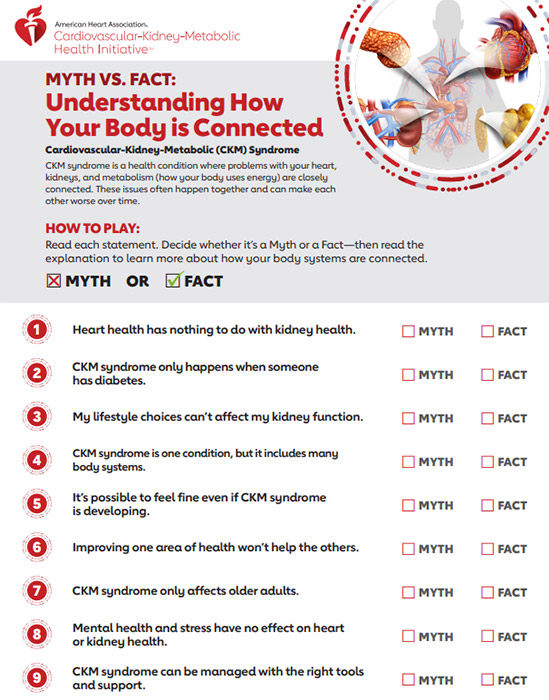
This resource explains that heart, kidney and metabolic health are closely connected, clears up common myths about CKM syndrome, and highlights that CKM syndrome can develop silently, affect anyone and improve with early care and healthy habits.
What are the stages of CKM syndrome?
Cardiovascular-kidney-metabolic syndrome (CKM syndrome) describes how dysfunction in the heart, kidneys and metabolic system (how the body creates, stores and uses energy) are connected. Problems in one area can affect the others, and CKM syndrome stages help show how a person’s health can change over time.
CKM syndrome (cardiovascular-kidney-metabolic syndrome) is generally described in 4 stages (0–4). These stages help show how risk can build over time and when more support may be needed. The stages are a way to understand where you are today, not where you have to stay.
With the right support, people can slow progression, manage conditions, and improve their health over time.
Stage 0: Ideal CKM Health
- No identified CKM risk factors
- Focus is on maintaining healthy habits and prevention
Stage 1: Early Signs
- May include excess weight, increased waist circumference and/or prediabetes
- Early signals of dysfunction in the body
- Lifestyle modifications and early intervention can prevent progression and promote regression of CKM syndrome
Stage 2: Increasing Risk
- Presence of conditions like:
- High blood pressure
- Metabolic syndrome – defined as 3 of the following
- Increased waist circumference
- Low HDL (good cholesterol)
- High triglycerides
- High blood pressure
- Prediabetes/diabetes
- Type 2 diabetes
- High triglycerides
- Kidney disease
- Multiple coexisting risk factors may prompt care coordination and management with additional healthcare specialists
Stage 3: Silent Damage
- Early organ damage – signs that the heart is being affected (may not have symptoms)
- May include more severe kidney function or early cardiovascular disease
- Risk is more defined and may require more aggressive management
Stage 4: Advanced Damage
- Significant heart disease and/or kidney disease
- Includes serious health events like heart attack, heart failure, stroke, atrial fibrillation, peripheral artery disease or kidney failure
- Requires ongoing intensive management to prevent secondary events
CKM syndrome can move forward to more serious stages, but it can also go backward to earlier, healthier stages when you make positive changes and get the right care. Learn about the stages of CKM syndrome.
Am I at risk for CKM syndrome?
Your heart, kidneys and metabolic health are closely related. When one area has problems, the others can be affected too. Life’s Essential 8 is a list of healthy steps that supports all three systems and when followed can help lower your risk of CKM syndrome.
Working on Life’s Essential 8 can help to:
- Lower stress on the heart
- Protect the kidneys
- Improve blood glucose (sugar), blood pressure, body weight, cholesterol and triglyceride control
- Lower the risk of poor outcomes such as heart attack, stroke, heart failure and kidney failure
Even improving one area can help the others. Here are some things you can do:
- Eat Better (PDF) – healthy food helps keep your blood pressure, blood sugar and cholesterol and triglycerides in healthy ranges. Good numbers can help protect the heart and kidneys.
- Be More Active (PDF) – moving your body helps lower blood pressure, support a healthy weight and improve blood sugar control. Even small amounts of activity can make a difference.
- Quit Tobacco (or Don’t Start) (PDF) – stopping smoking can improve heart, kidney and metabolic health. You may want to consider using support programs and medications, which can make quitting easier.
- Get Healthy Sleep (PDF) – good sleep allows the body to repair and reset. Poor sleep is linked with high blood pressure, high blood sugar and weight gain.
- Manage Blood Pressure (PDF) – ask your care team about a blood pressure goal. Healthy habits, like better sleep, nutrition and movement, can help you reach that goal.
- Control Cholesterol (PDF) – healthy cholesterol levels protect blood flow to the heart and kidneys and support overall metabolic health.
- Manage Blood Glucose (blood sugar) (PDF) – keeping your blood sugar in a healthy range helps protect your heart and kidneys and can prevent long-term problems with your eyes and nerves.
- Manage Weight (PDF) – reaching and maintaining a healthy weight can seem challenging, but it can lower your risk of CKM syndrome and supports whole-body health.
Your risk can increase or decrease depending on your health, habits, and care plan. You don’t need to change everything all at once. Start with one small healthy action:
- Add one vegetable to your meal today
- Take a 10-minute walk
- Check your blood pressure
- Go to bed 30 minutes earlier
Small steps add up. One healthy habit can support the whole body and steady changes over time lead to big results.
Who should be part of my care team, and how can they work together to support my CKM health?
Your care team can start with a primary care clinician, such as a doctor, nurse practitioner, or physician associate you trust. Depending on what’s available to you, you may also work with other professionals like heart, kidney or obesity specialists, a dietitian, a diabetes educator and others. Not everyone has access to all of these—and that’s okay. Starting with the care you do have is an important first step.
When more than one provider is involved, they may share information and help coordinate your care. If you’re seeing only one provider, they can still help guide your care and connect you to additional support if it becomes available.
No matter where you receive care, having a conversation is a powerful step. Even one conversation with a healthcare professional can help you better understand your health and identify steps that work for you.
You might ask:
- What is my CKM risk?
- What should I focus on right now?
- What are small changes I can start with?
- Are there other resources or support options available to me?
Where can I find support for CKM Health?
Living with cardiovascular-kidney-metabolic (CKM) conditions can feel overwhelming, but you don't have to manage it alone. Find trusted support, connect with others, and learn from real-life CKM experiences to help you navigate your health journey with confidence.
Real CKM Stories
Explore personal stories from people living with CKM conditions. Learn practical tips for managing daily routines, working with care teams, building healthy habits, and staying motivated.
Explore: Community, Stories and Support | American Heart Association
CKM Navigator Support
A CKM Navigator provides free, personalized guidance to help you:
- Understand your care plan
- Prepare for medical appointments
- Find community resources and support services
- Build confidence in self-management
Connect with a CKM Navigator:
1-800-242-8721
Get support: Navigator Referral Form
American Heart Association Support Network
Join a free online community for people living with CKM conditions and their caregivers. Connect with others, ask questions, share experiences, and find encouragement from people who understand your journey.
Join the community: AHA Support Network
Build Healthy Habits
Learn from others who have successfully made lifestyle changes to improve heart, kidney, metabolic, and overall health.
Check out these resources:
