Learn CPR: Why it matters more than you may realize
By American Heart Association


What to know about CPR training
- CPR can help maintain blood flow to the brain and other vital organs when someone’s heart stops.
- Immediate CPR can double or even triple a person’s chance of surviving cardiac arrest.
- Anyone can learn and perform CPR. You don’t need a medical background. All you need is two hands and willingness to act.
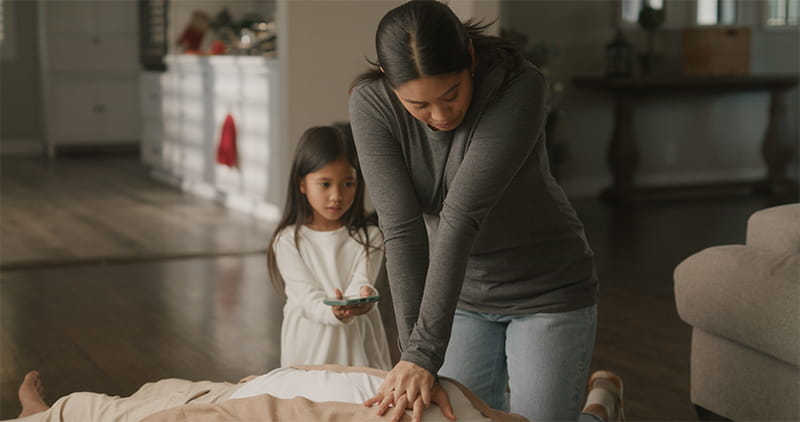
A family member collapses at home. A coworker suddenly becomes unresponsive. A child stops breathing.
In a cardiac emergency, the people nearby may be the ones to provide lifesaving help before emergency responders arrive. If a person is unresponsive and not breathing normally, call 911 and begin CPR. Send someone to get an automated external defibrillator (AED), if one is available. These steps can mean the difference between life and death.
Each year, more than 350,000 cardiac arrests happen outside hospitals in the United States, and about 90% of the people affected don’t survive, according to the American Heart Association. About 3 in 4 out-of-hospital cardiac arrests happen at home, which means you may be called on to help someone you know or love. Immediate CPR can double or even triple a person’s chance of surviving, yet fewer than half of people experiencing an out-of-hospital cardiac arrest receive CPR from someone nearby.
“You don’t learn CPR because you expect to use it,” said Dr. Saket Girotra, a professor of medicine at UT Southwestern Medical Center in Dallas. “You learn it because someday, someone you love may need you to know it.”
You can prepare by taking a CPR course before an emergency happens.
Why is it important to learn CPR?
Cardiac arrest happens when the heart suddenly stops beating, keeping blood from reaching the brain and other vital organs. CPR can help maintain some blood flow until emergency responders arrive.
“CPR doesn’t replace professional medical care, but it helps us buy time,” Girotra said. “It helps reduce the risk of brain injury and maximizes the chance of somebody surviving.”
The sooner CPR begins, the better. One study found that people who received CPR within two minutes of an out-of-hospital cardiac arrest had the highest rates of survival and survival without major brain damage.
How does CPR fit into the Chain of Survival?
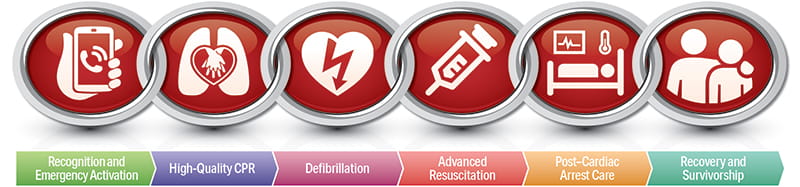
CPR is one of the first links in the Chain of Survival, a series of actions that can give an adult in cardiac arrest a better chance of survival and recovery.
Those actions are:
- Recognize cardiac arrest and call 911
- Start CPR, with emphasis on chest compressions
- Use an AED, if one is available
- Receive advanced care from emergency medical professionals
- Provide care at the hospital
- Support the person’s recovery
“What is really remarkable about the Chain of Survival is that the first few steps can be performed by anybody,” Girotra said. “They do not require a medical professional. Anyone can recognize cardiac arrest, call 911, start CPR and use an AED.”
What do you learn in a CPR class?
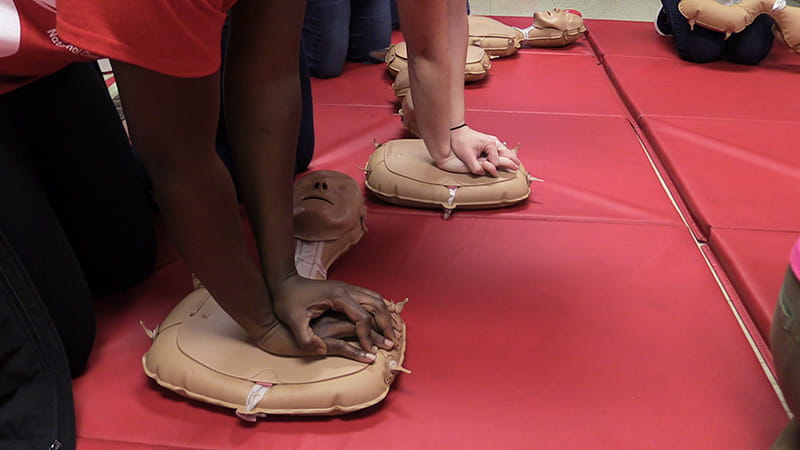
A CPR class offers an opportunity to learn and practice CPR skills, receive feedback and become familiar with the actions needed in an emergency.
A class, such as the Heart Association’s Heartsaver CPR AED course, teaches:
- The signs of a heart attack or stroke
- Adult CPR and AED use
- Choking relief for adults, children, and infants
- Drowning prevention and response
- Opioid-associated life-threatening emergencies
- Optional modules in Child CPR AED and Infant CPR
Performing CPR during a real emergency can feel overwhelming, especially if it’s somebody you know, Girotra said. It’s natural to feel frightened.
“Learning CPR ahead of time can give you the familiarity so that you can focus on what you need to do in that moment,” he said.
In some communities, a 911 dispatcher may provide CPR instructions by phone. Prior practice may make the steps easier to follow. Hands-on practice can also help you understand how CPR should feel, including the force required to deliver effective chest compressions.
What if you are afraid of performing CPR incorrectly?
Fear of making a mistake or hurting the person can cause people to hesitate. If someone is unresponsive and not breathing normally, call 911 and begin CPR.
A person in cardiac arrest has no effective heartbeat. Without CPR, the heart won’t pump blood to the brain and other vital organs.
“The most important thing you can do in that situation is act,” Girotra said. “People should not let the fear of doing CPR imperfectly get in the way. Doing something is far better than doing nothing.”
About 3 in 5 people mistakenly believe that only those with special training should perform CPR. But you do not have to be a healthcare professional to learn CPR or step in during an emergency.
Good Samaritan laws are intended to protect people who offer help in good faith.
What is an AED, and how do I use it?
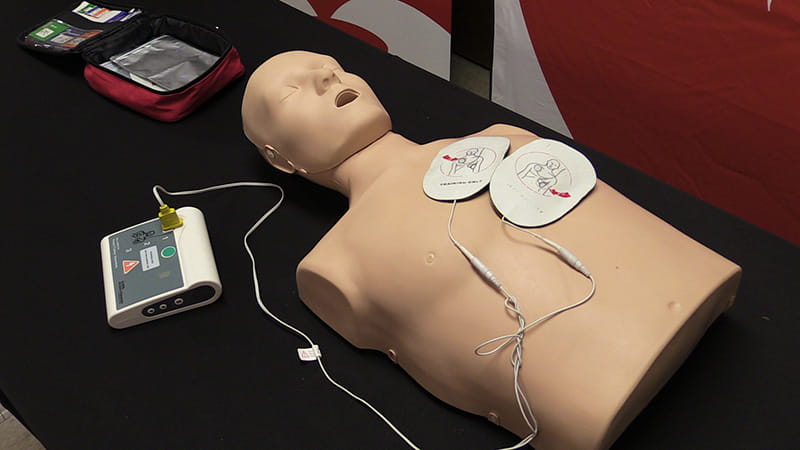
An AED is a portable device that can detect life-threatening heart rhythms and tells the user whether a shock is advised to restore a normal rhythm.
The idea of delivering a shock to a person may sound intimidating, but AEDs available in public settings are designed for people without medical training. Once turned on, the device provides step-by-step visual or spoken directions.
“All you have to do is get an AED, open the device, and it will walk you through the steps,” Girotra said. “It is a safe treatment. Importantly, it is a lifesaving treatment for somebody in cardiac arrest.”
Despite the potential benefit, only about 12% of people experiencing cardiac arrest in public have an AED applied by a bystander. Practicing with an AED trainer in a CPR class can make the device and its instructions more familiar.
Do children and infants need different CPR?
Yes. CPR techniques differ based on the person’s age and size. Infants and children need CPR with chest compressions and breaths.
If a teen or adult suddenly collapses, call 911 and provide Hands-Only CPR by pushing hard and fast in the center of the chest.
For infants and children in cardiac arrest, breathing problems are a common cause of cardiac arrest. So, breaths are especially important along with chest compressions.
Parents, grandparents, babysitters, childcare professionals, teachers and coaches should consider training that includes child and infant CPR. A pediatric CPR course allows participants to practice hand placement, chest compressions and breaths using child and infant manikins.
How do you choose the right CPR class?
Choose a CPR class based on who you want to help, whether you need first-aid training and whether you need an official completion card.
If you need CPR training for work, check with your employer or licensing organization before registering. Not every class, kit or completion card meets workplace or licensing requirements.
The American Heart Association offers various training options, including Heartsaver courses and CPR Anytime Training Kits.
Being able to perform CPR in an instant may require a refresher from time to time. The Heart Association offers resources, including CPR quizzes and a playlist of songs with the appropriate tempo for chest compressions.
Learn CPR and be ready to help
Cardiac arrest can happen without warning, and the person who needs help may be a family member, friend or coworker. CPR training can prepare you to help.
“Don’t wait until you need CPR to wish that you had learned it,” Girotra said. “Learning CPR takes a relatively small amount of time, but if you ever have to use it, you could save someone’s life.”
Ready to learn CPR? Find the right class and get the hands-on training you need to respond in an emergency.