When is the right time to perform CPR, and how should it be done?
By American Heart Association


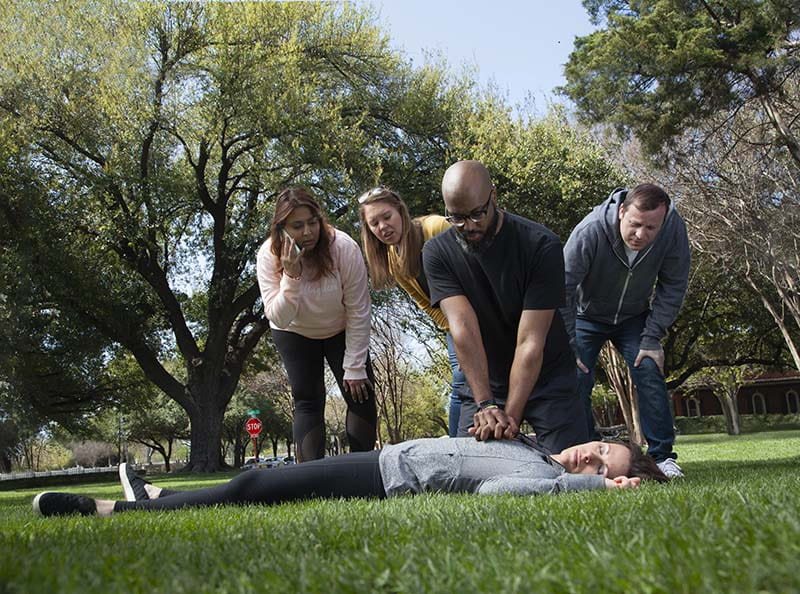
When cardiac arrest stops someone’s heart, CPR can save them.
But even though every second counts, people hesitate. Fear, confusion or simply not knowing what a cardiac arrest looks like can prevent people from acting.
If you find yourself in a situation that might require CPR, and you’re unsure whether to act, experts have simple advice: Don’t hesitate.
“The American Heart Association has correctly placed a very low threshold on starting CPR if you’re not sure,” said Dr. Benjamin S. Abella, chair of the department of emergency medicine at the Icahn School of Medicine at Mount Sinai in New York.
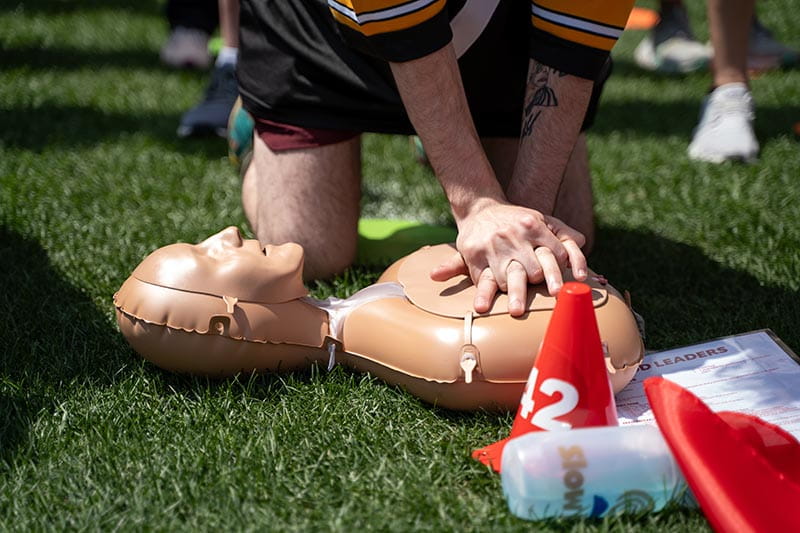
For a teen or adult, the essential steps to perform Hands-Only CPR are:
- Call 911
- Push hard and fast in the center of the chest.
So how do you know when to start CPR? Here’s what experts say.
What does cardiac arrest look like?
Cardiac arrest is when the heart stops beating. About 350,000 cardiac arrests occur outside the hospital each year in the U.S., with a survival rate around 10%, according to the Association.
“It’s usually abrupt and without warning,” Abella said. Someone might be in the middle of a sentence, then collapse unconscious to the ground. “So it’s not subtle.” Dr. Audrey L. Blewer, an associate professor at the Duke University School of Medicine in Durham, North Carolina, said that witnesses calling emergency dispatchers might describe the scene as, “This person has passed out.” They also might use terms such as unconscious, collapsed or unresponsive, said Blewer, an epidemiologist and resuscitation scientist who helped write the Association’s latest Guidelines for CPR and Emergency Cardiovascular Care.
So if you suspect a cardiac arrest in someone who is unconscious, tap them on the shoulders and say “Hey, are you OK?” If they don’t respond, Blewer said, that’s the immediate sign to call 911.
What confuses witnesses about when to start CPR?
Sometimes, people whose hearts have stopped will appear to be breathing. This “agonal breathing” looks like gasping, Abella said. But even though their heart has stopped, the person’s chest will move.
Either way, if someone collapses and is unresponsive – if they are not breathing or not breathing normally – you should call for help, Abella said.
“Other barriers to action can include simple panic,” Blewer said. That’s part of why calling 911 is so helpful.
Why is calling 911 so important?
“If you are ever at all uncertain about whether it’s time to perform CPR, the first thing to do is call 911,” Blewer said.
Calling 911 does several things:
- It summons help quickly, Blewer said, when every second counts.
- Dispatchers can quickly confirm whether the caller needs to start CPR, she said. “911 will help them figure it out, so they don’t have to be the medical expert.”
- Dispatchers can walk the caller through the essential steps, such as sending someone to fetch an automated external defibrillator, or AED, Blewer said. They may also be able to provide the right cadence for performing chest compressions.
- By providing clear instructions to callers in a scary situation, dispatchers can “help calm people down and center them,” Abella said.
When should someone just wait for help to arrive?
“They should never do that,” Abella said.
“Cardiac arrest, unfortunately, is so time-sensitive that there’s no amount of time that waiting is good,” he said. “The sooner you start CPR and/or use the defibrillator, the better.”
People might worry about doing CPR correctly or hurting the person, he said. But “the risk of CPR is very, very small. The risk of not doing CPR, if it’s cardiac arrest, is very high.” Good Samaritan laws protect people from liability, he added.
Acting quickly means using an AED if one is available, Blewer said – even if you haven’t been trained in using one. “An AED, once you turn it on, will walk the person through the basics of taking it out, applying the pads and delivering the shock.”
Again, it’s not a time to hesitate, she said. “Doing something is better than doing nothing because you really can’t hurt anybody more than they already are at this point.”

Where can someone learn more about CPR?
Blewer said the Association has many different levels of resources that can help people learn skills and improve their confidence. But in an emergency, nobody needs certification to act, she said.
It is much better to do CPR imperfectly than to not do it at all, Abella said.
“It’s so important that people act right away,” he said. “It makes all the difference. It’s the difference between life and death, truly.”
Hearing directly from survivors and rescuers can offer a clearer picture of how ordinary moments can become life‑defining decisions. During CPR & AED Awareness Week, you can learn more about the inaugural Nation of Lifesavers Class — five people whose lives were touched by CPR and who are helping others feel more ready to act.