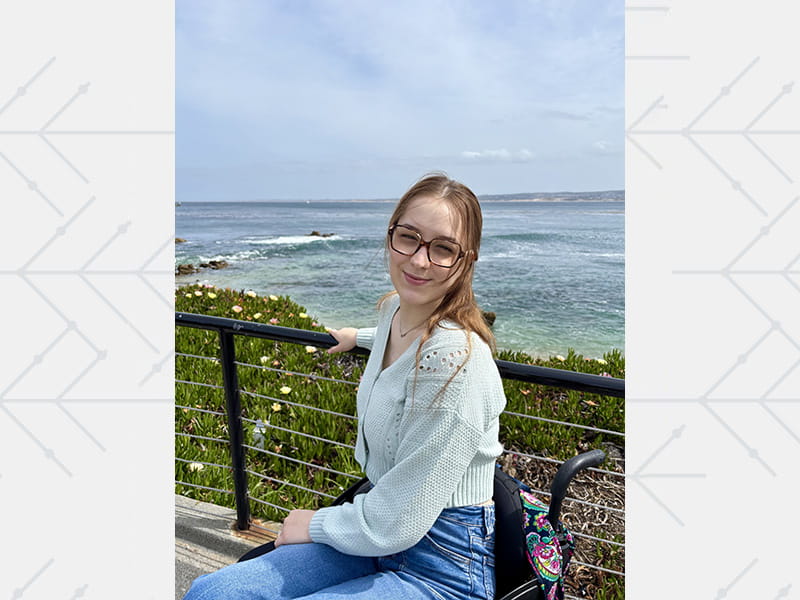
A heart transplant saved this student’s life. Determination drives it.
By Leslie Barker, American Heart Association News


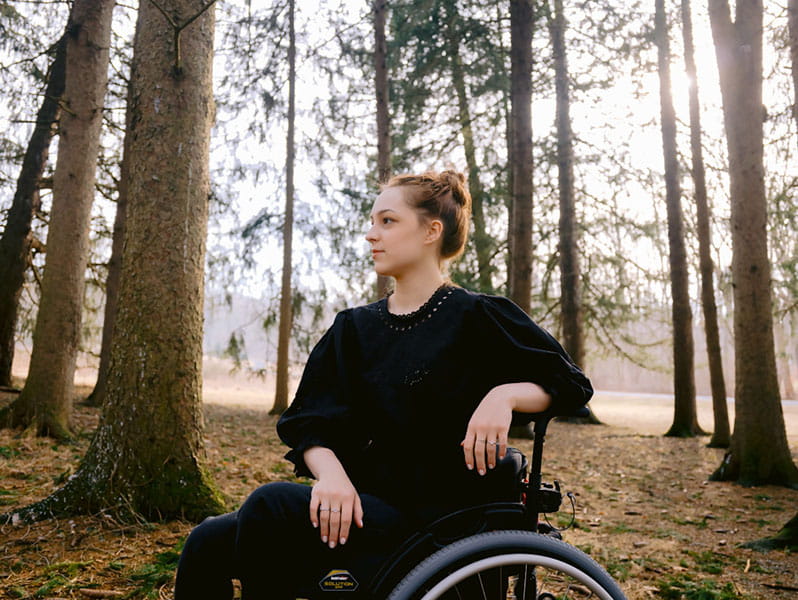
As a college freshman, Caroline Laubach initially attributed her breathing issues to a recurrence of her childhood asthma.
But it wasn’t that. Nor was it the cold, dry Pennsylvania winter. Nor, as tests at the campus health center concluded, was it COVID-19, the flu or strep throat.
Her cough got worse, so Caroline returned home. She went to an urgent care center and was told she had walking pneumonia.
And when she couldn’t keep anything in her stomach, and fluid built up in her legs and back, doctors came back with stunning news: Her kidneys, liver and heart were failing as a result of complications from a rare genetic condition called left ventricular noncompaction cardiomyopathy.
“My mom and I knew something was going on,” Caroline said, “but we never thought it was something that big.”
Heart failure leads to emergency surgery
Doctors told Caroline’s family she needed emergency surgery to connect a pump that would do the work her heart was struggling to do.
“I’m thinking, ‘This is crazy. I don’t want her having surgery,’” said her mother, Gretchen Laubach.
Desperate and scared, Gretchen called the family’s trusted and longtime pediatrician. His response came quickly: “You have to let them do this.”
Spinal stroke complicates her journey
After surgery, Caroline was transported to a larger hospital better equipped to handle her case. There, doctors discovered the pump had been inserted incorrectly. Her deteriorating health also necessitated her being put on extracorporeal membrane oxygenation, or ECMO, an advanced form of heart-lung support.
Caroline spent two weeks in intensive care, intubated and on a heart transplant waiting list. Her fluid-filled lungs made her feel as if she were drowning.
Then came another setback. Numbness and tingling in her feet, initially attributed to being on ECMO, instead were signs of a spinal stroke. Caroline was paralyzed from the waist down.
The stroke led to her brief removal from the transplant list.
Less than a day after being put back on, Caroline saw her nurse on the phone outside her ICU window at 2 a.m. The nurse seemed quite excited.
“I think something is happening,” Caroline texted her sister. “I think I’m getting a heart.”
A new heart, a new reality
Caroline’s transplant surgery on March 21, 2022, went well. Her kidneys and liver, which had begun shutting down, started to function better.
But days after her transplant, other health issues turned her recovery into a series of setbacks and adjustments.
It all started when Caroline was told she’d need to go to rehab to learn how to live with her paralysis. She figured she’d be there for two weeks and then walk out on her own.
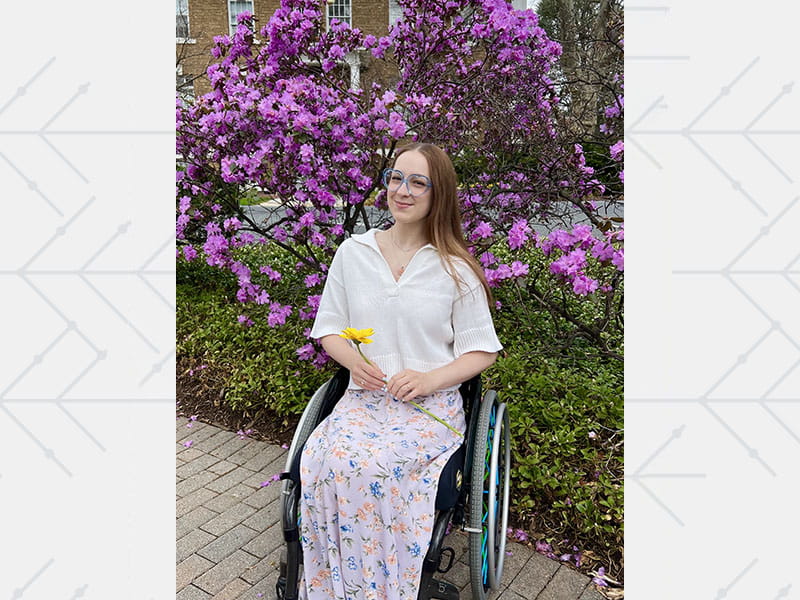
“It wasn’t at all like that,” she said. “I’ve had to imagine a future where I’d be disabled the rest of my life.”
Recovery brings new challenges
The family’s two-story home had doorways that weren’t wide enough for Caroline’s wheelchair. So they sold the house and moved into an apartment. Gretchen quit her job to care for Caroline.
A few months later, Caroline developed post-transplant lymphoproliferative disorder, a serious complication. She was on antibody treatment from October 2022 to January 2023, when doctors declared her in remission.
Later, though, tests showed a tumor wrapped around her small intestine. A few months later, her appendix and parts of her colon and intestine were removed. She’s been cancer-free ever since.
“I didn’t accept my rewritten future for a couple of years,” Caroline said. “I wanted to move forward, and I wanted to figure out how to be happy.”

Writing the next chapter in her life
Caroline relies on the strength and optimism of her family – Gretchen, plus siblings Meredith and Elliot (their father is deceased) – who made certain to keep the spirits of their baby sister high.
Caroline no longer needs to see her oncologist. She visits her cardiologist only annually. A port implanted in her chest to receive medications has been removed.
Now a full-time college student, she’s studying nutrition and somehow finding time to spend with friends and her romantic partner. She started an Instagram account and has been featured in Bonus Days, a publication about people who have undergone traumatic life changes and the resilience they’ve shown.
She also has a contract job with a France-based exoskeleton company for which she was initially hired as a “test pilot” for a product that may help her regain the ability to walk. She demonstrated it at various conferences and events.
A magical connection to her heart donor
Adding to her sense of gratitude, Caroline received a letter from the sister of her heart donor.
“I learned her first name, and that she loved walking in the grass barefoot and swimming in creeks,” said Caroline, now 23. “She loved animals but was afraid of earthworms. She made her sister bait her hooks when they went fishing.”
Mere days after her transplant, and knowing nothing about her donor, Caroline made a list of what she eventually wanted to do. Among her notations: walking to a creek and walking barefoot in the grass.
“At the time,” Caroline said, “I didn’t even live near a creek and rarely walked barefoot in the grass. Now, though, I know that was her, guiding me.”
Support played an important role in Caroline's recovery. Connect with heart disease and stroke survivors, patients and caregivers through the American Heart Association's free Support Network and share experiences, encouragement and hope.
Stories From the Heart chronicles the inspiring journeys of heart disease and stroke survivors, caregivers and advocates.