A stroke led him to create recovery software for survivors
By Deborah Lynn Blumberg, American Heart Association News


Well past midnight in suburban Seattle, software engineer Yutao Huang finally gave up on trying to solve a programming problem and went to bed.
But after four hours of tossing and turning, he decided to get back to work. As he stood up, he lost his balance and stumbled through his bedroom. Then his right leg went numb, as if it had fallen asleep.
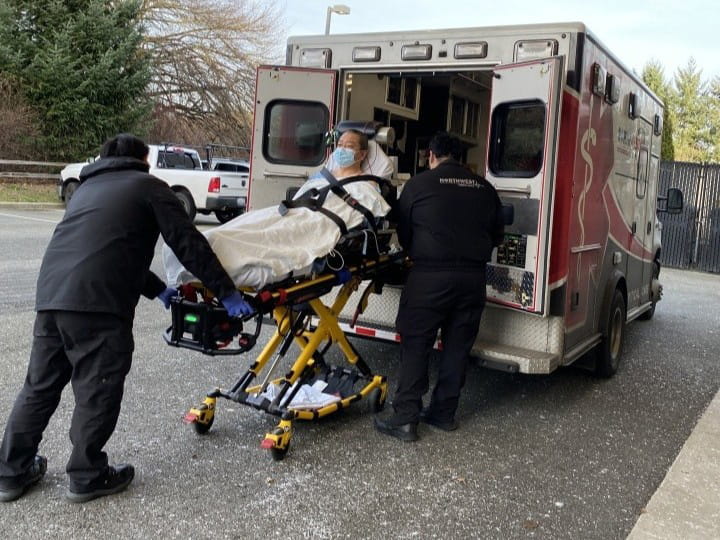
Yutao knew this was more than just a bad night’s sleep. So he called out to his wife, Lily, and daughter, Ruohan, then 16, for help. His words came out as gibberish. Yutao took his blood pressure. It was dangerously low. Ruohan called 911.
In the emergency room, Yutao’s speech returned. An MRI of his brain showed no problems.
“You’re probably just under the weather with a cold,” a doctor told him.
Yutao knew garbled speech was a symptom of a stroke. He asked the doctor if that’s what happened. No, the doctor said, and discharged him.
Over the next two days, Yutao’s right leg and right hand weakened to the point he couldn’t use them. His speech became unclear again. Lily took him to urgent care.
Yutao eventually had another MRI. This time, it showed blood clots affecting the left side of his brain and limiting blood flow. He had an ischemic stroke.
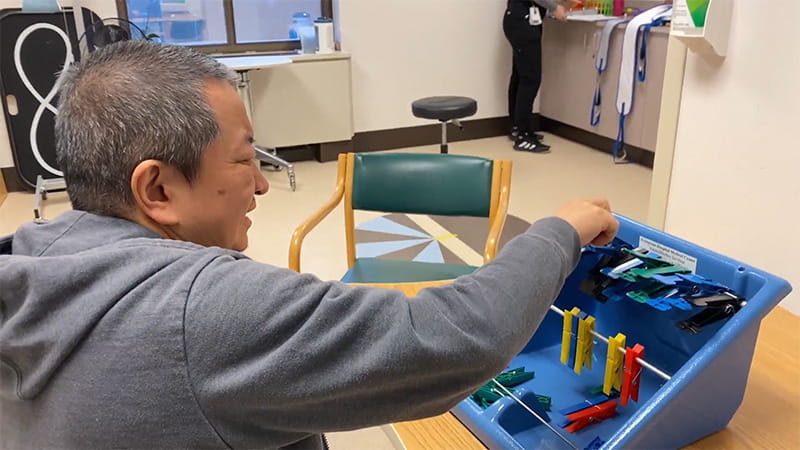
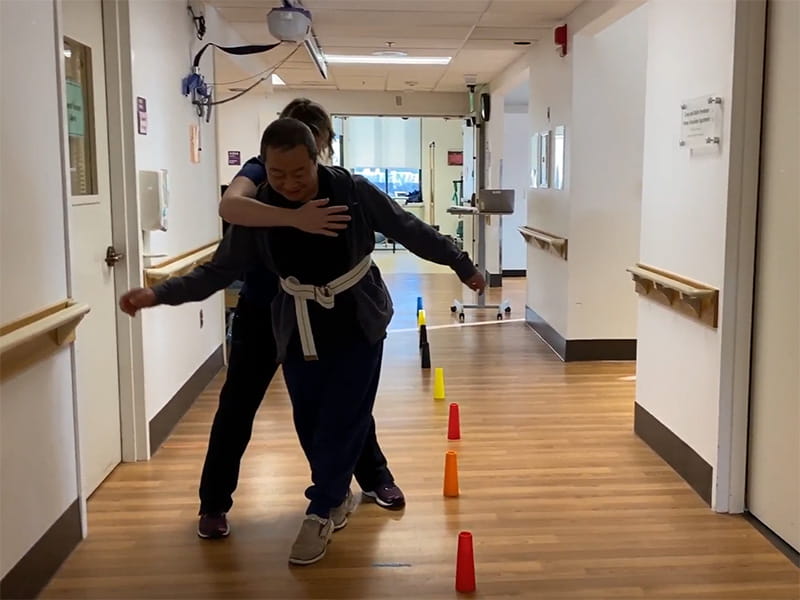
He went back to the hospital. After several days of observation, he was cleared to begin therapy to relearn how to walk, swallow, talk and use his right hand.
Building a tool for stroke recovery
He made constant progress and kept working hard. Weeks later, he still couldn’t master manipulating his computer or steadily using his mouse – big problems for a software engineer.
Practice tools he found online were insufficient. Some were too simple. Others were cluttered with ads and paywalls. None were designed specifically for stroke survivors.
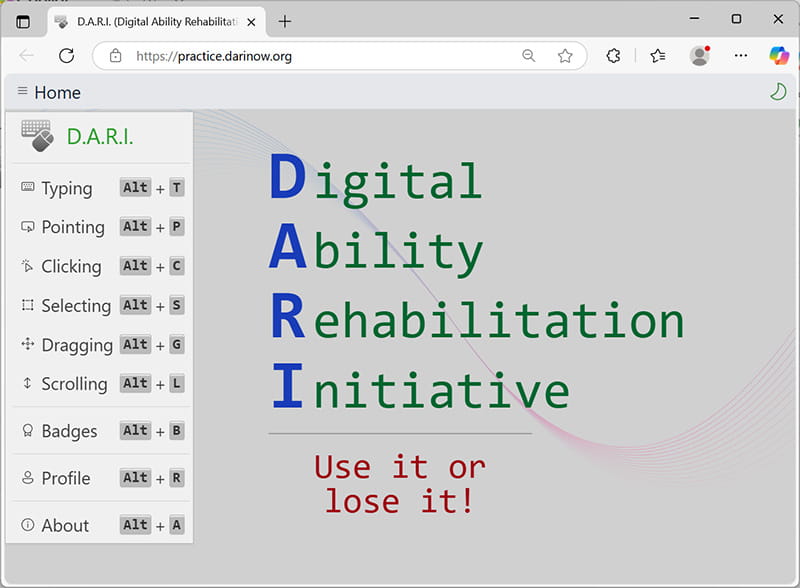
So, months into his recovery, Yutao set out to build what he couldn’t find and needed: a web-based app that helps stroke survivors practice typing, pointing, selecting, dragging and scrolling.
The challenging and somewhat slow process of building the tool – and then using it – helped Yutao master holding the mouse steady, double-clicking and dragging files. Ruohan helped with basic programming. Text for some of the exercises came from short stories and poetry she’s written. Yutao eventually customized the app with exercises for different occupations and needs, such as coding, finance, even everyday browsing.
He called it DARI, which stands for Digital Ability Rehabilitation Initiative. The free tool won first prize in his company’s hackathon competition for employees. Ruohan suggested he turn DARI into a non-profit, then helped with the paperwork to make it happen.
A heart defect diagnosis offers possible answers
Meanwhile, doctors found that Yutao had a small hole between the two upper chambers of his heart, known as a patent foramen ovale, or PFO. It’s a normal opening that’s supposed to close shortly after birth but doesn’t in about 1 of every 4 people.
Most people with a PFO have no symptoms. However, the hole can allow small blood clots to pass through the heart and to the brain, causing a stroke. There’s no way of knowing whether that happened in his case, but it’s certainly possible. So Yutao underwent a procedure to close the hole.
Helping other stroke survivors recover
Yutao’s stroke happened in January 2024. Two and a half years later, he walks with a limp. His right leg feels rigid, especially in cold weather or when he’s stressed.
“My dad has gone through so much, but he’s been so optimistic through it all,” Ruohan said.
The stroke has been a major learning experience for her, too.
Ruohan has gone from not knowing what a stroke was to teaching her peers about its warning signs and symptoms. She also continues working with her dad on improving DARI. It’s already reached more than 500 users across 23 countries. They plan to make the tool available in Chinese, Spanish and other languages.
“My stroke didn’t end my work. It reshaped it,” Yutao said. “Now, I hope it’s helping others move forward, too.”
Support for stroke survivors and caregivers
The Stroke Family Warmline connects stroke survivors and caregivers with trained specialists who can provide support, information or simply a listening ear. Call 1-888-4-STROKE Monday through Friday from 8:30 a.m. to 5 p.m. Central, or visit stroke.org/SpeakWithUs.
Stories From the Heart chronicles the inspiring journeys of heart disease and stroke survivors, caregivers and advocates.