Pulmonary embolism can be life-threatening, but a new guideline offers help for patients and doctors


Sherrell Clark had never heard of pulmonary embolism until it nearly killed her.
Clark was 32 in the fall of 2015. That August, she’d had no trouble keeping up with her nephew at an amusement park near her home in Hampton, Virginia. But the next month, the Army veteran found herself short of breath while climbing stairs. She assumed it was bronchitis, or maybe just the result of being a little out of shape.
In October, on a return visit to the amusement park, she had to pause every few steps. Then, in November, she felt pain in her chest. That sent her to the emergency room. After a series of tests and scans, her doctor was finally able to tell her what was going on: Her left lung was blocked by blood clots, and more were developing.
The seriousness of her situation was driven home when a nurse told her, “Had you waited any longer to come to us, your family would be visiting your grave.”
Clark is among the hundreds of thousands of people in the U.S. who are treated for pulmonary embolism each year. Not every case is so dramatic, but a new guideline from the American Heart Association and American College of Cardiology aims to help medical teams quickly decide who needs care and what kind of care they need.
The guideline, published in the journal Circulation earlier this year, is “a roadmap for clinicians who take care of pulmonary embolism to provide the most evidence-based diagnostic testing and treatment for their particular patient,” said Dr. Mark Creager, a professor of medicine and surgery at the Geisel School of Medicine at Dartmouth in Hanover, New Hampshire.
Creager, a former president of the Heart Association, led the committee that wrote the guideline. Clark served as a patient representative to the panel.
Pulmonary embolism, sometimes abbreviated as PE, has made headlines recently. It was listed as part of the cause of death, along with cancer, for actor Catherine O’Hara. Super Bowl MVP Kenneth Walker III survived pulmonary embolism as a teenager. And last year, NBA star Victor Wembanyama joined a list of athletes who have dealt with a related condition, deep vein thrombosis, or DVT.
Creager explained the essential facts about pulmonary embolism, and how the new recommendations should help more people get better care.
What is pulmonary embolism?
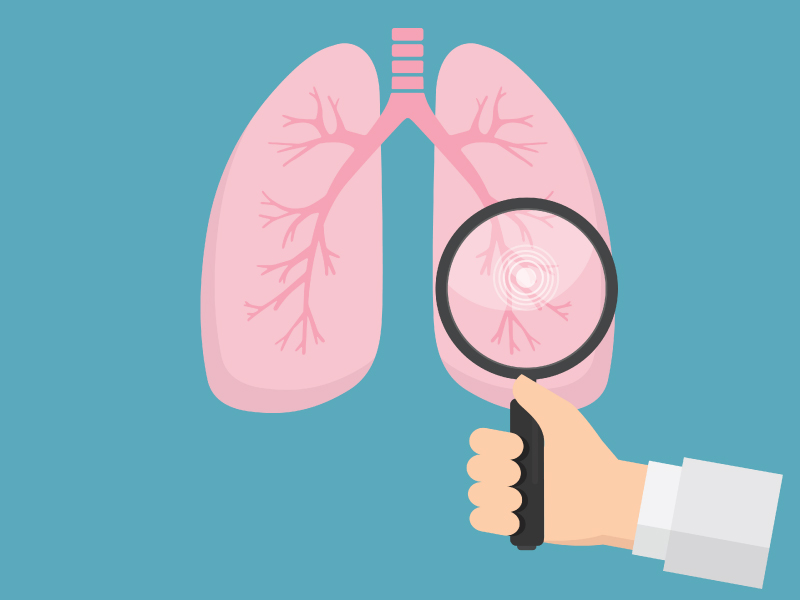
Pulmonary embolism is a blood clot, Creager said. It typically begins as DVT, a clot that usually forms in the veins of the legs or pelvis. Pieces of such clots can break off and travel to the heart through the inferior vena cava, a large vein that returns blood to the heart and then into the arteries of the lungs. There, the pieces can block blood flow.
Arteries that carry blood into the lungs are called pulmonary arteries. A clot that travels from one place to another is called an embolus, and the blockage from such a clot is an embolism.
How common is pulmonary embolism?
About 470,000 people are hospitalized for pulmonary embolism in the U.S. each year, according to Heart Association statistics. In 2023, the most recent year for which data is available, PE was the primary cause of nearly 8,800 deaths and a factor in more than 46,000.
What are the risk factors for pulmonary embolism?
The guideline spells out many risk factors. Creager emphasized:
- Major trauma or surgery, “particularly orthopedic surgery.”
- Prolonged hospitalization and other things that cause immobility or “lying around in bed for a long period of time.”
- Pregnancy
- Oral contraceptives
- Active cancer
Genetics can predispose someone to pulmonary embolism or clotting, Creager said. Long-haul travel is also associated with it, as is obesity. The risk increases with age. And “for unclear reasons, people who have atherosclerotic conditions like coronary disease are at increased risk as well.”
But, he said, “sometimes we don’t know what the underlying cause is.”
What are the symptoms of pulmonary embolism?
“The classic symptom are chest pain and shortness of breath,” Creager said. “The pain typically is sharp and gets worse when taking a breath.” The shortness of breath may occur suddenly, or with levels of exertion that were previously tolerated. Other symptoms include a fast heart rate, coughing up blood or passing out.
Symptoms of PE can mirror other conditions, such as a heart attack, he said, and require immediate care in an emergency department. (Don’t drive yourself – call 911.)
“Ignoring the problem and not getting treated can have very serious consequences, including death. Or if not death, severe disability,” Creager said.
Complicating things for doctors, however, is that sometimes pulmonary embolism has no symptoms. People may get a CT scan of their chest for other reasons, such as during cancer treatment, Creager said, “and there’s a blood clot sitting there.”
According to the guideline, less than 10% of patients evaluated for symptoms of pulmonary embolism end up being diagnosed with it.
The guideline offers recommendations to help doctors diagnose pulmonary embolism efficiently. A blood test, for example, can look for a clotting marker called D-dimer. If that level is high, a CT scan can confirm it’s PE.
What does the new pulmonary embolism guideline change about care?
A key section categorizes pulmonary embolism by severity.
“That is the newest and one of the more impactful parts of this guideline,” Creager said.
The guideline puts patients in one of five main categories. At the lowest level, Category A, is someone with no symptoms whose pulmonary embolism was discovered incidentally.
Moving up the scale, the concerns become more worrisome. Categories B and C include patients with mild to moderate symptoms and signs of pulmonary embolism. In Category D, the patient is showing signs of shock. “They’re not providing blood flow sufficiently to their organs,” Creager said. Level E includes cardiac arrest.
If health care professionals use these categories and their subcategories, Creager said, “they could see from the guideline what is recommended as the most clinically effective and safest way of managing their patients.”
How is pulmonary embolism treated?
“We use these categorizations to help guide us as to how aggressive we should be in managing these patients to increase their likelihood of survival,” Creager said.
Virtually everybody with PE will end up needing anticoagulants, or drugs that prevent clotting, he said. Many, but not all, patients require hospitalization. For example, somebody in Category A usually would not need to be hospitalized for treatment of a PE.
The guideline also helps doctors decide who needs advanced therapies, which can include procedures where a catheter is used to physically remove the clot.
The good news, Creager said, is that PE “is a condition that is easily diagnosed and treatable in most patients.”

Clark is an example.
Her experience was nerve-wracking at first. After she arrived in the ER, her doctor asked a series of questions, then ordered a D-dimer test, followed by a CT scan. After he saw the results, “He’s like, ‘Ms. Clark, um, you’re not going home tonight.’”
Clark spent four days in the hospital, where she was closely monitored as she received powerful clot-busting drugs. She also had to learn how to inject the medications herself before going home.
That was tough, she said, but the injections didn’t go on for long. These days, she takes only a low dose of aspirin.
But Clark, who works in human resources, speaks regularly about her experience to make people aware of PE symptoms and causes.
Her clots, she said, were attributed to the birth control pills she was taking, but she learned along the way that wasn’t her only risk factor. A genetic test showed she had sickle cell trait – which she inherited from her mother, who had never brought it up with her before. People with sickle cell trait or disease have been reported to have more than twice the risk of developing pulmonary embolism than those without, Heart Association statistics show.
Clark is grateful she had care from a doctor who asked all the right questions – and hopes the guideline helps others become aware of what to do.
“I’m a big advocate of – if you’re not feeling well, go to the doctor, go get care,” she said.
When serious conditions can have subtle—or no—symptoms, everyday habits matter. The Healthy for Good newsletter shares practical tips, recipes, and real life inspiration to help you build healthy habits that last at every stage of life.