Saved by CPR when her heart stopped in church, she’s now helping others learn it
By Leslie Barker, American Heart Association News


The day Ann Furner’s heart stopped beating was the day she and her husband, Tom, had planned to leave their home in upstate New York for a long-planned Christian rock concert and mini-vacation with friends.
Packed, ready to hit the road and ahead of schedule that Sunday morning in July 2023, they decided to attend an earlier Mass than usual. Five minutes into the service, Tom glanced at his wife.
“She just didn’t look right,” he said.
Within a split second, Ann slumped to the floor. Tom screamed for help. Lori Fiorentino, a nurse practitioner attending the service, ran over and shouted, “Call 911!” Enlisting the help of Tom and two other parishioners – a volunteer firefighter and a registered nurse, as it turned out – Lori orchestrated Ann’s care until paramedics arrived.
The volunteer firefighter and the nurse administered CPR for about 15 minutes. Once the paramedics arrived, they used a defibrillator to shock Ann’s heart. It took three tries before they got a sustainable rhythm.
At the hospital, Ann was diagnosed with “cause unspecified” cardiac arrest. She received an implantable cardioverter defibrillator, or ICD. This “insurance policy,” she calls it, will shock her heart back into rhythm if her heartbeat becomes erratic.
While Ann was in the hospital, the discomfort on her chest was like nothing she’d ever experienced. All things considered, she later agreed with the doctor who said, “You’ll be grateful every time that hurts.”
Ann was lucky; only 10% of people who experience out-of-hospital cardiac arrest survive. The paramedics who helped save her life that Sunday came to see her in the hospital because, one of them told her, “It usually doesn’t turn out this way.”
Still, the gravity of Ann’s situation didn’t hit until she was home.
Normally effusive and energetic, the retired teacher now had no energy. She slept a lot. Because of the ICD surgery, she couldn't lift her arm above her head. The first time she went to the doctor, she needed a wheelchair to get from the car to his office.
But Ann being Ann, she began charting a course for her future – buoyed by learning that her congregation began clapping when it was announced she had survived the scary episode, and by the support of Tom, their two children and spouses, grandchildren and friends.
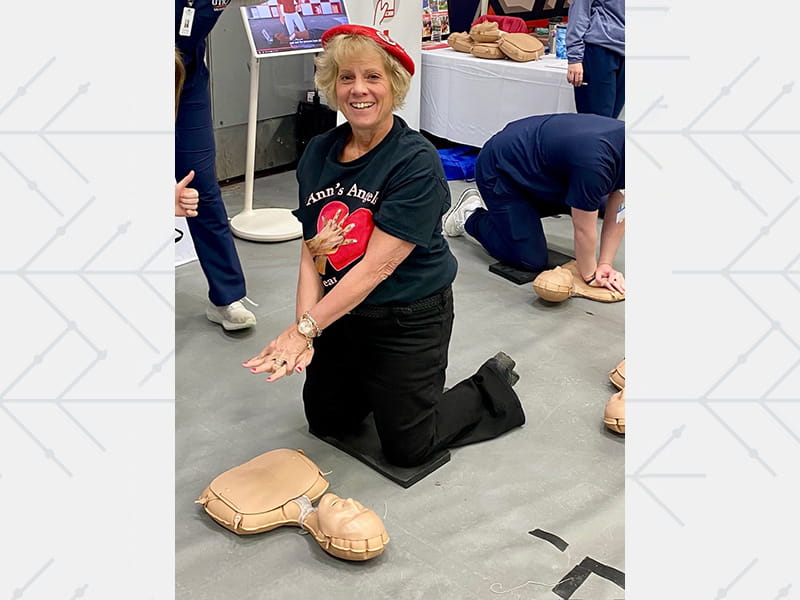
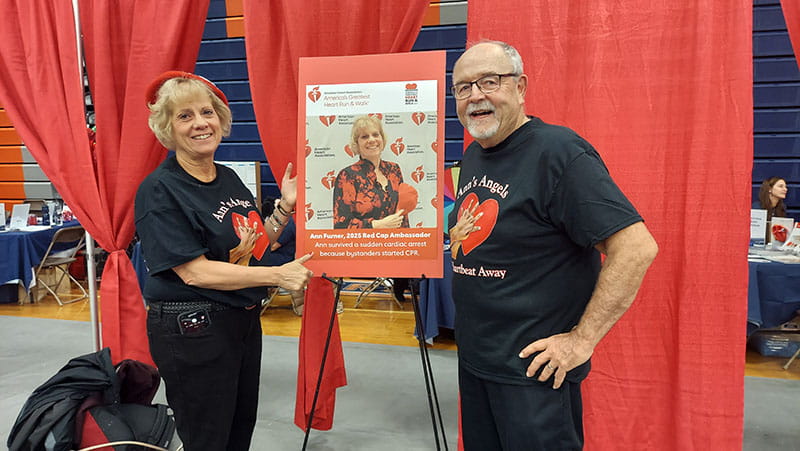
That support energized Ann to do more. She started You Can Be a Heartbeat Away, a Facebook page to support other cardiac arrest survivors. She organized a team for the American Heart Association’s Greatest American Heart Run and Walk in Utica, New York. It raised $4,100 and was named a top community team. She traveled to Albany, the state capital, to speak in favor of a bill to mandate that public schools have Cardiac Emergency Response Plans; it passed and became law last summer.
Ann also began advocating for the placement of automated external defibrillators, or AEDs, anywhere she could think of, starting with her church. The more AEDs out there, the more lives can be saved, she stresses. When she sees an AED, whether on a trip to Aruba, at airports and at church gift shops she visits, she takes selfies next to them.
“I drive everybody crazy,” she said. “We went to a store which had a sign saying it had an AED, but I didn’t see it. The clerk and I found it in an office, and I told her it needed to be on the wall, out in the open.”
“My wife has taken this terrible event and turned it into a major positive,” Tom said.
How could she not, Ann reasoned? “No. 1, I like to talk. No. 2, I’m a teacher. No. 3, I lived, which is most helpful of all.”
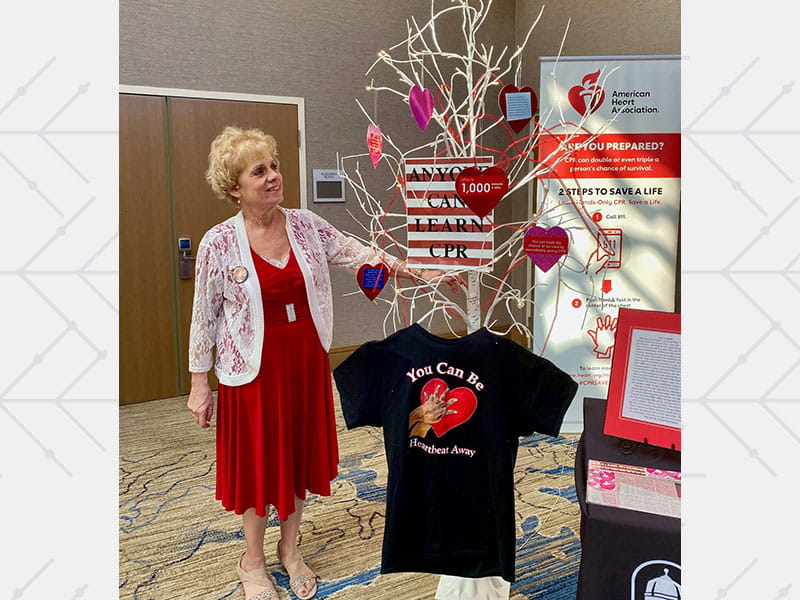
Nearly three years later, Ann – now 66 – still tires more easily than she used to. When Ann leaves the house by herself, Tom still worries until she gets home. They’ve been married 45 years, together for 48, and feel closer now than ever – to each other, and to people they otherwise would never have met.
During Ann’s time in the hospital, Lori, the nurse practitioner who had taken charge at the church that fateful day, visited her. Ann said when Lori and Tom saw each other, “they fell into each other’s arms, sobbing. It was so beautiful. She’s like a member of our family now.”
One of the paramedics sent Ann a letter, telling her he had her initials tattooed on his forearm. “He told me that seeing it helps remind him that when all the stars align, this – the saving of a life, of my life – can happen.”
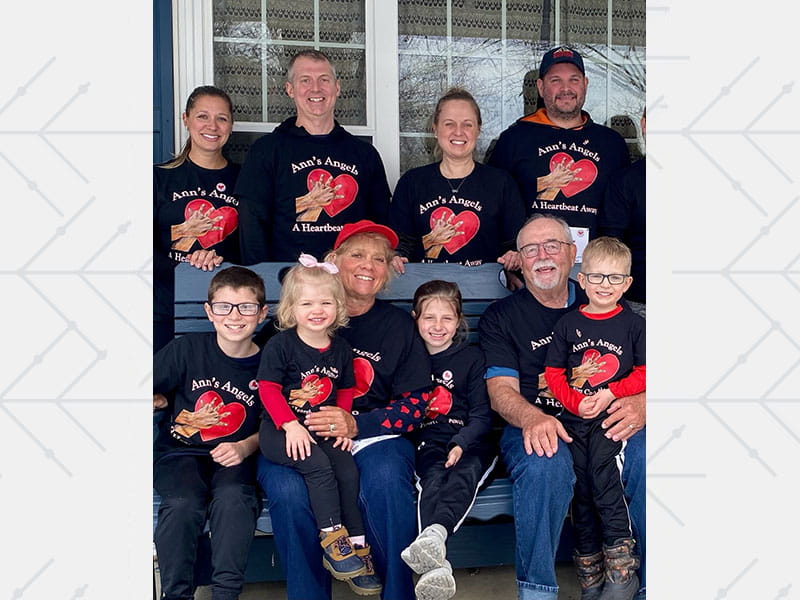
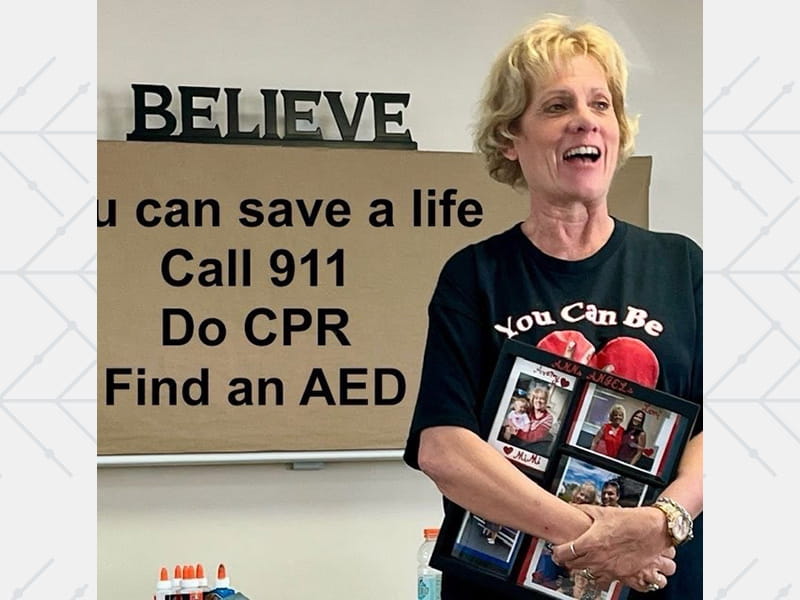
Ever since that lifesaving, life-altering experience, Ann carries a photo of whom she calls “Ann’s Angels” – those who saved her life. She pulls it out whenever she’s encouraging people to learn CPR.
“I’m the face,” Ann tells them, “of someone who lived because of CPR.”
Ann survived because people nearby knew what to do. You can be one of them. Join the American Heart Association’s Nation of Lifesaversand learn CPR today — at home, on your own schedule. And by adding your voice to Heart Powered, a grassroots network, you can advocate for policies that help build a Nation of Lifesavers.
Stories From the Heart chronicles the inspiring journeys of heart disease and stroke survivors, caregivers and advocates.