After losing his daughter to cardiac arrest at 18, dad vowed to bring CPR/AED training to schools
By Diane Daniel, American Heart Association News


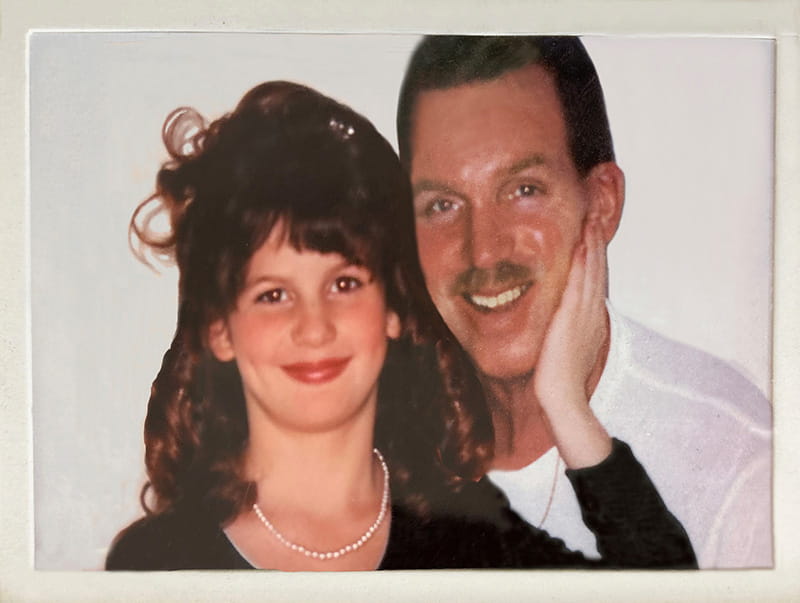
Lauren Laman had been dancing since she was a child. As a high school senior in St. Charles, Illinois, she was on the dance drill team.
Falls during jumps happened sometimes at practice. On this particular afternoon, however, Lauren simply collapsed.
By the time her mom, Mary, arrived, paramedics were giving Lauren CPR. Mary then saw them stop to shock her daughter’s heart with an automated external defibrillator, or AED, in hopes of restoring a rhythm.
Mary described what was happening on a phone call to her husband, George, a former firefighter and paramedic. “She’s totally blue,” Mary said. “Her eyes opened wide when they shocked her but then closed right away.”
Then Mary said the words already on his mind: “Oh my God, I think she’s dead!”
The paramedics continued CPR as they put Lauren in the ambulance. The resuscitation effort continued at the hospital. Because staffers knew George from his paramedic days, he was able to walk right up to the people still trying to save Lauren.
George put a hand on the shoulder of the doctor giving CPR.
“Please stop,” he said. “I know you’ve done everything possible to save my daughter.”
Lauren was pronounced dead. She was 18.
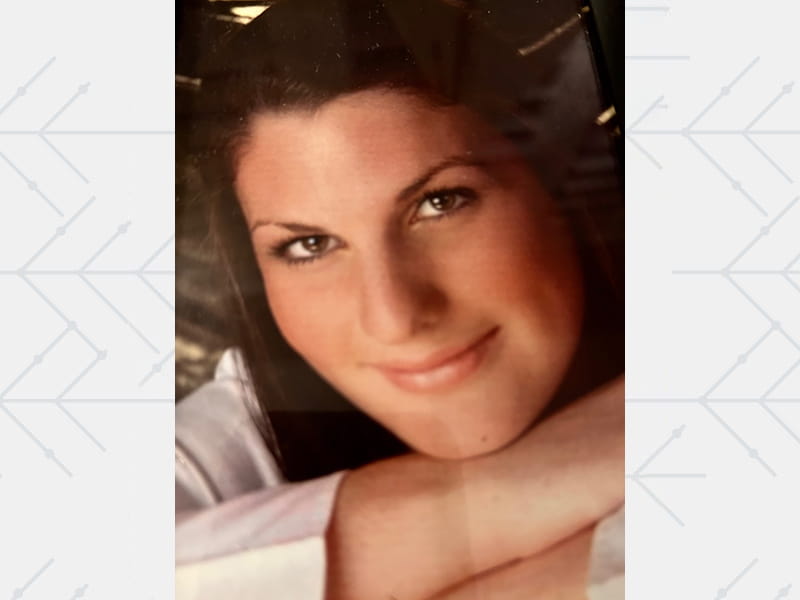
Lauren’s death, in 2008, was the result of sudden cardiac arrest. Doctors didn’t know what caused her heart to stop.
When Lauren was a child, she was diagnosed with mitral valve prolapse. It’s often a harmless, manageable condition requiring only routine monitoring. She had no physical restrictions; if anything, doctors encouraged physical activities.
Lauren also had a family history of heart problems – stemming from her dad.
Just over a decade earlier, when he was 45, George passed out one day after cutting the grass. It turned out to be an episode of ventricular tachycardia, which causes a fast heart rate in the ventricles of the heart.
To treat the problem, George underwent a procedure called a cardiac ablation. During the procedure, doctors found that he had right ventricular dysplasia, a condition that can cause abnormal heart rhythms and potentially cardiac arrest.
At the time, George and Mary had their four children – three sons and Lauren, the youngest – physically and genetically tested. No related problems were found.
These issues were why George left the fire department. He needed a less stressful, more sedentary job. He also got an implantable cardioverter defibrillator, or ICD, in his chest to monitor his heart’s rhythm. If the device detected a problem, it would shock his heart back into a normal rhythm.
“If you’re going to survive, you’ll need a heart transplant in 20 years,” his doctor told him.
George explained to his children what had happened. He told 10-year-old Lauren, “I will do everything in my power to see you graduate high school.”
“Daddy,” she said. “Not only that, you’re going to walk me down the aisle someday.”
Following Lauren’s death, those words haunted George. As did other things.
Chief among them: Had anyone at Lauren’s school attempted to perform CPR? Did anyone use the school’s AED?
Mary and George talked about pushing for a law in Illinois to require Hands-Only CPR and AED training for high school students. But for the five years after Lauren died, they were too consumed in grief and anger to act on it.
Then, in 2013, George found himself lacking energy. Although he was still working, he napped throughout the day and went to bed after dinner. “I was starting to die, and I knew it,” he said.
He thought: “If I don’t go after this law now, I’ll never do it. Whatever happens, at least I could say I did everything I could.”
Working with legislators and advocacy groups, Lauren’s Law passed in 2014. It mandates that all Illinois secondary schools provide instruction in lay rescuer CPR and AED education.
The following year, George had a stroke at work. Thanks to a quick response, he was able to get clot-busting medication and fully recovered.
Then his heart failure reached the point where he was placed on the heart transplant waiting list. He got a new heart on Feb. 24, 2016, at age 63.
“When I looked in the mirror, I was pink for the first time in years,” he said. “It was such a gift.”
In 2021, George and Mary divorced. He believes the family was unable to heal after Lauren’s death.
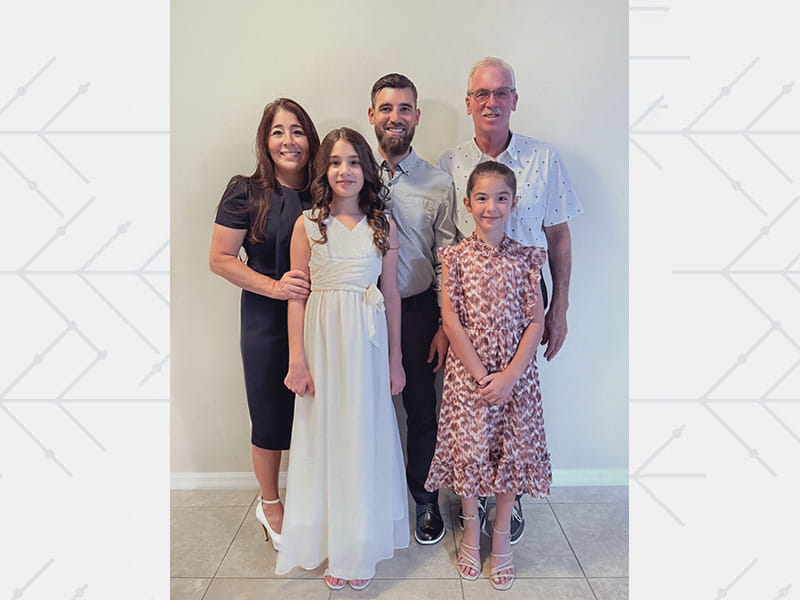
He lived with his son Matthew for a time then moved to Fort Myers, Florida, where he still lives. Matthew, his wife and two children ended up relocating there as well.
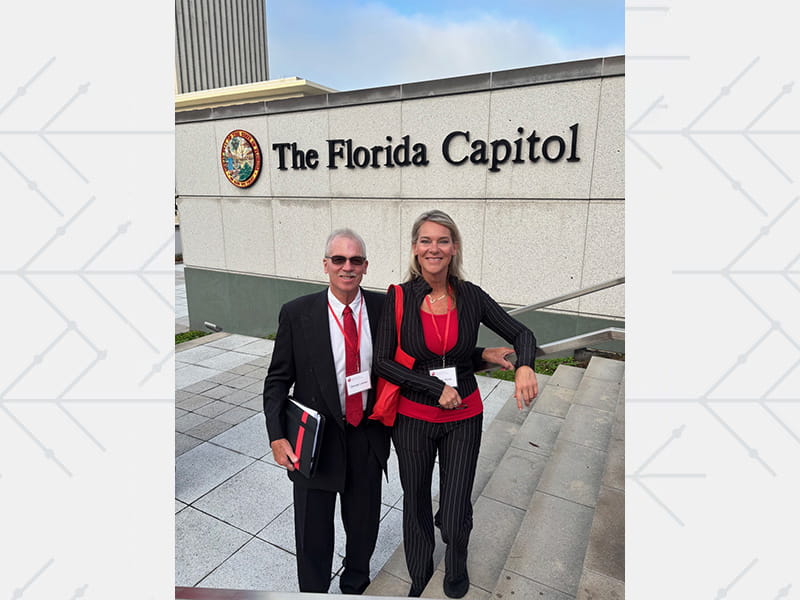
Using the same playbook that led to Lauren’s Law in Illinois, George immediately joined efforts to expand CPR-related laws in Florida.
“I advised my dad to get his footing in Florida and make this a home first, but he said, ‘Give me my next mission,’” Matthew said.
In May 2025, George’s efforts helped realize passage of a state law that requires Florida public and charter schools to implement Cardiac Emergency Response Plans, provide basic first aid and mandatory CPR/AED training in grades 6-12. By July 2027, all public and charter schools must have at least one operational, publicly accessible AED on campus in a marked location.
“It fulfills my promise to my daughter,” George said, “which means everything to me.”
Stories From the Heart chronicles the inspiring journeys of heart disease and stroke survivors, caregivers and advocates.
George Laman worked with the American Heart Association to get CPR legislation passed in Illinois and Florida. The Association is working nationwide to advance policies that expand CPR training for students. See where your state stands at cpr.heart.org, and explore more of the Association’s efforts through the Heart Powered(link opens in new window) grassroots advocacy network.