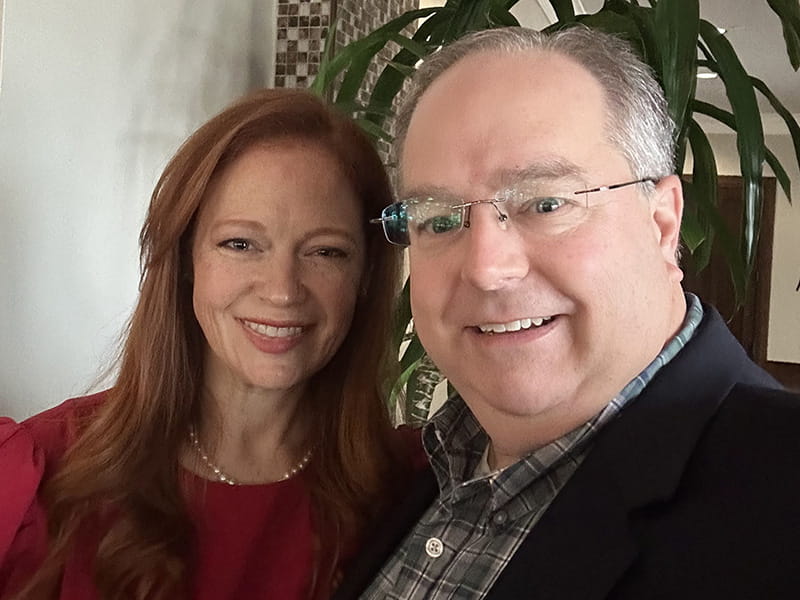
He learned CPR thinking he could help a co-worker someday. He saved his wife when her heart stopped.
By Katherine Shaver, American Heart Association News


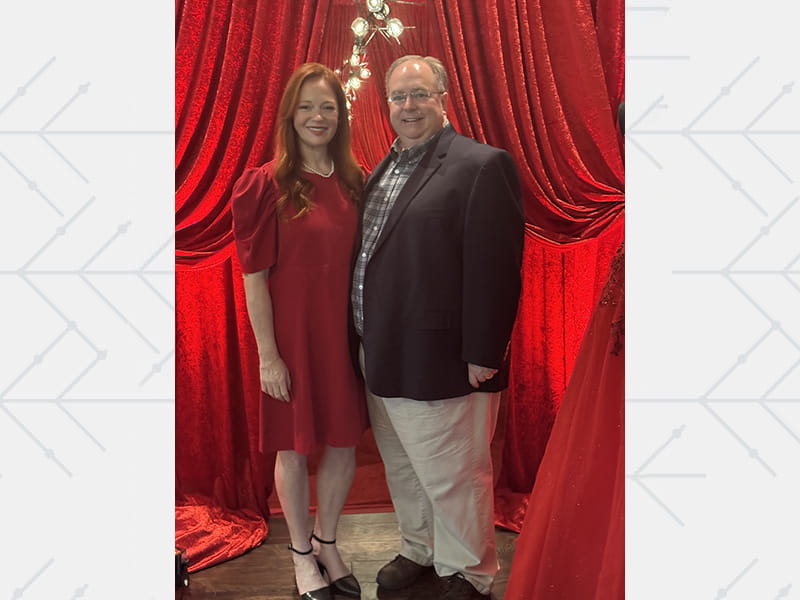
After a long, somewhat typical workday, capped by a relaxing dinner out, new empty-nesters Angie and John Lowe called it a night.
Angie nodded off while watching TV. John turned off the light and fell asleep, too.
Around 1 a.m., John awoke to unusually loud snoring from Angie. She was also making a gurgly, gasping sound.
John tried to shake Angie awake. He couldn’t. Her eyes were open but glassy. Then John noticed her lips turning blue.
He flipped on the light, called 911 and ran around to Angie’s side of the bed.
The 911 dispatcher began instructing him on CPR. John had already started chest compressions.
Eight months earlier, he’d taken a half-day Basic Life Support class, which included CPR, at work. As an IT expert for Baylor University in Waco, Texas, he figured it would be good to know CPR in case a colleague – or maybe a faculty member or student – needed it.
He’d also heard a refresher just a few weeks before on a podcast episode called “How to Save a Life.” The episode included an interview with a woman who had awoken to her husband making unusually loud snoring sounds, called 911 and saved his life with CPR.
John made sure to press at least 2 inches deep into Angie’s chest, as he’d been taught. With the first compression, he heard two cracks and knew he’d probably broken her ribs – something his CPR instructors had warned might happen.
As the dispatcher repeated “1-2-3-4!” through the speakerphone to help John keep a fast, steady rhythm, he kept thinking, “Am I doing this right? Am I not doing this right?”
Feeling himself growing exhausted, he begged the dispatcher to tell the paramedics to hurry. Thanks to a voice-operated smart lock, he’d already unlocked the front door for them.
About six minutes after he’d begun CPR, John looked up to see a Waco firefighter walk through his bedroom door.
“OK,” John thought. “She’s going to be OK.”
Less than a minute later, paramedics arrived. They connected Angie to a defibrillator to try shocking her heart back into rhythm.
The third try triggered a pulse. It was weak and irregular but stable enough to transport her to the hospital.
In the emergency room, doctors and nurses had to shock Angie’s heart twice more. After about an hour, she was moved to intensive care, where doctors cooled her body in hopes of reducing brain damage.
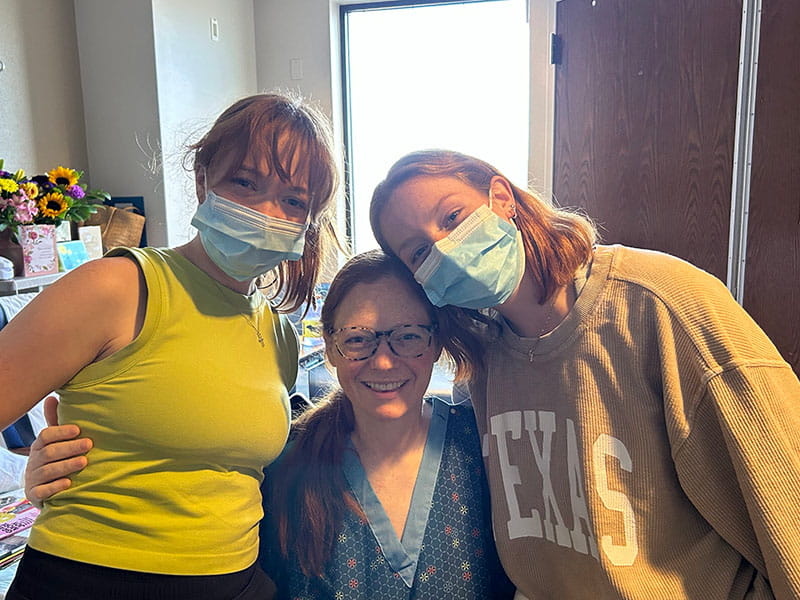
Three days later, Angie began to respond to stimulation as the medical team warmed her body again. A nurse asked her to stick out her tongue. She did, causing John to jump from his chair, burst into happy tears and shout “She did it!”
Doctors had warned John that she might have brain damage. But Angie immediately recognized him. Soon, she was playfully quoting inside jokes.
Angie’s heart stopped in November 2024. Aside from not remembering anything that happened for three days after dozing off while watching TV, she hasn’t detected any neurological deficits.
Angie, who works as a dyslexia expert with elementary school children, had no previous history of heart problems. Her only family history of heart disease was a grandfather who had cardiac arrest in his 70s; he, too, was the beneficiary of life-saving CPR. Doctors told her they didn’t know why her heart stopped but said it might have been related to an electrical abnormality in her heart.
To protect her in case of another glitch, Angie received a pacemaker and defibrillator. She’s also started running, lifting weights and using elliptical and rowing machines.
“I feel like I'm in the best shape right now,” Angie said. “I'm grateful for that.”
About 90% of people who experience cardiac arrest outside a hospital die, according to the American Heart Association. However, immediately performing CPR on someone whose heart has stopped can double or triple their chance of survival by keeping blood flowing until paramedics or other trained medical professionals arrive.
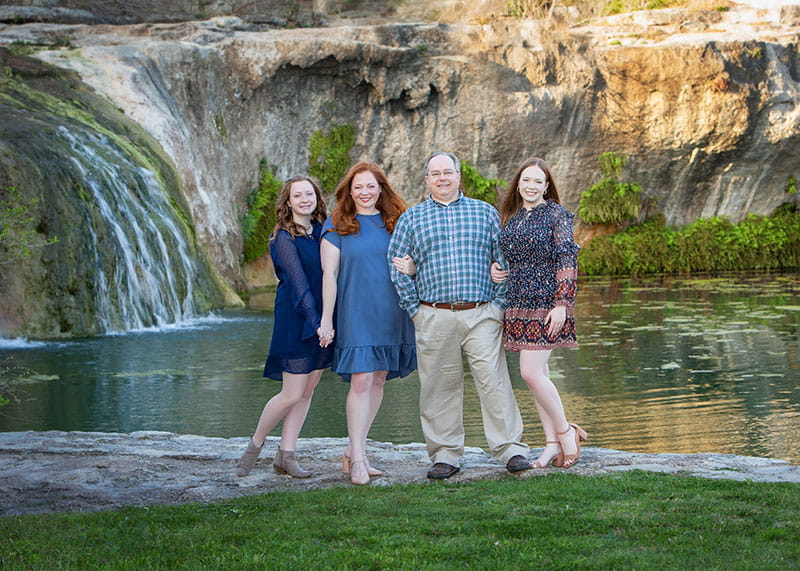
CPR classes remain a family affair for the Lowes. John is certain CPR helped save Angie’s life, especially because he’d been taught how to do the compressions correctly. Their daughters are trained, too. Lillian, 19, learned CPR during her final semester of high school. Emma Kate, 22, took a class last year, months after her dad saved her mom’s life.
In June, Angie and John took a First Aid and CPR class together. While practicing compressions on the manikin, Angie said, she imagined how John must have felt working desperately to save her. She remains grateful he knew what to do.
“That was six minutes,” Angie said of the time until first responders arrived to help her. “A lot can happen in six minutes. Those seconds counted, and there's just no telling what the outcome would have been if he would have just waited.”
Stories From the Heart chronicles the inspiring journeys of heart disease and stroke survivors, caregivers and advocates.
CPR, if performed immediately, greatly increases the chance of survival for someone whose heart stops. Find out how you can learn CPR and other Basic Life Support skills at cpr.heart.org.