Every second counts during cardiac arrest
Anyone can learn the steps to save a life — no certification required. Learn how.
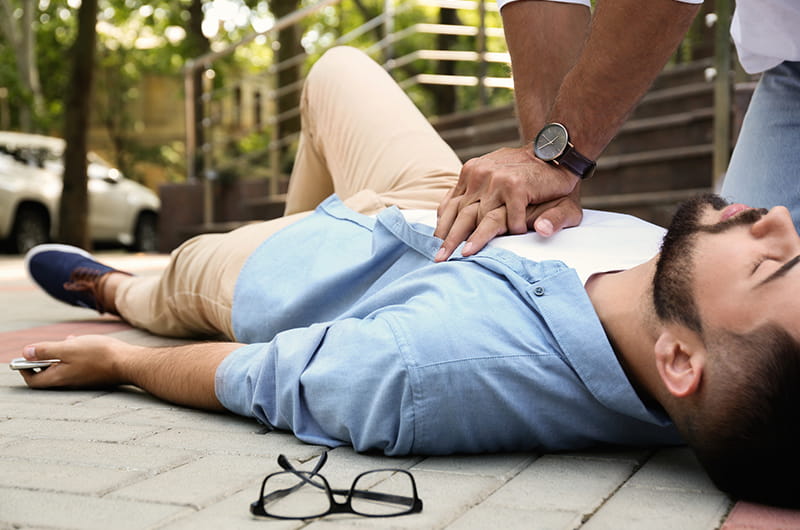
When someone’s heart stops beating, every second counts. And when that person is not in a hospital setting — instead at home, work, school or in the community — they are relying on the heroism of whoever is closest to help.
During American Heart Month, the American Heart Association reminds us that anyone can be a first responder, no medical training required. Being prepared is especially important in case of cardiac arrest. Each year, more than 350,000 cardiac arrests happen outside of the hospital in the U.S. and only 10% of those people survive.
In the event that someone near you has cardiac arrest — signaled by a sudden loss of responsiveness and no breathing or only gasping for air — there are two important steps to take right away. First, call 911 and ask someone nearby to find an automated external defibrillator, or AED. Second, begin CPR to restart the heart. CPR can double or triple the chance of survival.
“When cardiac arrest happens, there is no blood flowing to the brain or to the other vital organs of the body,” said Dr. Comilla Sasson, a practicing emergency medicine doctor and a health care executive with the American Heart Association. “And so, it becomes very important to be able to pump that blood that has oxygen to those vital organs, including the brain.”
When someone starts CPR, they are manually pushing oxygen-rich blood to the heart, the brain and other important organs. When CPR works, “people are not only surviving the event, but they also have no sustained damage to their brains from that lack of oxygen and blood flow,” Dr. Sasson explained.
CPR should continue until the emergency response team arrives. If an AED is available, use it as soon as you can, then continue CPR until the medical team arrives.
One of the challenges in this chain of survival is getting bystanders to take action. Some people are afraid of making a mistake or injuring the patient, Dr. Sasson said, but those risks are nothing compared to inaction.
“The only thing you can do is help right at this point,” she said. “You are not going to hurt them if they have a couple of broken ribs. You’ve saved their life because you’ve restarted their heart.”
Plus, there are Good Samaritan laws that protect people who offer emergency aid such as CPR.
Taking action is simple, Dr. Sasson said. The steps for Hands-Only CPR are:
- Call 911.
- Push hard and fast in the center of the chest at 100-120 beats per minute.
- Keep compressions at least 2 inches deep for adults.
- Keep going until a health care professional takes over.
You can take steps today to be prepared in case of a cardiac emergency — and to step in as a first responder no matter where you are. Consider:
- Watching a video on Hands-Only CPR at heart.org/nation
- Finding a CPR class at heart.org/nation
- Learning where AEDs are available in your community
Dr. Sasson teaches CPR in her community, and she shared that most people have a lightbulb moment when they realize how simple it is to learn how to save a life.
“It can have a huge impact,” she said. “It doesn’t take a long time to learn, and you don’t need to be certified to do it. Anyone can help.”


