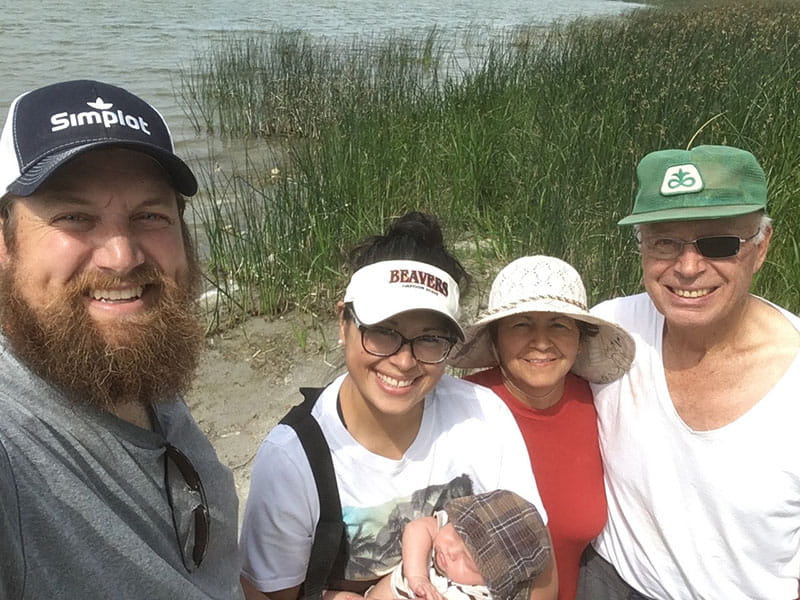
A stroke at 22 changed her future. She built a new one.
By Leslie Barker, American Heart Association News


Everything was falling into place for Marcella Prokop.
After earning a journalism degree, she interned at NBC News in Washington, D.C. Now, having spent her 22nd birthday and Christmas with her family in Nebraska, she was gearing up to move to her own apartment in Sioux Falls, South Dakota, where she had gone to college. She dreamed of working in New York City someday and seeing her byline in Rolling Stone magazine.
“I was on top of the world,” Marcella said.
For at least a few hours, though, she was entirely focused on the present, specifically, an afternoon of ice fishing with her parents.
But when the fish weren’t biting, Marcella went back to the truck to read and take a nap. She woke up with a splitting headache.
Pain medication didn’t help. That didn’t alarm her as much as what happened next: She couldn’t drive the truck through a gate they’d easily navigated just hours earlier. Marcella shifted into reverse, then forward, then reverse and forward again. Finally, her dad told her to get out of the truck and let him do it.
“I think something’s wrong with you,” he said. “I think you’re having a stroke.”
Indeed, Marcella was.
A tangle hidden in her brain
The nearest hospital was an hour away. By the time her family arrived, Marcella was in excruciating pain.
She threw up, then passed out. Tests showed a massive brain bleed. She needed more care than this hospital could provide, so she was flown by helicopter – a seemingly endless 1½-hour ride – to a hospital in Casper, Wyoming.
Further testing showed she had an arteriovenous malformation, a tangle of blood vessels in her brain that created irregular connections between arteries and veins. The AVM had ruptured.
Surgeons removed blood and brain tissue from the damaged area, then sectioned it off. Marcella was put into a medically induced coma to allow her brain to heal and the swelling to subside.
But there was no way of knowing how much damage the stroke had caused. That wonderful future awaiting her – was any of it still possible?
After she regained consciousness, Marcella had to relearn how to walk and perform other basic daily activities. Following her discharge from the hospital, she moved in with her parents. Three times a week, her mom drove her an hour each way to work with a speech therapist.
Marcella’s short-term memory all but disappeared. She became frustrated and angry and sad. She also feared another AVM rupture, even though doctors told her it was highly unlikely.
“I felt like I was reduced to nothing,” Marcella said.
The long way back after a stroke
Ever determined, though, she improved enough to return to Sioux Falls and moved in with a former classmate. Kristen Kueter became more than a roommate: She was Marcella’s chauffeur, confidante, cheerleader and more.
“I tried to be sensitive to what she needed,” Kristen said, recalling how Marcella often fumbled with her fingers, as if trying to get them to work. Her depth perception was off, especially at night. Even so, Marcella was still Marcella – resilient, bright, ever future-focused.
“Most of the time I could hardly keep up with her,” Kristen said. “I was struggling with a breakup at the time and going through my own issues, but they were nothing compared to what she was going through.”
A year later, Marcella moved to Chicago. Then seizures threw her another setback. Medication and attention to her seizure triggers kept them at bay, but the seizures contributed to her doubts about whether she could ever become a journalist. After freelancing for community newspapers, she made the agonizing decision that she could not pursue the career she loved.
“I felt lost once again,” she said.
She worked at a new age bookstore in Chicago. Philosophies she absorbed from visiting authors prompted her to visit Thailand and delve into them more deeply.
“Through Buddhism,” Marcella said, “I knew for the first time I was going to have to let go of my old dreams and forge new ones.”

Writing a new future
Marcella moved back to Sioux Falls. She married Sean McFarland, whom she had known in college and became reacquainted with upon her return. She also started working as a creative writing instructor while earning her master’s degree.
“I still wanted to be involved in storytelling, hearing other people’s stories and helping tell them,” she said. “Telling the story of my stroke was helping me heal; it gave me a sense of control over my life.”
Marcella’s Colombian heritage through her mother is another important part of the story she tells, especially during Hispanic Heritage Month. Cardiovascular disease is the leading cause of death among Hispanic and Latino adults in the United States, according to a recent American Heart Association scientific statement. “Latin/Hispanic people may not always have access to the care needed to prevent stroke and other cardiovascular disease and to get the rehab necessary to recover as fully as they could,” she said.
Now 44, Marcella and Sean live on an apple orchard near Sioux Falls with their 8-year-old son, Cedar. Her vision is still slightly impaired, but she can drive. If Cedar’s shoelaces get into a crazy knot, she might not be able to figure out how to untie it.
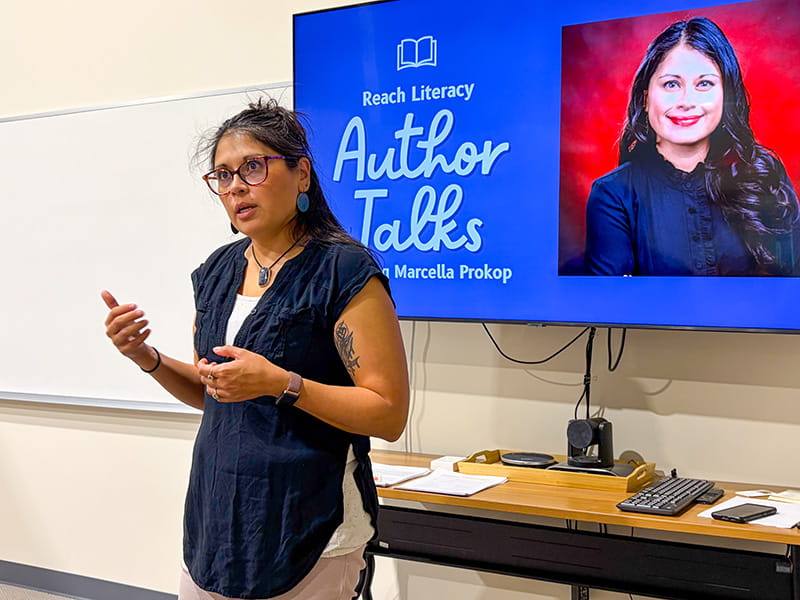
She works as director of access and workforce opportunity at a technical college. Writing, though, remains central to who she is: She has published a book of poetry, is writing a memoir of life after her stroke, and is working on a Ph.D. focused on the positive effects of writing, especially when people have gone through life-altering experiences such as hers.
“I had no idea there would be a happy ending, but there has definitely been one,” she said. “I get to use my story, not just for my healing, but for others to recognize there can be life after stroke.”
Sharing her experience helped Marcella Prokop reclaim her story and connect it to the lives of others. Stroke survivors and caregivers can find that same sense of connection through the American Heart Association’s free Support Network, where members share their experiences and offer encouragement and hope.
During Hispanic Heritage Month, explore the Association’s resources, stories and community support for Hispanic and Latino families.
Stories From the Heart chronicles the inspiring journeys of heart disease and stroke survivors, caregivers and advocates.