She saved her husband’s life with CPR. Now the former journalists have a new assignment.
By Jaime Aron, American Heart Association News


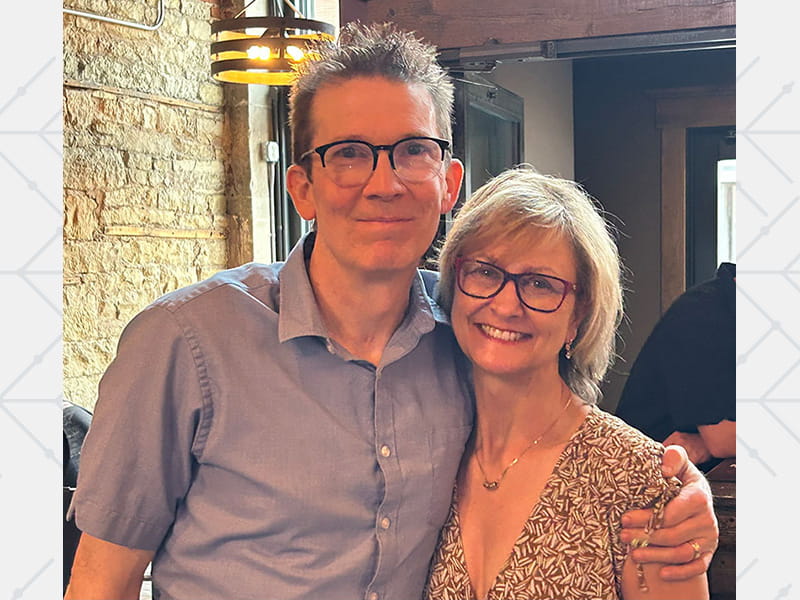
It’s a heck of a story: A wife saves her husband’s life using Hands-Only CPR she’d recently learned at a course she reluctantly took.
Back when they worked together in TV news, Kris Patrow and Dave Ogle would’ve pursued telling that tale.
Only this time, they lived it.
Seven years later, they’ve self-published a book about their challenges, setbacks and triumphs. Many cardiac arrest survivors have done that. Kris and Dave are taking the added step of turning the book’s release into “their next assignment.”
Turning their cardiac arrest ordeal into a mission
October is National Sudden Cardiac Arrest Awareness Month. Kris and Dave are holding events where people hear their story and are encouraged to learn Hands-Only CPR and how to use an automated external defibrillator, or AED.
Kris and Dave have dubbed the gatherings “First Link” events, a nod to the chain of survival.
Dates are set in Kris’ hometown of Chippewa Falls, Wisconsin, and in Rochester, Minnesota, where they both used to work. More are in the works.
“We have a new purpose,” Dave said. “We’re trying to save lives and save hope.”
Saving lives has a clear meaning. Saving hope, Kris said, means showing people that they, too, can overcome “the enormity of the obstacles we faced.”
Obstacles such as:
“We initially wanted to share our story because there were so many things we learned along the way that we wish we’d known,” Kris said. “You never anticipate a crisis. But maybe this book will help some other family be more prepared.”
At first, partners in storytelling
Their tale begins as a workplace romance.
Dave was a news photographer at the Twin Cities ABC affiliate when Kris was hired as a reporter in 1998. They became such a great team that they married in 2001.
“One of the things that made me fall in love with Dave is how we clicked as partners in storytelling,” Kris said. “We'd collaborate on some twists of phrases and compelling video that would make the story even more memorable. It was like magic to me.”
By late 2018, Dave was a freelancer and Kris was 10 years into working in the public relations industry.
Almost every year, Kris’ company offered CPR training. She always skipped it because the sessions were after work. She planned to skip this one, too. The day before the class, an administrator told Kris a spot had opened and asked if she’d take it. Begrudgingly, she agreed.
“It wasn't laborious like I thought it would be,” Kris said. “It was actually engaging. And easy to learn.”
The night Dave’s heart stopped
On July 7, 2019, Kris and Dave made a seven-hour drive back to their home in Woodbury, Minnesota. Wanting to unwind before bed, they sat on the sofa to watch the latest episode of “Yellowstone.”
Within minutes, Kris heard a strange raspy sound. She turned toward Dave. His head was tilted back, his eyes and mouth open. She couldn’t rouse him.
He wasn’t breathing.
Kris knew it was cardiac arrest. Dave’s heart had stopped. She also knew what to do: call 911, then start Hands-Only CPR. By pushing hard and fast in the center of his chest, she helped keep oxygen-rich blood flowing to his brain and other vital organs.
Help arrived about 10 minutes later. Paramedics used a defibrillator to restore a stable rhythm. It took seven shocks. Between each shock, they continued CPR.
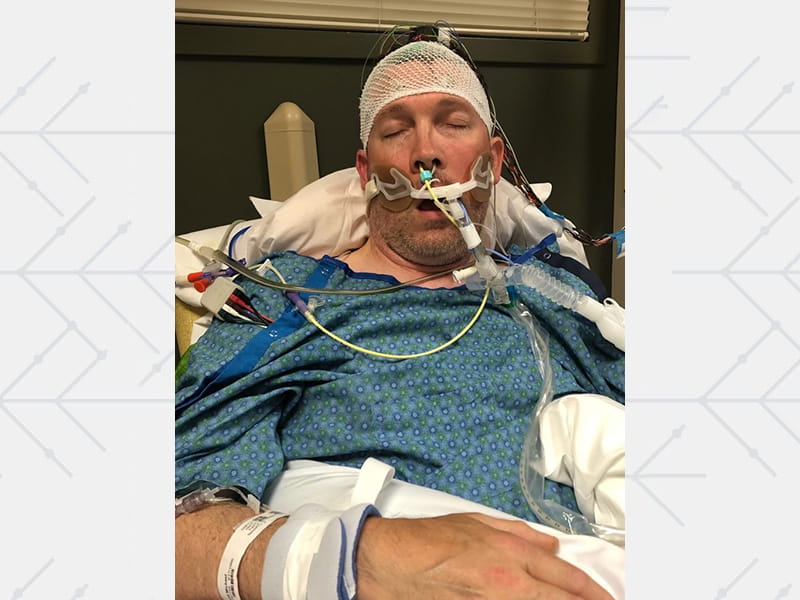
At the hospital, doctors put Dave into a coma to help his body and brain heal.
As days turned into weeks, an unanswerable question loomed: When Dave awoke, would he still be Dave?
Had the lack of oxygen damaged his brain? If so, how much? And would it be temporary or permanent?
After cardiac arrest, an uncertain recovery
Early indications were grim.
A doctor gave Kris three likely outcomes. Even the best-case scenario required round-the-clock care.
“I would be happy to be proven wrong,” the doctor told Kris.
Everyone Kris spoke to reminded her that Dave wouldn’t even have a second chance at life if it weren’t for her performing CPR. Still, she wrestled with two questions:
Did I do it wrong?
Did I not do enough?
Her only solace was that they’d done end-of-life planning. Dave’s advance directive, living will and medical power of attorney meant that Kris “had his words of what he wanted me to do if he ever couldn't advocate for himself.”
When Dave suddenly regained consciousness, he immediately asked the nurse, “Where’s my wife?”
The nurse called Kris. Merely knowing Dave was asking for her felt like a miracle.
Doctors never determined why Dave’s heart stopped. To keep it from happening again, he received an implantable cardioverter defibrillator, or ICD. The device can deliver an electric shock if it detects a dangerous heart rhythm.
Home again but far from normal
Once home, Dave began the challenge of figuring out what he could still do.
For Kris, the challenge was letting him figure it out.
An early example came when Dave wanted to sort his many pills into a large weekly organizer. Kris set everything on the coffee table, then left him alone. When she peeked in 10 minutes later, “there were pills of every shape and size all over the place.” He eventually admitted, “I’m over my head.” Setting aside how painful it was to see him so vulnerable, Kris coached him to slowly put each pill into the correct slot.
At dinner, Dave might pour dressing on his salad, put the bottle down, then immediately pick up the bottle and do it again, not realizing that he’d already done it.
“I'm watching him struggle, proud that he's working so hard, but then also thinking, ‘I can't leave him alone in the kitchen. He might burn the house down,’” Kris said. “That was really hard. And it lasted a year or two after he came home.”
Relearning words after a brain injury
With help from therapists and YouTube videos, and lots of persistence, Dave relearned most of what he’d lost – even “hammock,” “manhole” and other basic but uncommon words.
“I knew they were still there,” he said. “I just had to unlock them.”
For years, Dave pretended to be part of conversations.
He’d nod instead of admitting he couldn’t follow what was said. Sometimes he couldn’t find the words to respond. Before overcoming his slurred speech, he was embarrassed to talk because he feared people would think he was drunk.
“Not that I was the most eloquent person in the world before,” Dave said, “but all that was frustrating.”

Tapping back into his creativity
Resuming his career proved too difficult. He still had all his gear, though.
One day, he picked up a camera, stepped outside and started taking pictures.
Now he spends as much time as he can capturing images of birds and bugs, rivers and streams.

“Taking up photography again has changed everything – my happiness, my outlook, my mood,” he said. “I think I’ve been nicer to be around.”
Said Kris: “Now that he has that creative outlet back, he’s so much more like he was before the cardiac arrest.”
Writing the story only they can tell
Kris considers herself “a writer by wiring.”
Early on, she posted updates online. Eventually, she realized she had the makings of a book.
She also wanted Dave to tell his side. This created another narrative arc: a guy who lost most of his vocabulary writing half the book.

“It’s so impressive and compelling,” she said. “I don't know how he did it. It really is a gift.”
Kris wrote the first half, a day-by-day account revealing ugly facts and raw emotions.
It’s a little too ugly and raw for Dave. He’s only “kind of glanced over her part once,” he said.
“I really don’t want to think of exactly what she was going through.”
Their next assignment: Encouraging others
Dave knows he’ll learn more about Kris’ chapters through their upcoming events.
He’s OK with that if it helps spread their message of saving lives and saving hope.

The public speaking is good for his recovery, too. All went well at the first event, which was held in Minneapolis on the seven-year anniversary of his cardiac arrest.
“My delivery isn’t perfect,” he said. “I don’t think anyone cared, and I didn’t care at all.
“I had some good stories that I wanted to tell and I told them. Not flawlessly, but in the way I wanted to. And they hit home with people. That made me really happy.”
Of the 60 attendees at their initial event in Minneapolis, 20 later went through CPR and AED training.
Another sign of success came after an interview with their local NPR station. It wasn’t from listeners. It came from the newsroom itself, much like the TV newsroom where Kris and Dave met.
“Within one day,” Kris said, “the entire newsroom organized its own CPR training.”
Most cardiac arrests happen at home, so if you are ever needed to give CPR, it will likely be for someone you love. Join the American Heart Association's Nation of Lifesavers and learn CPR so – like Kris – you’ll have the skills and confidence needed when it matters most.
Stories From the Heart chronicles the inspiring journeys of heart disease and stroke survivors, caregivers and advocates.