A cardiologist’s solo golf round ends in cardiac arrest – a nearby colleague saves his life with CPR
By Deborah Lynn Blumberg, American Heart Association News


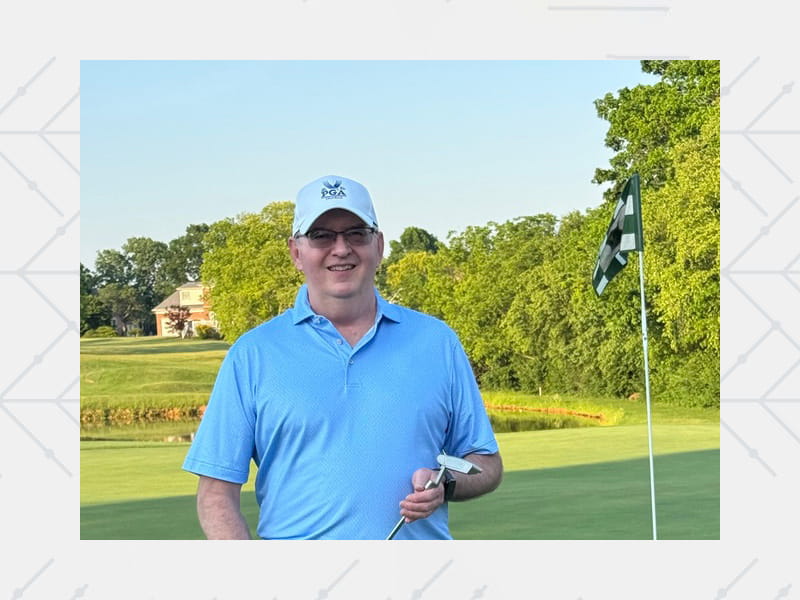
On Memorial Day 2025, after several months of golf lessons, Dr. Jesse Adams was finally ready to see how he would do on his local course in Louisville, Kentucky.
Jesse didn’t want to subject anyone to what he suspected might be a long, slow outing. So he booked an afternoon tee time for one. With rain in the forecast, he figured that might work to his advantage, too – the fewer witnesses, the better.
When Jesse arrived, the sun was out and the skies were clear. The course was packed.
The foursome ahead of him was thankfully slow, allowing him to take his time setting up his stance and perfecting his grip before every shot. Through seven holes, his scorecard was filled with bogeys and double bogeys (one or two strokes over par). Jesse was thrilled that his lessons were paying off.
The group behind Jesse included Alexis Haller, who plays golf for Randolph-Macon College in Ashland, Virginia, and her father, Dr. Dale Haller, an intensive care pulmonologist.
Actually, Alexis was the only one playing. Dale was there to spend the afternoon with Alexis and to babysit her 3-month-old chocolate labradoodle, Oakley.
Alexis and Dale sometimes ended up on the same hole as Jesse – such as starting a hole on the tee while he was putting to finish a hole. They were never close enough to interact.
Things were playing out as usual on hole No. 8. Jesse putted out while the Hallers were farther back in the fairway. Dale was looking at his phone when Alexis screamed, “Dad! That guy up there fell!”
“He’s not moving,” Alexis said. She jumped into the golf cart and floored it.
As they got closer, Dale hopped out and started running to the fallen golfer, who was face-down. Dale rolled the man over and discovered it was Jesse, his longtime friend and colleague at Baptist Health Louisville.
Dale realized Jesse was unresponsive and not breathing. So Alexis called 911 and Dale started Hands-Only CPR.
Dale performed chest compressions for 12 minutes. Once emergency responders arrived and took over, they determined that Jesse was experiencing ventricular fibrillation. This occurs when the heart’s lower chambers quiver chaotically instead of pumping in a coordinated rhythm. It causes the heart to stop circulating blood effectively, meaning the brain and other organs are cut off from oxygen.
The emergency medical technicians used a defibrillator to restart Jesse’s heart. Finally, about 28 minutes after Jesse collapsed, he had a stable pulse.
He woke up in the ambulance to the sound of a responder’s voice. At 65, and after 30 years of treating patients with heart problems, Jesse now found himself the heart patient.
“We’ve got you, Jess,” the EMT said. “You’re going to be OK.”
In the hospital, Jesse’s only issue was chest pain from broken ribs – a small price to pay for not only having his life saved, but for receiving such thorough compressions that he had no apparent brain damage despite having gone so long without a heartbeat.
The following day, doctors implanted a defibrillator in his chest, a small device that monitors his heart and can shock it back into rhythm if needed.
When Dale checked on him the next day, Jesse thanked his friend for saving his life, then asked a critical question: “Did I make my putt?”
As it turns out, once Jesse was headed to the hospital, Dale and Alexis gathered his clubs and went looking for his ball. So Dale knew the answer.
“Good news,” Dale said. “The ball was in the cup.”
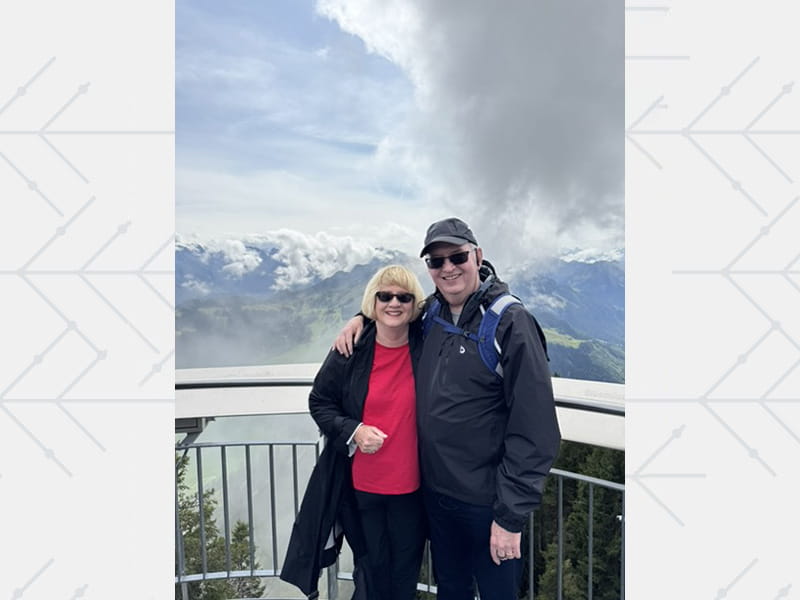
Jesse spent a week in intensive care and had a battery of tests, some of which he himself helped standardize through his research. But doctors didn’t find heart blockage or any other conclusive explanation for what happened.
A cardiologist, Jesse had always followed the same advice he gave his patients: exercise regularly and eat a heart-healthy diet. He played competitive tennis, before switching to walking, hiking, biking, weight training and – most recently – golf. Although he was slightly overweight, he tried being diligent about his health because of a family history of heart disease.
A month after his cardiac arrest, and after he’d begun cardiac rehab, Jesse returned to work. His story highlights the critical importance of learning CPR, he said.
“I thought I was doing absolutely everything I could to not have something like this happen,” said Jesse, a past president of the American Heart Association’s Kentuckiana Metro chapter.
“Despite that, I had a cardiac arrest. The only thing that saved me was, just by dumb luck, I had somebody within eyesight who knew how to do CPR.”
Since getting a second chance at life, Jesse has welcomed his first grandchild and danced at his son’s wedding. Now, he’s back in the gym. And in April he resumed hitting golf balls on the driving range. Initially, he was anxious when he tried to go to the driving range, but now he’s working on his swing so he get back on the course.
“I’m rarely anxious,” he said. “It was a really, really strange feeling for me.”
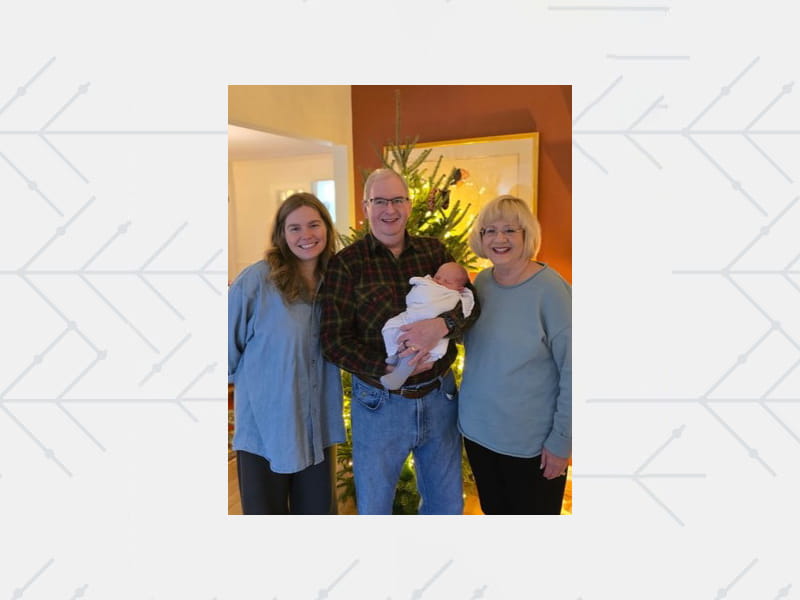
When the time comes, plenty of friends, including his cardiologist, have volunteered to join him. Jesse also hopes to play a round of golf with his daughter, Lauren, and son-in-law, Eric, who originally encouraged him to take the lessons.
Soon, Jesse will have more time to golf as he plans to retire later this year.
Until then, his message to patients remains the same as always, just harder won.
“Stay physically active and try to eat healthy,” Jesse said. “No one’s perfect. But when something like this happens, it helps you come through it and get back faster.”
Dr. Jesse Adams is one of about 350,000 cardiac arrests that occur outside the hospital each year in the U.S. – with a survival rate around 10%. CPR, if performed immediately, greatly increases the chance of survival – like it did for Jesse. During CPR and AED Awareness Week, see where you can learn CPR and other Basic Life Support skills. Or take a few moments to learn Hands Only CPR with this video.
Stories From the Heart chronicles the inspiring journeys of heart disease and stroke survivors, caregivers and advocates.