EMT instructor saved by his students using CPR
By Deborah Lynn Blumberg, American Heart Association News


This story was originally published on June 5, 2026.
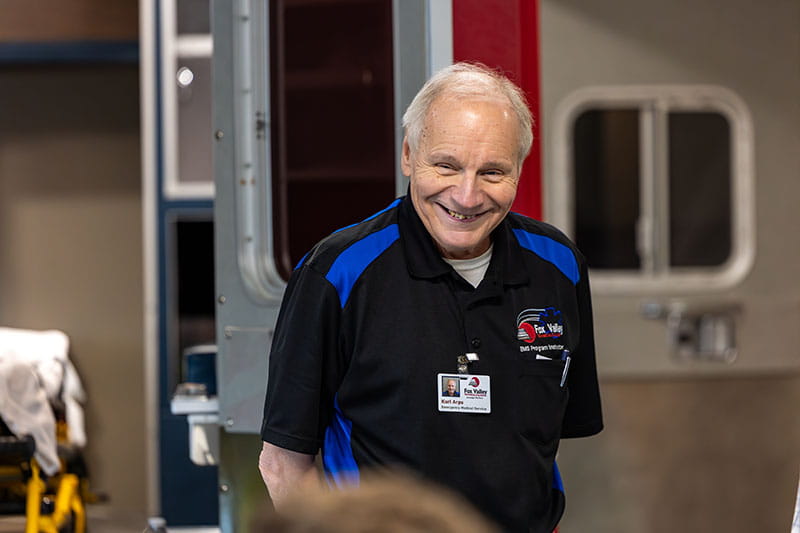
An EMT instructor in Wisconsin went into real cardiac arrest during a classroom demonstration. His students quickly performed CPR and used an AED, saving his life before paramedics arrived. This real-life rescue highlights the importance of CPR training and rapid response.
A routine EMT class turns into a real emergency
The EMT Fundamentals class at Fox Valley Technical College was winding down when lead instructor Traci Blondeau asked fellow instructor Karl Arps to act out a scenario for the students to practice.
“I’ll do a chest pain one,” Karl said. So he feigned a heart event, clutching his chest.
A few students helped Karl onto a cot, then slid the cot into the back of a mock ambulance.
While being jostled, Karl suddenly felt a little dizzy. He’d felt it before while blowing snow outside his home in Hortonville, Wisconsin. At 72, he figured a tiny dizzy spell once in a while was typical.
As part of the exercise, students asked Karl to describe his symptoms.
“Chest pain radiating down my left arm,” he said, “and I’m perspiring.”
Recognizing cardiac arrest in real time
Then Karl’s face tightened into a grimace. He made a loud snoring sound and gasped for air.
It was a convincing performance, so convincing that Sofie Devalk asked her classmates, “Is he acting?”
Traci was nearby and walked over. She immediately recognized the signs of cardiac arrest.
Student Logan Lehrer, a firefighter, called 911. Several other students placed Karl on the ground. Then Traci started CPR while another student grabbed an automated external defibrillator.
“Karl! Karl! Wake up! Wake up!” Traci called out.
CPR and using an AED save his life
For the next several minutes, Traci, two fellow instructors and students took turns administering CPR, alternating every two minutes. They paused to see if Karl needed a shock from the AED. He did – twice. The second shock helped restore a heartbeat.
Before paramedics even arrived, Karl was conscious and alert.
What caused the cardiac arrest?
In the emergency room, he went to the cardiac catheterization lab for a procedure that allowed doctors to examine his heart from the inside. They found 90% blockages in three of his four major heart arteries. Karl learned a heart attack triggered his cardiac arrest.
During a cardiac catheterization, doctors often can insert stents into an artery to open blockages, restoring normal blood flow. Sometimes the blockages are so severe that blood flow must be rerouted around the problem, a procedure called a bypass operation. Karl’s three severely clogged arteries meant he needed a triple bypass.
Because Karl had been given blood thinners during the rescue effort, doctors had to wait for the medicine to clear his system before operating safely. He received a temporary heart pump to help his damaged heart during the four-day wait. The surgery went as hoped.
Karl has been an emergency medical technician for nearly 30 years. He’s taught at Fox Valley for 19 years, training hundreds of firefighters, police officers and nursing students.
In addition to being an EMT and an instructor, Karl worked part time as a security guard for the minor league baseball club in town. He also played golf. He equated being active with being healthy, even if he also knew his diet – which was heavy on cheese, hamburgers and hot dogs – could use improvement.
Karl also knew he had a family history of heart disease: His mother and older brother had heart attacks. He thought he was staying on top of things by taking medicine to control his blood pressure and cholesterol.
Three days after the triple bypass, Karl went home.
He started outpatient cardiac rehab, quickly building up to 20 minutes on the bike and 20 on the treadmill. After a few weeks, he felt strong enough to drive to school for the first time since his cardiac arrest.
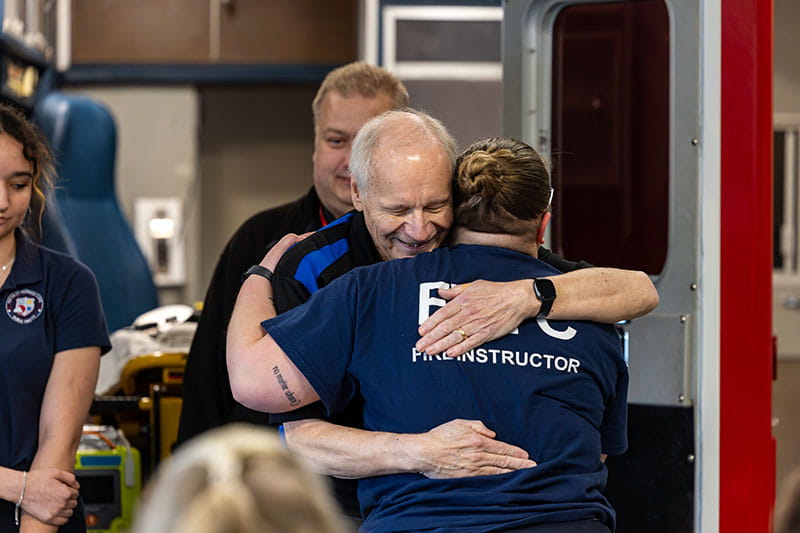
As he walked into class, teary, a round of applause and smiling faces greeted him.
A powerful lesson for EMT students
Before Karl left, a student approached him. The student told Karl that witnessing the cardiac arrest and rescue effort made him consider dropping the class.
“But when I saw you walk back into that classroom,” the student continued, “I knew I wanted to finish the course and make a difference in someone’s life.”
While the class was filled with students who are trained helpers, Traci was still awed by how they responded when a pretend emergency became a real one.
“Most people, the first time they run into something like this happening in the field, they’re nervous and they fumble,” she said. “But the students that day did everything so gracefully.”
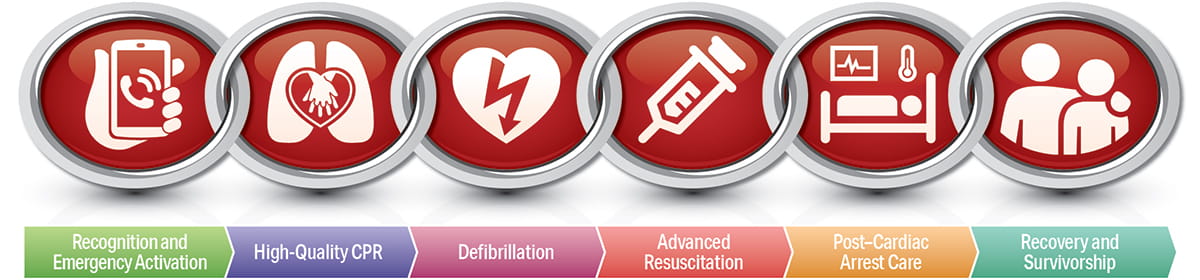
Students followed the exact protocol Karl had taught them in class, progressing through several links in the Chain of Survival. It includes six critical steps to maximize survival and function following cardiac arrest: recognition and emergency activation, high-quality CPR, defibrillation, advanced resuscitation, post-cardiac arrest care, and recovery and survivorship. When performed in rapid succession, they give someone in cardiac arrest the best chance of survival.
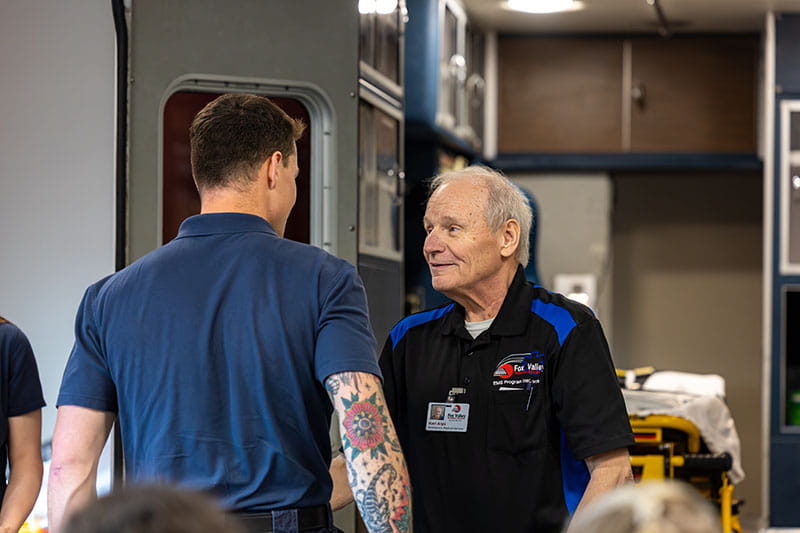
Three months since that fateful day, Karl is easing back into his three jobs. “I like to stay active,” he said. “I’m happy to be here, and I’m ready to get back to work.”
He’s worked security at a few baseball games this season, and he helped administer a final exam for the EMT students.
Four of the students who were in the classroom when Karl’s heart stopped are becoming full-time paramedics. Others will return to firefighting better prepared.
In June, another EMT Fundamentals class begins.
“And I’m going back,” Karl said. “There’s no doubt.”
Karl continues to urge everyone he meets to learn CPR. “Please, please, please take a course,” he said. “You never know when a heart event could happen. The experience you get in class versus being told how to do it — you just can't measure that.”
Learn CPR and save a life
Karl is one of about 350,000 cardiac arrests that occur outside the hospital each year in the U.S., with a survival rate around 10%. Immediate CPR can double or triple the chances of survival – as it did for Karl. During CPR and AED Awareness Week, why not join the American Heart Association’s Nation of Lifesavers and learn CPR today — at home, on your own schedule?
Stories From the Heart chronicles the inspiring journeys of heart disease and stroke survivors, caregivers and advocates.