Anxiety in men can appear in unexpected ways
By American Heart Association


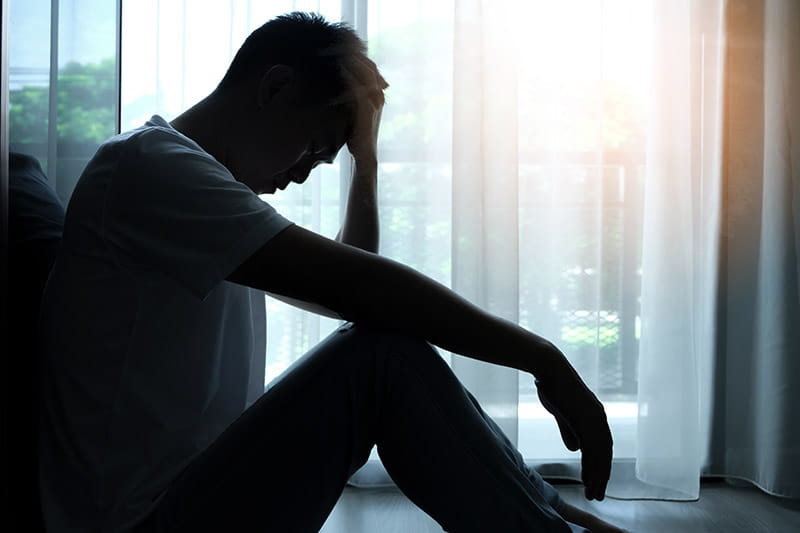
Anxiety is a universal feeling, something anyone can experience at any age.
But anxiety is different for adult men, psychologists who study men’s mental health say, both in how it appears and in the challenges men can face in addressing it.
According to the National Institute of Mental Health, anxiety is part of normal life. At the physical level, it involves the “fight or flight” stress response that helps the body respond to an imminent threat. But for people with what is called generalized anxiety disorder, that feeling never goes away, even when the cause of the stress recedes.
“Anxiety is fear and worry,” said Dr. Ryon McDermott, a professor of clinical and counseling psychology at the University of South Alabama in Mobile. It is also closely related to depression, he said.
“From a really simplistic standpoint, you could think of anxiety as living too much in the future, and depression as living too much in the past,” he said.
Differing responses to anxiety
Anxiety is more than a matter of mental health. In studies published in the Journal of the American Heart Association, it has been linked to cardiovascular health problems in young adults and increased risk of death in older people with heart disease.
Symptoms range from excessive worry about everyday things and being easily startled to sleep issues, headaches, muscle aches or twitching. But it can look different in men and women, said Dr. Joel Wong, a provost professor of counseling psychology at Indiana University Bloomington.
Girls and women are more likely to respond to anxiety with what Wong called “internalizing” behaviors, such as avoiding other people or hand-wringing and ruminating about what makes them anxious.
Men and boys, meanwhile, tend to cope with anxiety through “externalizing” behaviors. “Men tend to become very angry and irritable,” McDermott said. They might abuse alcohol or become physically aggressive.
About a third of people in the U.S. will experience some form of anxiety at some point in their lives, studies have shown. Many researchers report that anxiety, as measured on standardized screening tests, is more common in women.
But standard evaluations can miss signs of anxiety in men, McDermott said. Men might not discuss anxiety in clinical interviews as much, he said, but “if you dig deeper, it’s there,” expressed in terms such as “I just haven’t been myself lately. I’ve been really worried about things at work. My wife says I get irritable all the time, and I snap at her.”

Masculinity: Cultural or biological?
Whether the source of sex-related differences in anxiety is primarily cultural or biological is debated, said McDermott, who acknowledged being on the cultural side of that discussion.
For many men, perceptions of masculinity play a key role in their anxiety, said McDermott, who was part of the committee that wrote the American Psychological Association’s first Guidelines for Psychological Practice With Boys and Men(link opens in new window) in 2018. “We find that the guys who buy into the really rigid stereotypes about men – like the idea that men can’t cry or men have to be dominant and tough and stoic – those guys really have the worst problems over time. It’s because they’ve cut off a big number of coping behaviors that could be really helpful.”
Wong, who with McDermott is leading the committee updating the APA guidelines, said efforts to talk about masculinity’s role in anxiety and its treatment were not, as some critics have suggested, an attempt to paint all aspects of traditional manhood as harmful. Some researchers have said that men might draw strength from seeing a mental health issue as a heroic challenge to overcome, for example.
But research also shows that narrow views of what it means to be a man tend to generate anxiety, Wong said, “and the anxiety often relates to that sense of inadequacy between the man that you think you’re supposed to be versus the man that you think you are.”
A perceived threat to manliness might fuel not only anxiety in men, Wong said, but also the willingness to engage in risky behavior to help re-establish their social standing. And, he said, some evidence shows that the more men conform to restrictive notions of what it means to be a man, the poorer their attitudes toward seeking mental health treatments – possibly because seeking help could be seen as a sign of weakness.
“Targeting this belief is a very critical path toward helping men, particularly men with anxiety,” Wong said.
The idea is to give men the liberty to make healthy choices. “There are all these societal messages that tell you that men should be this and should be that,” Wong said. “That’s sort of like taking away your freedom.”

Managing anxiety
Wong said anxiety can be treated in many ways – some of which could be adjusted to help men better.
A doctor or psychiatrist can recommend anti-anxiety medications, he said. And different forms of therapy can teach skills that help people look at their thoughts differently, Wong said. Some types “focus on learning to accept your emotions so that they don’t become as scary to you as they once were.”
But while Wong calls himself a big fan of therapy, “I understand that therapy is not for everyone,” he said. Some men might benefit from just talking to a friend. Others might be more open to attending an online workshop, as opposed to therapy. “It’s viewed as a bit less threatening if it’s a workshop on managing your anger.”
On the professional side, he thinks more could be done to change the way men perceive therapy. Describing it as “coaching” could help men who are more comfortable with the language of sports. “You want to improve your game in sports, you go to a coach, you get some skills, you get some feedback about what you can do better, and you become a better athlete, right? Why would you not want to do that for your well-being and your overall emotional life?”
Such skills can give men tools for managing anxiety, McDermott said. Deep-breathing exercises, for example, can “instantly activate the opposite of the fight-or-flight response.”
Helping men understand anxiety can help them feel “I am in control – I’m in the driver’s seat of this thing,” McDermott said.
Wong said men’s anxiety, and the attitudes that prevent some men from getting help, need to be spoken of more directly to help men escape what he calls “an emotional prison – because it’s really constraining men.”
Anxiety and other mental health issues can affect your heart health. The American Heart Association’s Support Network is a free and trusted online community where people can connect with others whose lives have been touched by heart conditions, stroke, mental health challenges and more. The Healthy for Good newsletter offers practical tips, recipes, and real-life inspiration to help you build healthy habits and boost your mental well-being.