What cardiac arrest looks like and why early action matters
By Michael Merschel, American Heart Association News


What to Know
- Cardiac arrest occurs when the heart suddenly stops beating properly, causing a person to collapse, become unresponsive and stop breathing normally.
- Common warning signs of cardiac arrest include sudden collapse, loss of responsiveness, abnormal breathing or gasping.
- Every minute without CPR and defibrillation reduces the chances of survival.
- If you suspect cardiac arrest, call 911, start CPR and have someone get an AED as soon as possible.
This story was originally published on February 9, 2023.
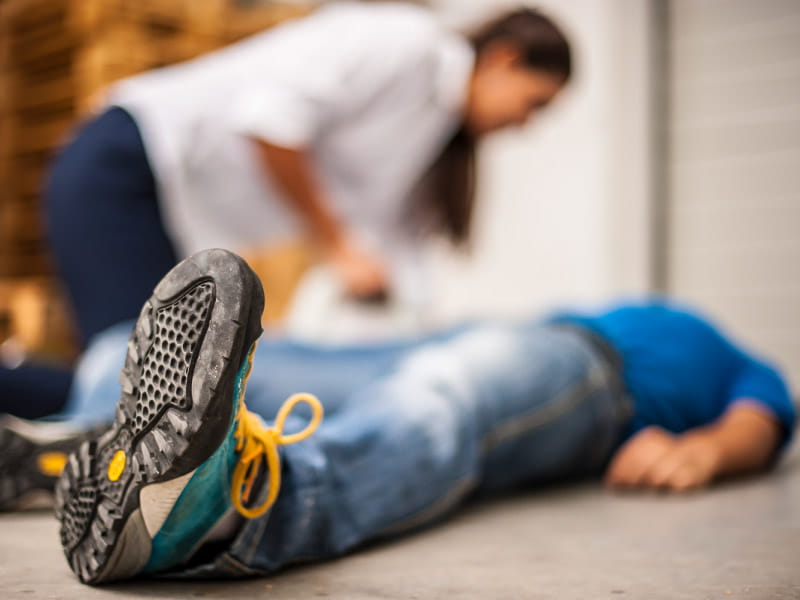
Dr. Anezi Uzendu should not be here to explain what a cardiac arrest looks like. He's alive only because strangers at a gym understood – and acted.
In 2016, Uzendu, then a 25-year-old medical resident, was playing a pickup basketball game at a gym in Birmingham, Alabama. He doesn't recall what happened, but he's told he scored, then collapsed.
"First, they kind of thought I was joking," he said. "But then they realized I wasn't breathing."
He'd just become one of roughly 350,000 U.S. adults annually who have an out-of-hospital cardiac arrest. In most cases, the story – and the patient's life – ends there. Uzendu's did not because of what happened next.
"People at the gym recognized that I was having a cardiac arrest and started CPR," he said. "There was a defibrillator at the gym, and they attached it, and they used it." His heart was shocked twice before emergency workers arrived.
Saving his life took what Uzendu calls "heroic" efforts by those workers and the emergency department where he was taken. Three weeks later, he was discharged. Today, he is an interventional cardiologist finishing up a research fellowship at Saint Luke's Mid America Heart Institute in Kansas City, Missouri.

Bystanders as the first link in the chain of survival
Medical experts talk about the steps that it takes to save someone who has a cardiac arrest outside of a hospital as a "chain of survival." Witnesses, such as those who responded to Uzendu, who can identify the problem are the first link in that chain.
"The most important thing that a bystander can do is to recognize the issue and then act quickly by first calling 911, then doing CPR" and calling for an automated external defibrillator, or AED, said Mary Newman, president and CEO of the Sudden Cardiac Arrest Foundation, which is based in Pittsburgh.
But Newman, a researcher who developed that idea of a chain of survival, said recognition can be tricky, because cardiac arrest doesn't necessarily look like a heart problem in the movies, where someone might dramatically clutch their chest and swoon. Even NFL player Damar Hamlin's wobbly collapse on "Monday Night Football" in January doesn't convey the whole experience.
Cardiac arrest vs. heart attack: What’s the difference?
A major source of confusion is that people often think cardiac arrest is the same as a heart attack. "They're two different things," Newman said. A heart attack is often likened to a plumbing problem, where blood flow to the heart muscle is stopped. Although a heart attack can lead to cardiac arrest, cardiac arrest is an electrical issue, where the heart stops beating properly.
"When you have a heart attack, you're awake, and your heart is beating, and you don't need CPR," Newman said. "You just need to call 911 and get help. But with sudden cardiac arrest, their heart has stopped. And if no one intervenes quickly, they will die."
She corrected herself: "When you're in cardiac arrest, you're actually dead. And the challenge is to bring the person back to life."
What does sudden cardiac arrest look like?
Even among people who know what cardiac arrest is, it can be challenging to figure out. But for anyone who does not have medical training, Uzendu said, it comes down to two questions: "Are they responsive? And are they breathing normally?"
Agonal breathing and other signs of cardiac arrest
Checking responsiveness is as simple as tapping them on the shoulders. But “agonal breathing” may confuse people. Uzendu described that as "strange, intermittent breaths, very short breaths, very shallow breaths. Sometimes they're kind of one large breath, and then nothing for a long time."
Agonal breathing can come in a lot of variations, he said, but at the end of the day, "if you notice their breathing isn't normal or not present at all, that should be a trigger to think this person is having a cardiac arrest."
Sometimes, cardiac arrest also can cause jerking movements as if someone is having a seizure, he said, which also can slow people from responding.
What to do if someone has a cardiac arrest
If you see somebody collapse, don't waste time pondering the possible causes, Uzendu said. During the time that it takes someone to recognize a cardiac arrest, the patient's vital organs are being starved of blood.
If someone collapses and is unresponsive or not breathing normally, follow these cardiac arrest response steps:
- Check for responsiveness. If the person does not respond to touch or voice, they may be in cardiac arrest.
- Call 911 and ask someone to get an automated external defibrillator (AED). If you're alone, call 911 and get an AED if one is available.
- Check for breathing. If the person is not breathing normally or is only gasping, begin CPR.
- Use an AED as soon as possible and follow the device's instructions.
- Continue CPR until the person begins to move or breathe, or emergency responders take over.
"For every minute that someone doesn't receive CPR, and doesn't get an AED to shock them out of an abnormal rhythm, survival drops precipitously," Uzendu said. Having a bystander perform CPR can double or triple the chances of somebody surviving.
Why acting quickly matters
Don't worry about needlessly performing CPR either, Uzendu said. "I'm more concerned about people waffling and saying, 'I don't think this is it' or 'I think this could be something else.'" If you attempt CPR on someone who doesn't need it, they'll quickly stop you, and no harm is probably done, "whereas if you don't start CPR on someone that does need it, it's almost universally fatal."
You can help even if you're not formally trained, Uzendu said, but "if you have the training, and you have the skill set, it's so much easier for you to go in and act," he said. Free American Heart Association videos can provide the basics before you seek out hands-on training.
Who is at risk for cardiac arrest?
Cardiac arrest can strike seemingly healthy people without warning, but sometimes there are symptoms, such as dizziness or fatigue, Newman said.
Uzendu said that a few weeks before his cardiac arrest, he'd passed out playing basketball but ignored it. "I just chalked it up to being dehydrated."
Doctors never determined why he went into cardiac arrest, but he's aware he beat the odds. Only about 40% of people who experience cardiac arrest receive CPR from someone nearby.
"We know that survival from out-of-hospital cardiac arrest is less than 10%." He estimates his own odds of a full recovery were even lower.
"I thank God I survived," Uzendu said. And he would not have done so without the people who recognized what was happening, and acted. That, he said, "shouldn't be something that I get to benefit from, but other people don't."
Feel prepared in the event of a cardiac emergency. Take a CPR course or learn the basics today. Your actions could save a life.
Editor's note: This story was updated on Aug. 26, 2026.
Frequently Asked Questions
Sudden collapse, unresponsiveness and abnormal breathing. If a person is not responding and is not breathing normally, treat it as a cardiac arrest emergency.
No. A heart attack is a circulation problem caused by blocked or disrupted blood flow to the heart. Cardiac arrest is an electrical problem that causes the heart to stop beating properly. A heart attack can sometimes lead to cardiac arrest.
Survival chances drop rapidly when CPR and defibrillation. For every minute a person does not receive CPR and prompt defibrillation when needed, the chances of survival drop sharply.
Agonal breathing may look or sound like strange, intermittent breaths, very shallow breaths, or a single large gasp followed by a long pause. It is not normal breathing and can be a sign of cardiac arrest.
If someone collapses, is unresponsive and is not breathing normally, call 911 and immediately begin Hands-Only CPR. Have someone get an AED as quickly as possible.