Heart attack and cardiac arrest survivor had one goal: Get back and finish the ride
By Diane Daniel, American Heart Association News


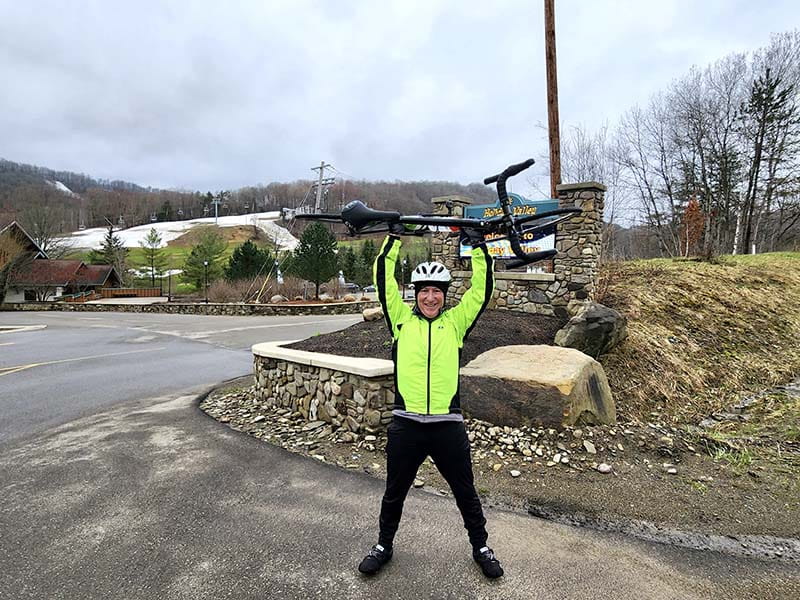
Patrick Raycraft was happy to have a day to himself. As a photojournalist for a daily newspaper, he was always on the go, often lugging heavy equipment.
During a short hike at a park near his home in Hartford, Connecticut, he felt a sharp pain in his chest. “Wow, that was intense,” he thought.
The next day, while putting away groceries, he felt the same pain. This time, he went to the emergency room. Doctors checked him out but found nothing wrong.
A few days later, Patrick had another episode, only worse. It felt like a volcano erupted in his navel, sending lava up to his chest. He returned to the ER. Again, doctors found nothing, dismissing it as possibly acid reflux.
The next morning, Patrick made an appointment with his primary care physician.
During a stress test the next day, a cardiologist realized Patrick needed immediate help. In addition to his chest pain, his left elbow throbbed. He was soon in a hospital, undergoing a cardiac catheterization, a minimally invasive procedure that allows doctors to look inside his heart and make repairs.
Doctors found a 100% blockage in the artery that supplies much of the blood to the left side of the heart. They placed a stent to open the blockage.
Patrick, then 49, “totally freaked out” because he’d considered himself healthy.
A former college football player, Patrick didn’t smoke or drink and watched what he ate. But he would later discover his family had a history of heart disease. While a healthy lifestyle can lower odds and speed recovery, it can’t always prevent a heart attack.
In cardiac rehabilitation, Patrick learned more about diet and exercise. He took courses in mindfulness and meditation and even went on silent retreats.
“I learned how to control my anxiety, and it helped with everything in my life,” he said.
He started swimming and joined a triathlon team. He’d never felt so fit.
That was in 2012.
One day 10 years later, Patrick woke up feeling dizzy. It took several months of testing before he received an accurate diagnosis: a heart rhythm disorder known as “sick sinus syndrome.”
Although sinuses are usually associated with our noses, a sinus rhythm means a healthy, normal heartbeat. Thus, “sick sinus” is a problem that results in an abnormal heartbeat; these can be fast or slow and cause irregular rhythms. Patrick’s rhythms were both slow and irregular.
Doctors suspected the new condition and the 2012 heart attack were unrelated. To regulate Patrick’s heartbeat, doctors implanted a pacemaker.
“The heart attack was plumbing, and the sick sinus syndrome was electrical,” Patrick said. “The good news is that my heart’s architecture is sound.”
Following another round of cardiac rehab, he felt back on track.
By then, Patrick was a freelance photojournalist and a teacher at a local university. He later started dating an avid cyclist and logged hundreds of miles on his bike.
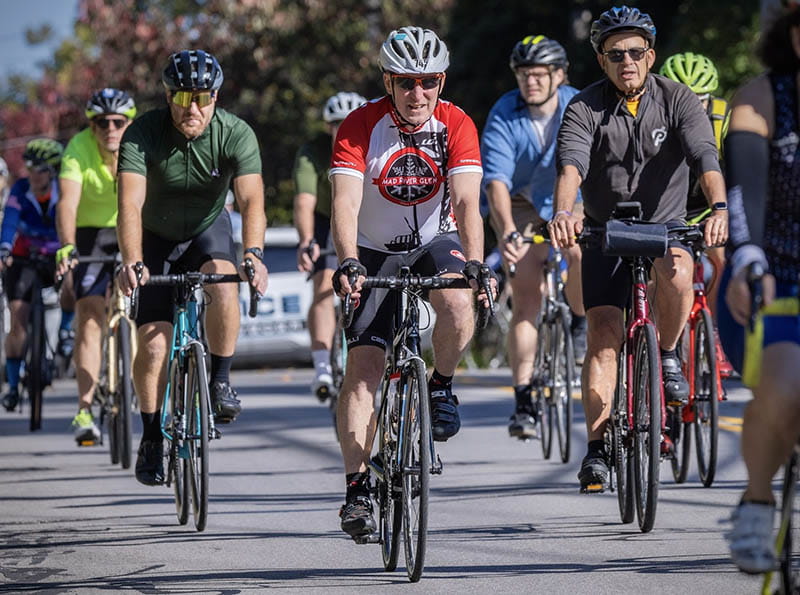
In October 2024, he joined his girlfriend and her friends for a 42-mile fundraising ride outside of Buffalo, New York. It was a perfect fall morning – blue skies, crisp air, colorful foliage.
At mile 30, he stopped for water and a snack while others began a 2-mile climb of Mount Hope. Once Patrick reached the top, he felt the same eruption in his chest and an aching elbow that he’d experienced in 2012.
Recognizing his predicament, he got off his bike and approached a volunteer bike mechanic who was monitoring the event.
“I don’t feel well, and I need help,” Patrick told the mechanic. “Can you take me back to the water stop?”
The mechanic loaded Patrick’s bike in his pickup truck and took him down the hill.
Patrick texted his girlfriend, and she returned to the water stop. A fellow cyclist who happened to be a cardiac care nurse stayed with him until the ambulance arrived.
In the ambulance, Patrick told one of the crew – a doctor who is also a volunteer firefighter – that he was feeling better. A moment later, Patrick stopped breathing.
He’d gone into cardiac arrest because of ventricular fibrillation, an abnormal heartbeat. The doctor and EMTs performed CPR on Patrick, then used a defibrillator to try saving his life. They shocked his heart nine times over a 20-minute period before a normal rhythm was restored.
Nurses and first responders later told Patrick they were inspired by the bracelet on his left wrist. It read: “Not Done Yet.” He’d bought it a week earlier for an adolescent cancer awareness fundraiser.
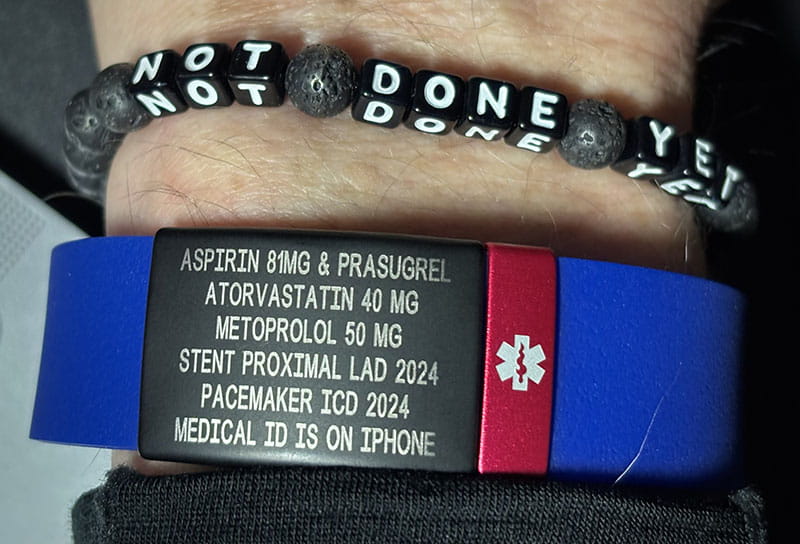
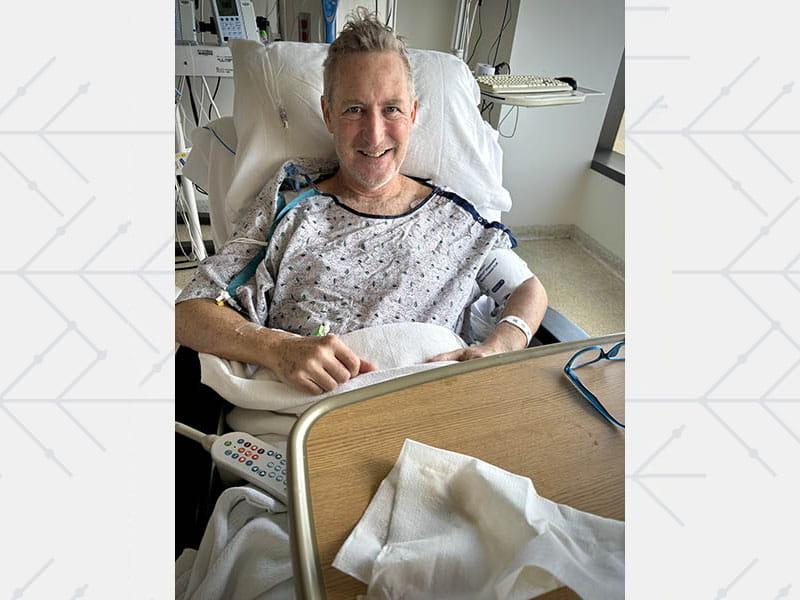
Doctors determined Patrick’s cardiac arrest was triggered by what’s called a STEMI, or ST-elevation myocardial infarction, a serious heart attack caused by a complete blockage of a coronary artery – in this case, the same one that had been blocked in 2012. The blockage was opened again with a stent.
Patrick later had his pacemaker swapped out for an implantable cardioverter defibrillator, or ICD, which offered the protection of a pacemaker and a defibrillator. A pacemaker helps control heart rhythms but can’t restart a heart in case of cardiac arrest; that’s the job of a defibrillator.
Six months later, Patrick returned to the cycle route to finish what he’d started.
Joined by two college roommates, he climbed the long hill again, then rode the last 10 miles.
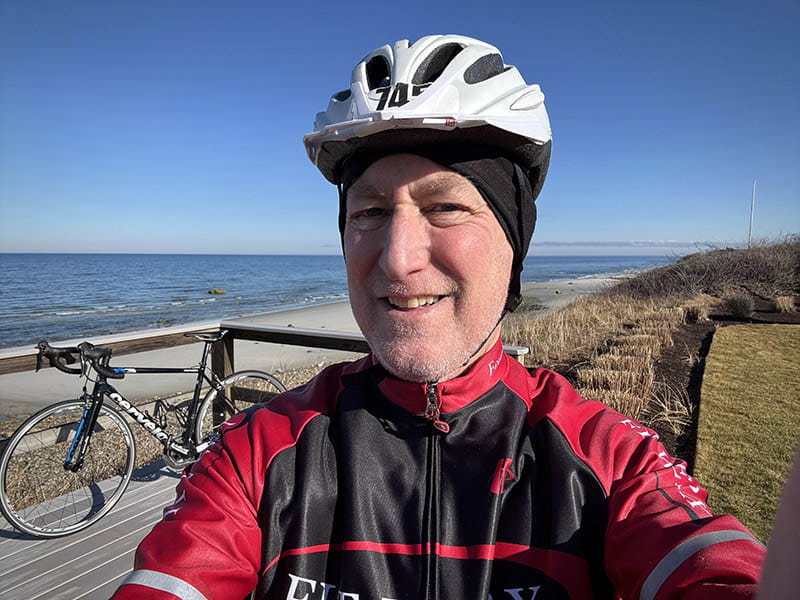
At what would’ve been the finish line, a welcoming party was waiting for him. Well-wishers included some of his first responders, including the doctor who first started CPR in the ambulance.
“He’s very mindful that he’s experienced these events, but also that life is short – so why not get out and engage rather than stay home and fret,” Patrick’s sister, Mary Beth Raycraft, said.
Patrick also returned to the hospital to thank everyone who helped save his life. He’s since learned CPR and other advanced lifesaving skills, and he actively encourages others to do the same.
“I’m proof that they can save lives,” he said. “I’ve done a lot in my life, but now I feel like I’ve finally found my purpose.”
For Patrick, recognizing that something wasn’t right – and getting help – made all the difference. But not every heart emergency is as clear. Knowing the signs of heart attack and cardiac arrest – and how to perform CPR – can save lives. Learn more at cpr.heart.org.
Stories From the Heart chronicles the inspiring journeys of heart disease and stroke survivors, caregivers and advocates.