Nation of Lifesavers Class: Edward Marsh
Competitive dancer was revived by ballroom dancers who knew what to do
By Deborah Lynn Blumberg
By all accounts, Edward Marsh was doing everything he could to avoid the heart disease that runs in his family.
An oilman in Lafayette, Louisiana, Edward ate healthy, lifted weights and got plenty more exercise through competitive ballroom dancing, which he’d been doing for 16 years. He also diligently took medicine to manage his high blood pressure.
Heart health was important to Edward because both of his grandfathers had died from heart attacks in their 50s. His father had a heart attack, too. And in December 2023, his twin brother Wallis had a heart attack when they were 56.
In January, Edward headed to his monthly social dance organized by the Lafayette Dance Nights looking lean and muscular, and feeling great.
He was having a fun evening dancing the fox trot when – in the middle of a dance – Edward collapsed. On the floor, his skin began turning purple.
A fellow dancer called 911. Three other dancers—Jennifer, Kelsey and Demetrius—started Hands-Only CPR. They took turns performing chest compressions until emergency responders arrived.
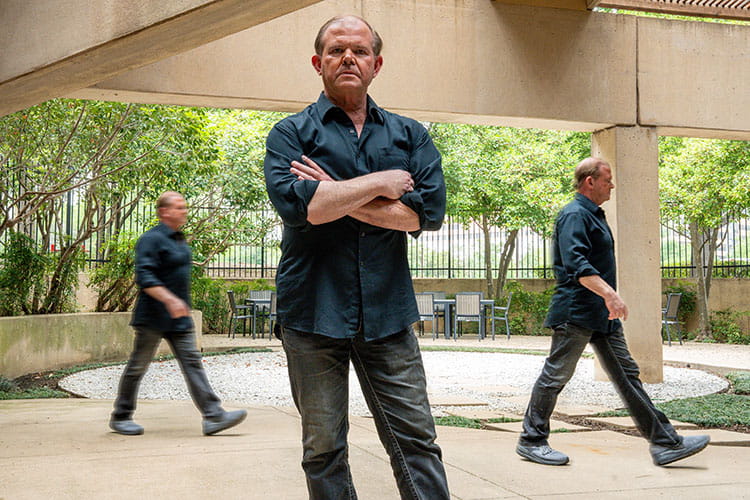
Edward needed CPR because he was in cardiac arrest; in simple terms, his heart’s power went out. That, however, was caused by a heart attack. All four of his major coronary arteries were severely blocked, leaving his heart starved of oxygen.
A week after his cardiac arrest, Edward had quadruple bypass surgery to restore blood flow to his heart. He spent nearly two weeks in the hospital.
Two months later, Edward was back on the dance floor.
“My surgeon said I could do the West Coast Swing because that’s the slowest,” Edward said. “Right before I went out, I had 12 different emotions all hit me, excited, nervous.”
In late March, Edward and a partner competed in The Texas Hoedown dance competition in Irving, Texas. He was pleased with their score.
By summer, Edward hopes to once again dance all eight dances in his competitive division, even the fast ones that his doctor advised him to hold off on, like the polka and the East Coast Swing. Edward credits his fast return to competitive dancing to his fellow dancers who have CPR training.
“The fact that I went down where so many people knew CPR is the reason I’m here,” he said. “It saved my life. If somebody goes down and they need help, if you’ve got the training, don’t feel intimidated, just do it.”
Edward thinks about what might’ve happened had his heart stopped when he was elsewhere, particularly if he was alone. He consoles himself by realizing how fortunate he was that things played out as they did.
“If not for Jennifer, Kelsey and Demetrius giving me CPR before responders arrived,” Edward said, “things would not have turned out so well for me.”


