Heart Attack Explained: Symptoms, Causes, Treatment and Recovery Guide
Heart Attack Quick Facts
- A heart attack occurs when blood flow to the heart is blocked.
- Common heart attack symptoms include chest pain, shortness of breath and nausea.
- Fast heart attack treatment can reduce heart damage and improve survival.
- Heart attack recovery often includes cardiac rehabilitation and lifestyle changes.
- Many people go on to live full, active lives after a heart attack.
What is a heart attack?
Your heart muscle needs oxygen to keep working. A heart attack happens when the blood flow that brings oxygen to the heart is reduced or blocked, often due to a buildup of plaque in the arteries. Over time, this buildup (called atherosclerosis) can narrow arteries without obvious symptoms. That’s why a heart attack can sometimes feel sudden, even though the process develops over years.
Learn more about the warning signs and symptoms of a heart attack and how to act quickly.
What should I do if I think I am having a heart attack?
Call 911 right away if you think you or someone else is having a heart attack. If something feels wrong, trust that instinct. Calling 911 is often the fastest way to get care. Emergency teams can begin treatment right away and coordinate hospital care.
Is sudden cardiac arrest the same as a heart attack?
These two conditions are often compared, but they are different. Sudden cardiac arrest happens suddenly when an electrical failure in the heart causes an irregular heartbeat (called arrhythmia). The heart can’t pump blood to the brain, lungs and other organs. This causes a person to lose consciousness and a pulse. The person can die if they don’t receive help within minutes. A heart attack can trigger sudden cardiac arrest, but not always.
Learn more about the differences between heart attack and sudden cardiac arrest along with how they might be linked.
What happens during a heart attack?
Symptoms can vary during a heart attack, and they might come and go. Most people notice:
- Chest discomfort – pressure, squeezing or pain
- Discomfort in the arms, back, neck, jaw or stomach
- Shortness of breath
- Other signs, such as nausea, fatigue or lightheadedness
What is a silent heart attack?
Not all heart attacks are obvious. A silent heart attack (called silent ischemia) may have mild, unusual or unnoticed symptoms, such as fatigue, indigestion or discomfort in the back or jaw. Some people don’t realize it happened until later testing confirms it. Even without clear symptoms, a silent heart attack can be dangerous and can put the person at greater risk of other heart problems. Since the person didn’t know to seek treatment, blood flow to the heart might not have been restored quickly and medications weren’t given, so the impact could be greater.
Is a silent heart attack more common in women?
Studies differ, but some suggest that silent heart attacks are more common in women than in men for various reasons. For example, women and their healthcare professionals may be more likely to chalk up symptoms of a silent heart attack to stress or anxiety and dismiss them.
What does a heart attack feel like?
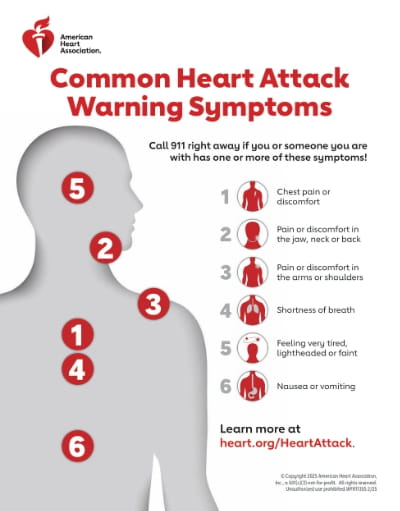
Symptoms of a heart attack can be different for everyone. Many people feel:
- chest pressure or discomfort
- pain in the upper body
- shortness of breath
- nausea
- fatigue or lightheadedness
- Sometimes symptoms come and go. Sometimes they can feel mild.
Common Heart Attack Warning Symptoms Infographic (PDF)(link opens in new window)
What does a heart attack feel like for women?
Even though heart disease is the No. 1 killer of women in the U.S., women often chalk up symptoms to less life-threatening conditions, such as acid reflux, the flu or normal aging. While chest pain or discomfort is still common, women are more likely to have symptoms that may feel less typical, such as unusual fatigue, shortness of breath, nausea or back, shoulder or jaw discomfort. Because symptoms might be subtle, they are sometimes dismissed or misinterpreted. If you have any of these signs, call 911 and get to a hospital right away.
How is a heart attack diagnosed?
If a heart attack is suspected, your healthcare team will act quickly to understand what is happening and how to treat it. This usually includes blood tests to check for heart muscle damage and imaging tests to look at your heart and blood flow. These results help guide immediate treatment and next steps.
Blood tests check for enzymes that are increased in the body after a heart attack. The most common tests are for troponin and creatine kinase.
Imaging tests take pictures of your heart and surrounding parts of the body. These tests include:
- Electrocardiogram (ECG or EKG)
- Echocardiogram (Echo)
- Coronary angiogram
- Heart computed tomography (CT) scan
- Heart MRI
- Exercise stress test
- Positron emission tomography (PET) scan
Watch an animation of a heart attack(link opens in new window)

How is a heart attack treated?
Treatment after a heart attack focuses on one key goal: restoring blood flow to the heart as quickly as possible. From there, care is tailored to your specific needs. Your treatment plan may include medications, procedures or surgery. Your healthcare team will help you understand what fits your situation.
Learn more about heart attack treatment.
What types of treatments might be used?
Medications
Cardiac medications are often used right away and may continue long after you leave the hospital. They can help:
- Prevent new blood clots
- Keep existing clots from getting bigger
- Lower blood pressure or cholesterol
- Reduce strain on your heart
Many people take a combination of medications. Your healthcare professional can walk you through what each one does and how it supports your recovery.
Procedures to Restore Blood Flow
Some treatments focus on opening blocked arteries and improving circulation.
One common option is angioplasty, where a small balloon is used to open the artery. Often, a stent is used to help keep it open. For some people, other procedures or surgery may be recommended.
Surgery
In more complex cases, surgery may be part of the treatment. One example is coronary artery bypass graft (CABG) surgery, which creates a new pathway for blood to flow around a blocked artery.
Your healthcare team may consider surgery based on how many arteries are affected and your overall health.
Learn more about heart procedures and surgeries.
Is there ongoing treatment after a heart attack?
Treatment doesn’t stop when you leave the hospital. Ongoing care may include:
- Continuing medications
- Follow-up appointments
- Monitoring your heart health
- Making gradual lifestyle changes
Cardiac rehabilitation is often part of this next phase and can provide structured support as you recover.
What about stents and heart devices?
Some people may receive devices to support heart function or reduce future risk.
These can include stents to keep arteries open, implantable cardioverter defibrillators (ICDs) to manage dangerous heart rhythms and pacemakers to help regulate your heartbeat.
Not everyone needs these, but for some, they can play an important role in recovery and long-term heart health.
Understanding Your Treatment Plan
Every heart attack and every person is different. Your healthcare team may recommend a mix of treatments based on the type of heart attack, how quickly treatment began and your overall health and risk factors. It’s OK to ask questions and take time to understand your options.
You’re an important part of the decision-making process.
How do I recover from heart attack?
Recovery takes time, and it looks different for everyone. Many people return to daily life, but it often includes medications, lifestyle changes and follow-up care. You don't have to figure it out alone. Your healthcare team, family and support networks can all play a role.
- Life After a Heart Attack
- Survived a heart attack? How to heal in the first 90 days
- Heart Attack Recovery Questions and Answers
The first 90 days after a heart attack
The first few months after a heart attack can be an important time for healing. This is when your care plan is taking shape, your body is recovering and you begin to make lifestyle changes. Some people also have emotional ups and downs during this time, and that is a normal part of recovery.
After a first heart attack, most people go on to live a productive life. But 1 out of four patients are readmitted to the hospital within 90 days of discharge. This is a critical time when new problems, including second heart attacks, can arise. Second heart attacks within that 90-day window are linked to nearly a 50% chance of death within five years. To maintain your health and avoid another heart attack, follow your treatment plan and focus on a heart-healthy lifestyle.
See what recovery can look like in the first 90 days by hearing from four different patients.
How do I prevent another heart attack?
Small steps can add up over time and help lower your risk of another heart attack. You might consider:
- Taking your medications as prescribed
- Attending your follow-up appointments
- Participating in cardiac rehabilitation
- Managing your risk factors
- Connect with other heart attack survivors and caregivers through our Support Network.
How do I lower my risk of a heart attack?
There is no single path to heart health. But there are areas that many people focus on to lower their risk of a heart attack. Healthy changes don’t happen all at once. Even small shifts can make a difference over time.
- Moving your body in ways that you enjoy
- Choosing foods that support your heart health
- Managing blood pressure, cholesterol and blood sugar
- Getting enough sleep
- Finding ways to manage stress
- Stopping smoking
- Limiting alcohol
Learn more about lifestyle changes to prevent a heart attack.
What are the risk factors for a heart attack?
It's important to know your risk factors for a heart attack. You can control some risk factors, such as tobacco use, physical activity, blood pressure, blood cholesterol and blood glucose. Other risk factors, such as age, family history and certain health conditions, can’t be controlled. But your healthcare team can help you manage your risk factors for heart disease, including:
- Increasing age
- Sex
- Diabetes
- High blood pressure
- High cholesterol
- Being overweight or obese
- Tobacco use
- Family history of early atherosclerotic cardiovascular disease
- Metabolic syndrome
- Chronic kidney disease
- Chronic inflammatory conditions such as rheumatoid arthritis, psoriasis and HIV/AIDS
- History of preeclampsia or early menopause
- High-risk ethnicity such as South Asian ancestry
- Higher-than-normal triglycerides, ankle-brachial index and other lab tests
Your healthcare professional may use a risk calculator to estimate your chance of a heart attack.
You don't have to navigate this alone. The American Heart Association offers tools, resources and support to help you understand your options and take next steps. Explore our resources for understanding heart attacks, treatment and recovery. And connect with others.
About Heart Attacks
- What Is a Heart Attack? (PDF) | Spanish (PDF)
- What Are the Warning Signs of Heart Attack? (PDF) | Spanish (PDF)
- Common Heart Attack Warning Symptoms (PDF)
- Watch, Learn and Live Animations Library
Treatment and Recovery
- Heart Attack Discharge Worksheet (PDF) | Spanish (PDF)
- How Will I Recover From My Heart Attack? (PDF)
- What Is Cardiac Rehab? (PDF)
- Cardiac Rehabilitation Referral Card (PDF) | Spanish (PDF)
- Infographic: Five Ways to Lower Your Risk of a Second Heart Attack (PDF) | Spanish (PDF)
- What Is Dual Antiplatelet Therapy (DAPT)? (PDF)
- Printable Medication Tracker (PDF)
- Healthy Lifestyle Information Sheets
Connect With Others
- Join our growing Support Network to connect with other survivors and family caregivers.

Watch, Learn and Live
See your cardiovascular system in action with our interactive illustrations and animations.