Estate Planning After OBBBA 2025: What Now?
 The passage of the One Big Beautiful Bill Act (OBBBA 2025) has significantly changed the estate planning landscape. These changes create new opportunities and challenges, making now the ideal time to connect with clients to review their estate plans and ensure their documents reflect their goals under the new law.
What Changed?
OBBBA 2025 permanently increased the federal estate, gift, and generation-skipping transfer (GST) tax exemption to $15 million per person ($30 million per couple), indexed for inflation. This means that for most families, federal estate tax is no longer the primary concern. Instead, planning now focuses on income tax efficiency and state estate taxes, which remain in some states. The law also provides stability by removing the uncertainty of prior sunset provisions, giving families confidence to plan for the long term.
Why This Matters
Previously, many estate plans were designed primarily to minimize federal estate tax. With the new higher exemption, and especially with the exemption being indexed for inflation, most estates will not owe federal tax. However, this shift does not mean planning is less important, it means the focus has changed. Now, strategies that optimize income tax outcomes, protect assets, and ensure your clients’ wishes are carried out have become central. For example, maximizing the step-up in basis at death can eliminate significant capital gains tax for heirs. State estate taxes, which can apply at much lower thresholds, also require attention.
Key Planning Priorities
- Maximize Tax Basis:
Assets included in an estate generally receives a step-up in basis at death, eliminating unrealized capital gains. Lifetime gifts of capital gain property carry over basis from the donor, subjecting the donee to the capital gains tax, so gifting strategies should be reconsidered. Techniques like 'upstream' planning, transferring assets to older relatives, can help achieve higher basis and reduce future tax burdens. Those who are charitably inclined should know that taxable retirement accounts do not receive a step-up in basis at death which exposes the accounts to double taxation paid by the estate and again by the beneficiary. Thus, taxable retirement accounts are ideal assets to leave to charities to preserve the full value of the asset for maximum impact. - Portability Still Matters:
Even if your client’s estate is below $15 million, filing a federal estate tax return for portability preserves their spouse’s unused exemption. Recent tax court cases highlight the risk of losing this benefit if filings are missed, so timely action is essential. - Review Trusts and Bequest Formulas:
Many wills and trusts use formulas tied to old exemption amounts. These may now create unintended results, such as overfunding certain trusts or misallocating assets. Updating these provisions ensures your plan works as intended under current law. Formula clauses should be flexible and adaptable to potential future estate tax exemption changes. For example, a “charitable lid” clause can be implemented to fluctuate with future estate tax exemption changes and protect the estate from estate tax by bequeathing a future determined value to charity. - State and Local Tax Deduction & Trust “Stacking”:
Expanded deductions for expanded state and local tax (SALT) gives high-income families the opportunity to take advantage of multiple deductions by shifting income generating assets into multiple non-grantor trusts, each eligible for their own SALT deduction. For those with high state and local taxes, the expanded deduction creates more opportunities to itemize deductions, including charitable deductions, for those that would have otherwise taken the standard deduction. - Income Tax Planning:
Opportunities exist to lower federal and state taxes by deferring income and offsetting large income events with charitable giving. Highly appreciated assets that have been owned for a year or more, like stocks, securities, and real estate, are ideal assets for charitable gifts due to double tax benefits received when donated – avoidance of capital gains tax plus income tax deduction. Also, for those 73 and older who must take required minimum distributions (RMDs) from retirement accounts, using Qualified Charitable Distributions (QCDs) is a savvy and effective way to lower adjusted gross income and avoid ordinary income tax. RMD income can also be deferred and spread out over the donor’s lifetime by making a QCD gift to a public charity, like the American Heart Association, in exchange for a charitable gift annuity (CGA). Special rules and limitations apply for the QCD for CGA opportunity.
Examples of Planning Scenarios
Consider a couple with a combined estate of $15 million. Under prior law, complex trust planning might have been necessary to avoid federal estate tax. Today, that couple owes no federal estate tax, but they still need to ensure their documents reflect current exemption amounts and address state level estate taxes if applicable. Charitable bequests could help save any applicable state estate or death tax. Another example: A family with highly appreciated real estate may benefit from holding property until death to secure a step-up in basis, rather than gifting it during life and passing along a low basis. The family can help minimize ordinary income taxes for heirs by leaving all or a portion of retirement assets to charity.
Next Steps
OBBBA 2025 offers stability and opportunity. For most clients, the focus shifts from avoiding federal estate tax to optimizing income tax outcomes and protecting assets. Working with your clients to update their plans now ensures they can take full advantage of these changes. We recommend working with your clients to:
- Review estate documents to confirm they align with current law and your client’s goals.
- Update beneficiary designations on retirement accounts and insurance policies.
- Evaluate portability elections and tax basis planning strategies.
- Address state and local tax concerns if applicable.
- Engage in income tax planning for clients and heirs including minimizing ordinary income tax through use of charitable gifting strategies.
About the Authors
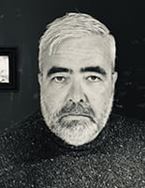 Bill Bereza
Attorney, Generation Trust Law Group
William Bereza has been an estate planning and settlement attorney since 2013 and is currently with Generation Trust Law Group. William’s diverse skills in the fields of software and law have been helpful to government agencies, software startups, small law firms, families and small business owners.
William grew up on his family’s farm growing sweet corn, truck farming, and raising beef cattle and graduated with Honors in Computer Science from Grand Valley State University in Allendale, MI, and a Juris Doctorate Magna Cum Laude from Thomas M. Cooley Law School in Grand Rapids, Michigan.
He co-founded Atomic Object in 2001, a custom software development and consulting firm in Grand Rapids, Michigan. Prior to that, William was a Computer Scientist at the National Security Agency, designing and developing software for large data statistical analysis. He has also co-authored papers on agile embedded development; studied foreign languages; hiked the Camino de Santiago across northern Spain; and studied International Human Rights Law in Galway, Ireland.
He is currently raising three lovely children with his beautiful wife in Grand Rapids, Michigan.
 Gunnar Crowell
Senior Advisor, American Heart Association
Gunnar has over a decade of experience in trust and estate planning, planned and major gift fundraising, and non-cash asset acceptance. Before joining the American Heart Association, Gunnar served as Vice President of Legal Services at Renaissance Philanthropic Solutions Group, where he was responsible for facilitating and managing due diligence for planned and complex asset gifts. Gunnar also previously held planned giving roles with the University of Utah and Purdue Research Foundation.
Gunnar holds a BA in Sociology and Business from Hanover College and a JD from Indiana University. In his free time, Gunnar enjoys spending time with his wife and kids and being active outdoors.


