Calling 911 is always best when heart attack or stroke symptoms start
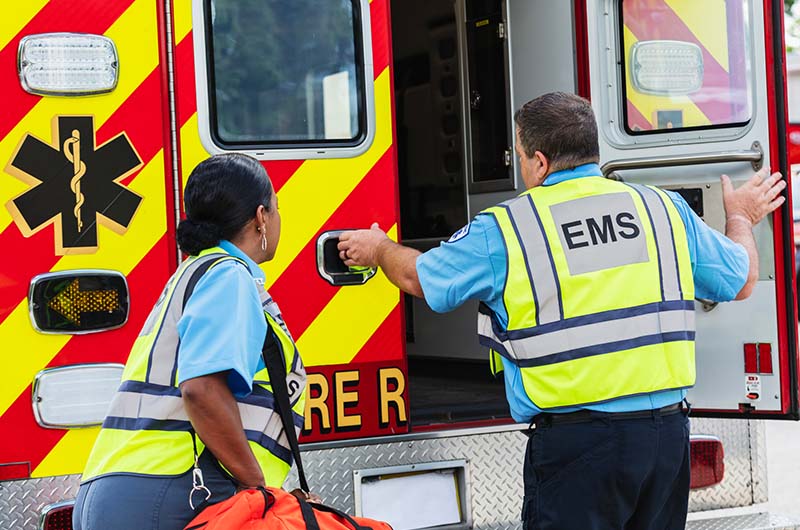
When heart attack or stroke symptoms start, acting quickly can make the difference between life and death. Doctors and emergency responders say the safest thing to do is call 911 right away. And yet some people will hesitate because they think they can drive to the hospital faster or do not want to cause alarm.
What do emergency department doctors think of that plan?
“I think it would be an extraordinarily rare situation where that’s a good idea,” said Dr. Eric Isaacs, director of the age-friendly emergency department at Zuckerberg San Francisco General Hospital.
He’s seen people show up at the hospital with somebody in their front seat, not breathing and with no pulse, because they mistakenly thought it would be better to drive them, said Isaacs, who is also a clinical professor of emergency medicine at the University of California, San Francisco.
Dr. Ameera Haamid, the associate emergency medical services medical director of the Chicago South EMS System, agreed that people should always call 911 when they’re having heart attack or stroke symptoms.
Haamid, who is also an assistant professor of emergency medicine at University of Chicago Medicine, said she has seen families arrive at the hospital with someone whose heart stopped beating on the drive there. “And now we’re doing CPR because they’re in cardiac arrest.”
Know the signs
Heart attack symptoms include:
- Uncomfortable pressure, squeezing, fullness or pain in the chest
- Pain or discomfort in the arms, back, neck, jaw or stomach
- Shortness of breath with or without chest discomfort
- Other signs such as breaking out in a cold sweat, rapid or irregular heartbeat, feeling unusually tired, nausea or lightheadedness
F.A.S.T. is an easy way to remember how to recognize a stroke and what to do.
- Face drooping
- Arm weakness
- Difficulty speaking
- Time to call 911
The American Heart Association recommends calling 911 if any of these symptoms develop, or if a person experiences a sudden loss of responsiveness or can’t breathe normally, which are signs of cardiac arrest.
Advantages of calling 911
The emergency specialists’ advice is clear: Call 911. For those who might still hesitate, here are some reasons why doctors think that way.
Receive faster diagnosis and treatment: Calling 911 doesn’t just summon an ambulance, Haamid said. It sets hospital staff in motion, so the right specialists are available.
In the ambulance, emergency specialists can begin to evaluate and transmit electrocardiogram readings. If a heart attack is suspected, the catheterization lab can be on standby, ready to perform procedures that restore blood flow. If a stroke is suspected, you can be taken straight for a scan to determine what kind and whether clot-busting medication can be given.
Save valuable time: It might seem faster to get somebody with mild symptoms to the hospital yourself, Isaacs said. But that doesn’t account for things that can go wrong. Mild symptoms can quickly worsen. A heart can start beating irregularly or stop. People can lose consciousness, and loved ones may not notice because of agonal breathing, which are reflex breaths that occur during cardiac arrest.
If you put someone in a car yourself, thinking the hospital is only 15 minutes away, that’s 15 minutes without breathing, or 15 minutes without a pulse, Isaacs said. “That means that they’re going to be dead when you arrive.”
Get the best care available: Emergency medical responders are experts in knowing where to get the best care, Haamid said.
Understanding their role in selecting a hospital is especially important in rural areas, said Dr. Stephen Powell, an assistant professor of emergency medicine at Wake Forest School of Medicine in Winston-Salem, N.C.
“You might think, ‘Oh, I live five minutes from this hospital. That’s where I need to go if I’m having a stroke,’ ” said Powell, who also serves as medical director for a rural North Carolina county. But your local hospital might not be able to provide the advanced treatments you need, depending on your type of stroke.
Better to be safe, than sorry: Isaacs said he understands the pressures people face when making the decision to call 911. Some of them may be practical, such as concerns about the cost.
He said that the emergency department staff know many of the patients with chest pain aren’t having a heart attack and will be sent home. “And not to be dramatic, but I will be dramatic: I would rather send you home reassured that it’s not something serious than having you be dead or disabled.”
Instead, Isaacs said, “I would rather educate you and reassure you in that situation. And that’s what we do for most people.”


