Cardiac arrest and a double transplant took soccer. Not his resolve.
By Leslie Barker, American Heart Association News


Diego Obregon fancied himself as an athlete, and with good reason. Sports, especially soccer, were the 17-year-old’s life.
Granted, for a few years before the last game he’d ever play – before the cardiac arrest that kept him in the hospital for 11 months, resulting in 16 surgeries including a heart and a kidney transplant – Diego had experienced health issues while on the field.
He often had trouble breathing, dizziness, ringing in his ears. But he always kept going. After all, his pediatrician said his only issue was exercise-induced asthma. Even though an inhaler didn’t help, Diego was determined to stay in the game.
His heart stopped while playing soccer
One February day, Diego was playing soccer at his neighborhood field in Jasper, Alabama, when the familiar symptoms returned. This time, though, they were so strong he had to sit down.
He couldn’t catch his breath. Then he couldn’t see.
Then Diego’s heart stopped.
His best friend called 911. A stranger who saw Diego collapse started CPR.
Paramedics rushed Diego to the closest children’s hospital, where he went into cardiac arrest again.
“They started an IV,” Diego said, “and that’s the last thing I remember until I woke up three months later.”
Diego’s friend called his parents. His sister Laura, a college freshman in Pittsburgh, was studying for a chemistry exam when a family friend called to say Diego had an accident. After her mother called to say her baby brother might die, Laura took two flights to get home.
“He’s always been the athlete and I’ve been the nerd,” Laura said, “but he was intubated and he was so pale.”

A rare congenital heart defect discovered
Diego was diagnosed with a rare congenital heart defect called anomalous origin of the left coronary artery from the pulmonary artery (ALCAPA). In basic terms, exercising prevented his left coronary artery from getting enough oxygen. Diego was in such dire condition that he was put on an advanced form of heart-lung support known as extracorporeal membrane oxygenation, or ECMO, and placed in a medically induced coma.
Three days later, doctors implanted a mechanical pump called a left ventricular assist device, or LVAD, to help Diego’s heart until he could receive a transplant. He needed one, they told the family, because cardiac arrest had severely damaged his heart.
His parents took turns at his bedside. Laura didn’t go back to school that semester, instead serving as an interpreter for her parents. They speak English, but Laura – a biomedical engineering major – better understood medical terms and issues, making her the best liaison between the family and Diego’s medical team.
Three months later, doctors brought Diego out of the coma. He couldn’t speak. He couldn’t swallow. He couldn’t move. His kidneys shut down. Oxygen deprivation had caused muscle tissue in his lower left leg to dissolve, resulting in extreme decrease of function. He had to have several toes amputated.
Diego underwent extensive physical therapy and surgeries, including a tracheostomy. Five months after his cardiac arrest, doctors told Diego he needed a heart and kidney transplant.
Waiting for a heart and kidney transplant
That October, Diego received a new heart – a gift whose munificence still overwhelms him with gratitude. The next day, he received a kidney.
He spent the next two months undergoing extensive physical and occupational therapy before leaving the hospital.
That was 12 years ago – a dozen years filled with highs and lows. Particularly beautiful and bittersweet was the relationship he developed with Fisher Martin, a 4-year-old heart transplant recipient boy on the same hospital floor as Diego. Tragically, Fisher passed away, but Diego remains in touch with his family and is ever grateful for their son’s energy and outlook. Fisher, he said, “changed my perspective on life.”

Building a new life after a heart transplant
More surgeries and other physical complications followed in the years after Diego’s transplant. His identity shifted from a 17-year-old athlete with goals and dreams to that of a perpetual patient who was “trying to take back control of a life that seemed less and less recognizable,” he said.
Yet despite having no motor function below his left knee, Diego found ways to keep moving. He now jogs, plays tennis and lifts weights.
Moment by moment, inch by inch, he’s kept his focus ever forward, channeling the determination he’d honed as a teen athlete and a resolve not to let down anyone – including himself.

Diego became an entrepreneur. After studying business administration at the University of Alabama at Birmingham, he began manufacturing fruit toppings, which are sold at farmers markets and grocery stores.
He’s a property manager, and he’s working on becoming a real estate broker.
His own health experiences led him to help Spanish-speaking patients and their families communicate with healthcare teams caring for their loved ones – as Laura did with their own parents. He also brings his background, experience and empathy to children at the hospital where he volunteers.
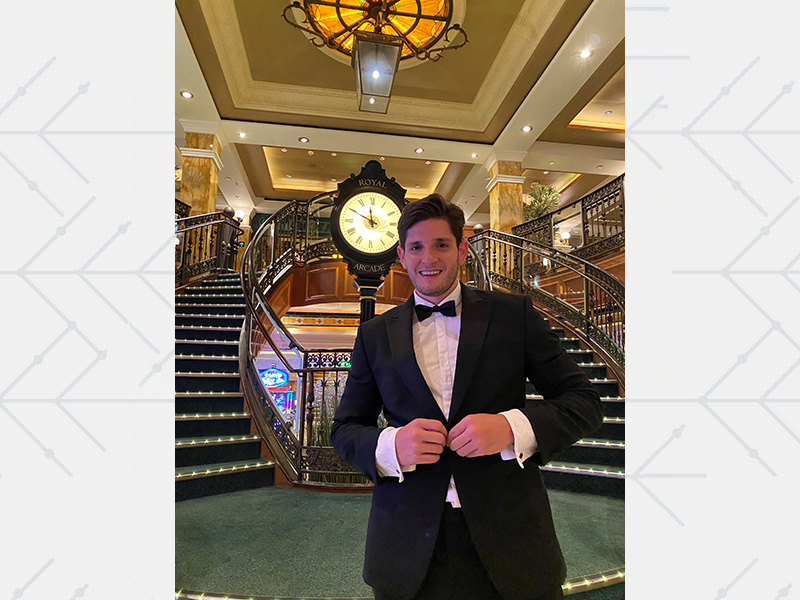
“It’s been a grueling and consistent process,” Diego said, “but I’m infinitely proud of how I’ve been able to beat the odds. It’s a bit of a miracle that I’m able to do the things I do today.”
After surviving cardiac arrest, receiving two lifesaving transplants and rebuilding his life, Diego now helps Spanish-speaking families navigate through their healthcare experience. During Hispanic Heritage Month, explore American Heart Association resources, stories and community support for Hispanic and Latino families.
Stories From the Heart chronicles the inspiring journeys of heart disease and stroke survivors, caregivers and advocates.