Just 10 days after giving birth, she had a heart attack
By Cathy Cassata, American Heart Association News



A week and a half after giving birth to her second daughter, Amy Mazur-Hession began feeling back pain. At first, she attributed the pain to the epidural she received during labor.
“As the day went on, my hands started to turn really white and I didn’t feel right,” she said. “I thought maybe I was having indigestion or a panic attack now that I had two kids.”
At 10 p.m., her husband, Tom Hession, gave her an antacid and suggested she go to sleep. Amy started up the stairs toward their bedroom.
Halfway up, she sat down and yelled for Tom.
“Call an ambulance,” she told him. “I’m having a heart attack.”
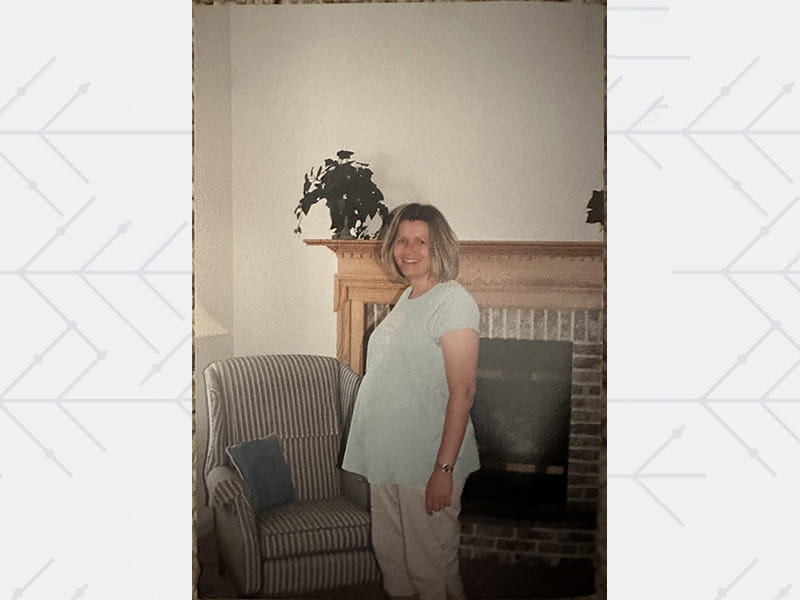
A frightening diagnosis
Tom couldn’t imagine that his 35-year-old wife was having a heart attack. Then he looked at how white her hands were. Something was clearly wrong. He called 911.
An ambulance arrived within 6 minutes. An electrocardiogram, which measures the heart's electrical activity, showed no problems. However, because Amy had an elevated heart rate, pale hands and pain, emergency responders took her to the hospital.
Tom stayed at their home in Annville, Pennsylvania, with their newborn, Ella. Their 4-year-old daughter, Anna, was already spending the night with Tom’s mom.
At the hospital, another EKG reading showed Amy was having a massive heart attack. The doctor broke the news to her, then called Tom to tell him he had about 15 minutes to get to the hospital before Amy underwent a cardiac catheterization to evaluate her heart and fix a potential blockage.
Tom grabbed Ella out of her bassinet, gathered some formula and rushed to the hospital. They made it in time.
“This might be the last time I see them,” Amy thought.
She then told Tom, “Whatever happens, I love you. Take care of the girls.”
In the cath lab, Amy’s heart stopped. Doctors used a defibrillator several times to shock her heart back into a normal rhythm. She was then put into a medically induced coma and transferred to ICU.
Waking up to lost time
When Amy came to 23 days later, she learned that she’d experienced postpartum spontaneous coronary artery dissection (P-SCAD), a rare condition that involves a tear in the wall of a coronary artery. The tear can cause reduced blood flow to the heart. Amy had a dissection of the left anterior descending artery, which supplies a large portion of the blood to the left side of the heart.
Amy grappled with having missed so much of her newborn’s life. Then, because she was recovering, she wasn’t allowed to pick up Ella. Recovery also included home nursing visits and cardiac rehab. Amy’s mother and mother-in-law stayed with the family to help care for the kids. Gratitude for their support helped Amy pull through.
“They got up with Ella in the evenings. They really did raise her for the first year,” Amy said. “They were cooking and driving places and staying on mattresses next to the baby carriage.”

Road to recovery
As Amy got stronger, she went from seeing her cardiologist every three months to six months. Eventually, they became annual visits. She’s now more than 20 years since her heart attack, which occurred in July 2005.
Amy lives with angina, which for her causes a feeling of heaviness in her chest. She used to worry that it was another heart attack but learned to recognize the symptoms.
“I know when I hit my limit and need to sit down or put my feet up or take a break,” she said.

Living with lasting effects of a heart attack
The heart attack also left Amy with long-term memory damage and back pain that she has learned to cope with.
Her lasting symptoms pushed her to move from working full-time as an insurance contract negotiator to part-time work. While not ideal, the change allowed her to spend more time with her daughters.
“I had never heard of P-SCAD before it happened to me,” Amy said. “I’m glad I listened to my body and didn’t ignore my symptoms. I’ve been able to watch my girls grow into young adults.”
The Support Network offers mothers who are dealing with a heart condition or stroke an outlet for questions and story-sharing through the Support Network Maternal Health Forum.
Stories from the Heart chronicles the inspiring journeys of heart disease and stroke survivors, caregivers and advocates.