New dad’s heart stopped during a family outing. CPR made the difference.
By Diane Daniel, American Heart Association News



Ed Gorelick could hardly wait to hit the trail again.
He usually ran three times a week. But between the birth of his son, Elliot, two months earlier, and his demanding project management job, exercise had to wait. At 33, he felt like he was in good shape. He’d been feeling a little worn out, though. He figured exercise was exactly what he needed.
It was Presidents Day, and Ed had the day off. He and his wife, Jacque, decided to turn ’his run into a family outing.
They parked at a trailhead about 20 minutes from their home in Palo Alto, California. They found a path where Jacque could push Elliot in the stroller while Ed got in his miles. He looped past them every few minutes. On each of the first several passes, Ed slowed to make goofy faces at Elliot.
On his next loop, Ed abruptly stopped 20 feet ahead of the stroller. He was breathing heavily and swaying.
“I don’t feel good,” he told Jacque.
She parked Elliot in the shade and led Ed, who had started to stagger, to a nearby bench.
Jacque feared something was seriously wrong. As she dialed 911, Ed collapsed onto the bench. He stared vacantly and struggled to breathe.
Jacque screamed for help. Two people on the trail rushed over and lowered Ed to the ground.
Moments later, a man rushed over and said he was a firefighter and paramedic. He began chest compressions.
An ambulance arrived. The emergency responders used a defibrillator to shock Ed’s heart into a sustainable rhythm, then took him to the hospital.
At the emergency room, Jacque learned that a disruption to Ed’s heart rhythm – a type of arrhythmia – caused cardiac arrest.
He was placed in an induced coma to allow his brain and body to recover more gently from the trauma. Doctors told Jacque that because of how long Ed went with limited oxygen in his system, he may have some brain damage.
After three days, Ed was brought out of the coma. He was confused and kept repeating questions.
A few days later, the neurologist went to the waiting room and summoned Jacque and Ed’s parents into a hallway.
To Jacque, the doctor looked overcome. She braced herself for bad news.
“I found no neurological deficits,” he said, almost in tears. “It is truly miraculous.”
The doctor credited CPR with keeping Ed alive until first responders arrived. About 10% of people who experience an out-of-hospital cardiac arrest survive. When CPR is involved, a successful outcome like Ed’s requires a speedy response and quality compressions. Because someone who knew CPR – and happened to be a paramedic – was nearby when his heart stopped, Ed received both.
After much testing, doctors couldn’t determine what caused Ed’s arrhythmia. They thought it could be a combination of stress along with strenuous exercise after being relatively inactive.
Doctors placed an implantable cardioverter defibrillator, or ICD, in his chest to monitor his heart rhythm. The device delivers an electric charge to the heart if it falls out of rhythm. Ed was released after 10 days.
Ed took six months off from work as he recovered. He also attended cardiac rehabilitation, though he felt the exercises were geared toward the elderly.
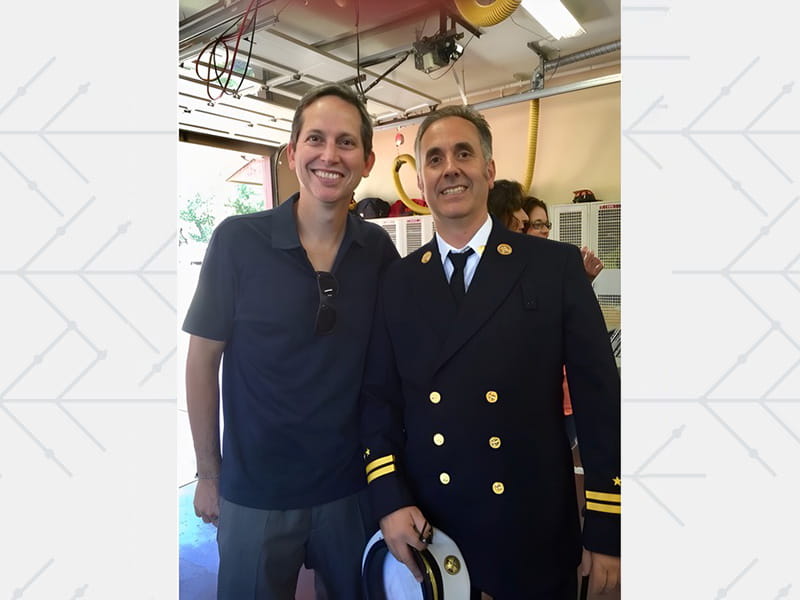
During this period, Ed’s lifesaver, Steve Silici was honored at his fire station. Ed, Jacque and Elliot were invited to attend.
“What can we do for you?” Ed asked Steve. “Just say it. Anything.”
“I just want a picture of you and your family,” Steve said. “I want to hang it in my locker. I can’t tell you how many of these calls I go on and they don’t end well.”
This happened in 2007. Steve and Ed later went on to share their story at several public events to help promote CPR awareness.
Although Ed’s outcome was as favorable as possible, both he and Jacque struggled afterward. Ed saw a therapist and began taking anti-anxiety medication. Jacque’s worries about Ed led to heightened fears for Elliot.
“I would literally sleep with one hand on Ed and one on the baby,” she said. Jacque recently published a book about her experiences as the wife of a cardiac arrest survivor.
One benefit for Ed was a change in priorities. He no longer obsesses with his career.
“If I could have good health, make enough money and have a happy family, that was good enough for me,” he said.
In 2013, the couple had a second son, Charlie. He was born on Feb. 19, the date of Ed’s cardiac arrest.
In 2017, Ed was at a baseball game with Elliot when he started feeling dizzy. His heart was racing despite the ICD. He asked a security guard for help. Ed left the stadium on a stretcher. Elliot rode with him in the ambulance.
Medication stabilized Ed, but that experience and another the following year reignited his anxiety to the point that it became “crippling” at times. That lasted for a couple of years.
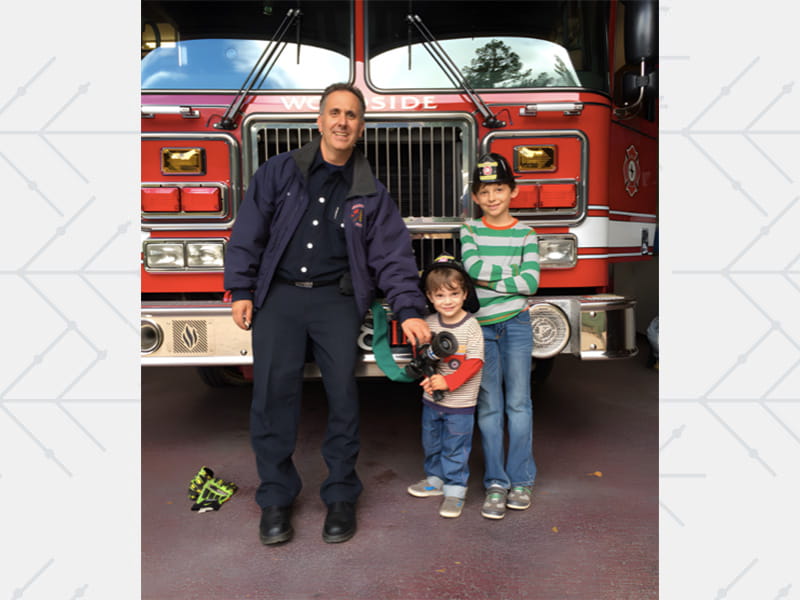
Ed hasn’t had any other cardiac events, but the anxiety still pops up. It’s especially triggered when he’s far from home, so the family cut back on travel.
“It shrank our lives in terms of geography, but it did make us very grounded in the here and now and with our kids and our family,” Jacque said.
Now 54, Ed has become a pickleball devotee; he even plays in a local league. As for running, “no way, never again,” he said.
Elliot is a college student studying film production. He’s also a certified lifeguard and trained in CPR. Charlie is headed for eighth grade in the fall. Cardiologists have examined their hearts and found no issues.
The family has made Feb. 19 a day of celebration for Charlie’s birth and Ed’s rebirth. And they keep Ed’s lifesaver in mind too.
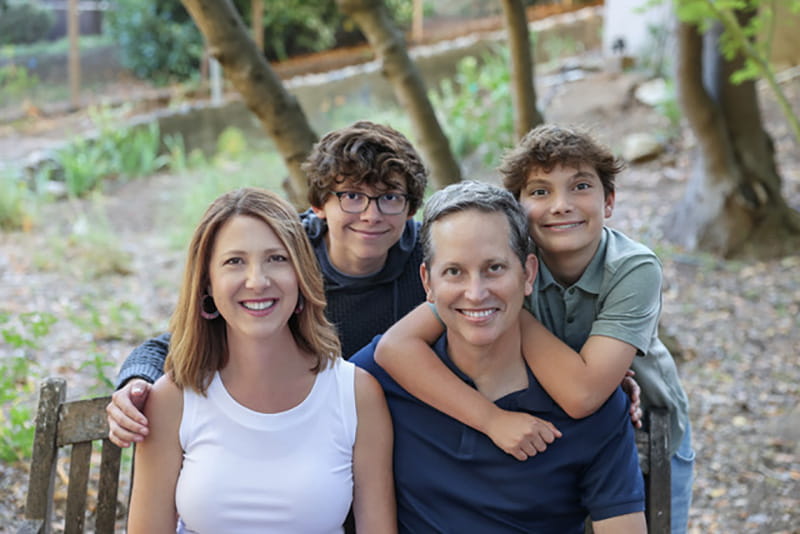
“We always text Steve,” Jacque said, “to tell him thank you.”
A doctor credited Steve’s quick CPR with keeping Ed alive until help arrived. When a heart stops, those first minutes matter most – and CPR increases the chances for survival. Learn how to perform CPR and other lifesaving skills.
Stories from the Heart chronicles the inspiring journeys of heart disease and stroke survivors, caregivers and advocates.