Heart Failure Explained: Understanding Symptoms, Causes, Diagnosis and Treatment
Heart Failure Quick Facts
- Heart failure means the heart isn’t pumping as well as it could.
- Heart failure can develop gradually and is one of the most common causes of hospitalization in older adults.
- Heart failure can affect how much oxygen and nutrients your body receives.
- While there isn’t a cure for heart failure, many people find ways to manage it and live meaningful, active lives.
What is heart failure?
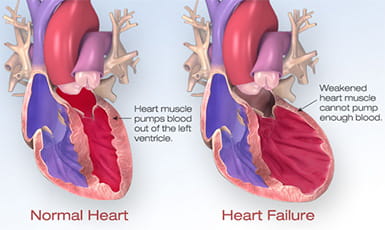
Heart failure doesn’t mean your heart has stopped working. It means it needs support.
When the heart can’t pump enough blood to meet your body’s needs, you may notice symptoms such as fatigue or shortness of breath. Everyday activities might feel hard. Treatment and support from your healthcare team can help you live better with heart failure.
You might consider exploring:
Watch an animation of heart failure(link opens in new window)
What causes heart failure?
Heart failure often develops over time, especially when the heart is under strain. Risk factors are traits or lifestyle habits that can increase your chance of heart failure. Most people who get heart failure have (or had) another heart condition first.
Common contributing factors include:
-
Coronary artery disease. Coronary heart disease is a common term for the buildup of plaque in the heart’s arteries that could lead to heart attack or ischemic stroke. But what about coronary artery disease? Is there a difference?
The short answer is often no — healthcare professionals frequently use the terms interchangeably. However, coronary heart disease, or CHD, is actually a result of coronary artery disease, or CAD.
When cholesterol and fatty deposits build up in the heart’s arteries, less blood can reach the heart muscle. This buildup is known as atherosclerosis, which causes coronary artery disease. Over time, this condition can cause issues that lead to heart failure.
-
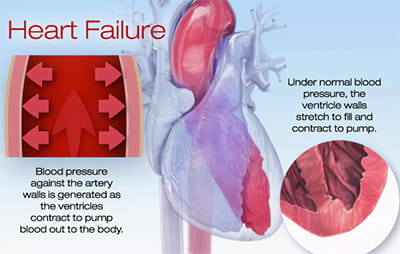
High blood pressure. When pressure in the blood vessels is too high, the heart has to pump harder to keep the blood moving. Over time, the heart’s chambers can get larger and weaker, which can lead to heart failure.
- Diabetes. People with diabetes tend to get high blood pressure and atherosclerosis from high cholesterol, which can contribute to heart failure.
- Metabolic syndrome. Metabolic risk factors such as a large waistline, high triglycerides, low HDL (good) cholesterol, high blood pressure and high blood sugar affect the heart and can contribute to developing heart failure.
Other factors such as thyroid conditions, aging, certain medical treatments and some inherited conditions can also affect how the heart works. Lifestyle habits can play a role too. Smoking, limited physical activity or certain eating patterns may increase risk over time. According to the American Heart Association, some communities face higher risk due to a mix of health, access and social factors.
Not all risk factors are within your control, but some are. Small, steady changes can support your heart over time, and your healthcare team can help you explore what’s right for you.
What are the types of heart failure?
You may hear different terms used to describe the types of heart failure. Here’s a simple way to understand them:
- Left-sided heart failure: Most common type; affects how blood is pumped to the body
- Right-sided heart failure: Often develops after left-sided failure
- Biventricular heart failure: Both the left and right sides of the heart are affected
Some people also hear about ejection fraction, or EF, a measure of how well the heart pumps. This helps guide treatment, but it’s just one part of the full picture.
Is heart failure the same as congestive heart failure?
Congestive heart failure, or CHF, is a type of heart failure that includes fluid buildup in the body.
When the heart isn’t pumping effectively, fluid can collect in places including the legs, ankles or lungs. This may lead to swelling or shortness of breath, especially when lying down.
If these symptoms appear or worsen, your healthcare professional can help you understand what’s happening and explore next steps.
How long can I live with heart failure?
Many people wonder what this diagnosis means long term. Learn what can influence the outlook and how to plan for the future.
What are the symptoms and warning signs of heart failure?
Heart failure symptoms can be different for everyone and may change over time. Symptoms can develop gradually or change over time. Paying attention to your body can help you know when to seek care. Common symptoms include:
- Shortness of breath
- Persistent cough or wheezing
- Swelling in the legs, ankles or abdomen
- Fatigue or low energy
- Lack of appetite or nausea
- Confusion or impaired thinking
- Increased heart rate
- Sudden weight changes
Some people describe it as feeling like everyday tasks take more effort than they used to.
If something doesn’t feel right, talk to your healthcare professional.
Understand the symptoms and warning signs of heart failure:
How is heart failure diagnosed?
If heart failure is suspected, testing can help your care team understand what’s happening and what support you may need. Regular checkups with your healthcare professional are important, even if you’re not noticing any specific symptoms. If you do notice potential signs of heart failure, talk to a healthcare professional right away.
If heart failure is a possibility, your healthcare team may recommend tests to better understand what’s happening. Your healthcare professional uses your test results to determine whether you have heart failure, as well as:
- The types of heart failure
- The classes of heart failure
- The degrees of severity
Each test adds a piece to the picture. Together, they help your care team understand your heart function and explore treatment options with you. Your healthcare team might perform some or all of these diagnostic tests and procedures.
- Physical examination
- Blood tests
- Chest X-rays
- Electrocardiogram (EKG)
- Echocardiography
- Exercise stress test
- Radionuclide ventriculography or multiple-gated acquisition scanning (MUGA)
- Cardiac catheterization
- Cardiac magnetic resonance imaging (MRI)
Learn more about the diagnostic tests and procedures for heart failure
Ejection fraction and heart function
Ejection fraction (EF) is one way your care team understands how well your heart is pumping. It shows the percentage of blood the left ventricle pushes out with each heartbeat.
- A typical EF is about 55% to 70%.
- A lower EF can be a sign that the heart isn’t pumping as strongly.
- A higher EF may point to other heart conditions.
It’s also possible to have heart failure with a “normal” EF. This happens when the heart muscle becomes stiff and doesn’t fill properly, so less blood is available to pump. EF is just one part of the picture. Your symptoms, overall health and test results all help guide your care.
To measure EF, your care team may recommend imaging tests, most commonly an echocardiogram, along with other options if needed.
You might consider exploring:
What are the stages of heart failure?
Heart failure can be described in four stages, from risk to more advanced disease. These stages help guide care, but they don’t define what’s possible for you. Many people find ways to manage symptoms and maintain a good quality of life. Your care team uses these stages to help guide treatment and next steps.
|
Stage A: |
People at risk for heart failure but do not yet have symptoms or structural or functional heart disease
|
| Stage B: Pre-heart failure |
People without current or previous symptoms of heart failure but with:
|
| Stage C: Symptomatic heart failure |
People with current or previous symptoms of heart failure |
| Stage D: Advanced heart failure |
People with heart failure symptoms that disrupt daily life functions or lead to being hospitalized |
© 2022 by the American Heart Association, Inc., the American College of Cardiology Foundation, and the Heart Failure Society of America (Circulation.2022;145:e895-e1032)
What are the classifications of heart failure?
By classifying patients in heart failure, healthcare professionals know better how to treat people in these stages of heart failure. People are classified based on how severe their symptoms are. The most commonly used system is the New York Heart Association (NYHA) Functional Classification. It places patients in one of four classes based on their physical activity limitations.
| Class | Patient Symptoms | |
|---|---|---|
| I | No limitation of physical activity. Ordinary physical activity does not cause undue fatigue, palpitation or shortness of breath. | |
| II | Slight limitation of physical activity. Comfortable at rest. Ordinary physical activity results in fatigue, palpitation, shortness of breath or chest pain. | |
| III | Marked limitation of physical activity. Comfortable at rest. Less than ordinary activity causes fatigue, palpitation, shortness of breath or chest pain. | |
| IV | Symptoms of heart failure at rest. Any physical activity causes further discomfort. | |
Explore more: Classes and Stages of Heart Failure
Can heart failure be reversed?
Heart failure is usually a long-term condition, but many people find their symptoms can improve with the right care and healthy habits.
Support from your healthcare team, along with small, steady changes in daily life, may help you feel better and manage your condition more effectively. Living with heart failure looks different for everyone. It can help if you focus on:
- Tracking symptoms and noticing changes
- Taking medications as prescribed
- Finding ways to stay active that feel right for you
- Building a support system
It’s also normal to feel a range of emotions. Support from family, friends or community resources can make a difference. According to the American Heart Association, people who feel supported often find it easier to manage their condition over time.
Learn more about living well with heart failure:
- Physical changes to report to your healthcare team
- About your healthcare team and partnering in your treatment
- Help for caregivers who often play an important role
Vaccines and heart health
Staying up to date on vaccines, such as flu, RSV, shingles and pneumonia, can be one way to support your heart health. For people living with heart failure or other heart conditions, infections can sometimes lead to more serious complications. Vaccines may help lower that risk.
The Heart Association recommends people with heart disease or those with risk factors for heart disease or stroke to talk with their healthcare team about vaccination.
Hyperkalemia (high potassium) and heart failure
Some people living with heart failure may develop high potassium levels, also called hyperkalemia, which is often related to certain medications or kidney function.
Potassium helps your heart maintain a steady rhythm, but levels that are too high can affect how the heart works.
You may not notice symptoms, which is why routine blood tests are often part of ongoing care. If potassium levels rise, your care team may adjust medications or suggest changes that help bring levels back into a healthy range.
If you’re managing heart failure, it may help to ask your care team how potassium levels are being monitored and what that means for your treatment plan.
How long can you live with heart failure?
Heart failure is a lifelong condition, but how it affects your life can vary from person to person. Many factors, such as your overall health, the stage of heart failure and your care plan, can shape your experience.
With treatment and lifestyle changes, some people notice improvement in their symptoms or even periods of remission. Others find ways to manage their condition and continue doing the things that matter most to them.
Progress doesn’t have to be perfect. Small, steady steps, such as taking medications, tracking symptoms or making changes that feel doable, can support your heart over time.
If you’re wondering what this means for you, your healthcare team can help you better understand your personal outlook and explore options that fit your goals.
Explore more:
What are my heart failure treatment options?
Treatment for heart failure is personalized and can include medications, lifestyle changes, devices or procedures. Not every option is right for everyone, and your care team can help you explore what fits your needs and goals.
Some people may benefit from implantable devices that help the heart work more effectively or manage abnormal rhythms. These can include pacemakers, defibrillators (ICDs) or mechanical pumps that support blood flow.
In certain cases, procedures or surgery may be recommended, especially if there’s an underlying issue such as blocked arteries or a valve problem. These treatments can help improve symptoms and support heart function.
For people with more advanced heart failure, additional options such as specialized therapies or, in some cases, a heart transplant may be considered.
Every path is different. What matters most is finding an approach that supports your health, goals and daily life.
You might consider:
- Learning more about LVADs.
- Learning more about cardiac resynchronization therapy.
- Reading more about heart transplants.
- Viewing an illustration of coronary arteries.
- Watching an animation of angioplasty.
- Viewing an illustration of coronary artery bypass.
- Reading more about heart valve surgery.
If you or someone you love is navigating heart failure, you’re not alone. You might consider:
- Learning your symptoms and tracking changes
- Preparing questions for your next appointment
- Exploring support tools and community resources
Small steps matter, and support is available at every stage.
Helpful Tools and Resources
Learn
- What is Heart Failure? (PDF) | Spanish (PDF)
- Heart failure animation
- Support Network online community
- My HF Guide | Also available as a PDF
- Symptom Tracker (PDF) | Spanish (PDF)
- HF and Your Ejection Fraction Explained (PDF) | Spanish (PDF)
- How Can I Improve My Low Ejection Fraction? (PDF) | Spanish (PDF)
- How Can I Live With Heart Failure? (PDF) | Spanish (PDF)
Prepare
Self-Check Plan for Heart Failure Management
If you have been diagnosed with heart failure, it's important for you to manage and keep track of symptoms and report any sudden changes to your healthcare team. For each category, please select the option that best describes your current experience.
Shortness of Breath
Cough
Swelling
Weight
Sleep
Appetite
Emotional Well-Being

Pay Attention - Use Caution!
-
{{item.value}}
Medical Alert - Warning!
-
{{item.value}}