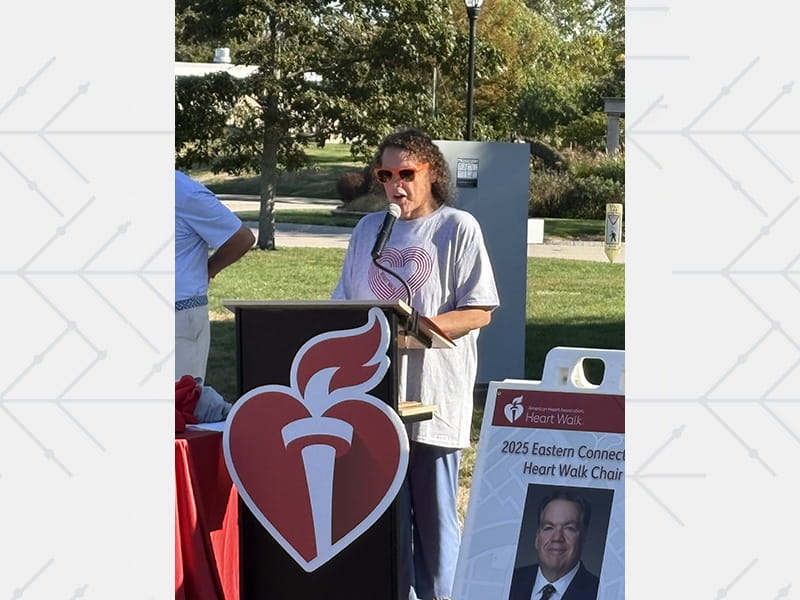
She hoped her back pain wasn’t a heart attack. It was.
By Diane Daniel, American Heart Association News


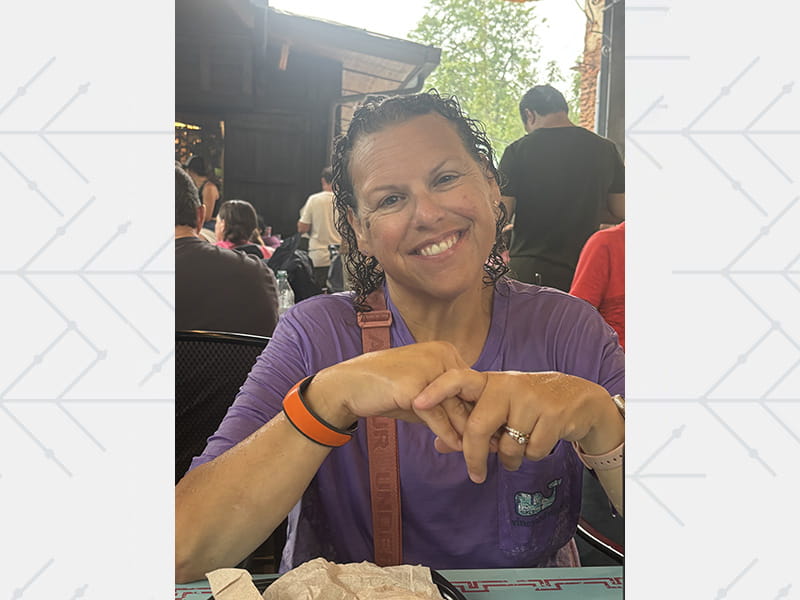
Tia Emard saw the last of her guests out and started to clean up. She and her husband, Jeremy, had successfully hosted another annual Christmas Eve dinner for more than 25 loved ones at their home in Westerly, Rhode Island.
While picking up plates and cups, Tia felt a sudden, sharp pain in the middle of her back. She brushed it off. As a lifelong softball catcher, she was used to knee and back pain. This pain, though, started in a weird spot.
When she sat down, she felt fine. But the pain was excruciating when she moved. Somehow, she managed to sleep through the night.
Trying to ignore her persistent pain
The next day, she and Jeremy opened presents with their 4-year-old son, Aidan. Tia still felt back pain. Her breathing was labored when she moved, especially going up the stairs. She took a pain reliever and relaxed at home.
Tia felt better the next day and joined her mother and sister-in-law to play bingo. By midday, however, Tia was far more exhausted than usual. When she walked, pain radiated from her back to her neck and shoulders – and it felt worse than ever.
A flippant text on the way to urgent care
Tia decided to go to urgent care. She sent Jeremy a text about her plans, flippantly adding: “I hope I’m not having a heart attack.”
Her exam included an electrocardiogram, or EKG, which records the heart’s electrical activity and can diagnose a heart attack. Tia’s test showed signs consistent with a heart attack. An ambulance rushed her to a hospital.
There, her medical team determined that the artery that supplies much of the blood to the left side of Tia’s heart was 100% blocked.
At 45, Tia was having a heart attack.
Fixing her heart, then trying to move on
Tia immediately underwent a cardiac catheterization, during which a stent was inserted to open the blocked artery and restore blood flow.
Once home, Tia was so afraid of another heart attack that she didn’t want to eat or sleep. Her mother came to keep her company. A network of family and friends cooked and cleaned. Jeremy took over many chores, including caring for Aidan.
“I had no idea how much work you do,” Jeremy told Tia.
A new lifestyle and a new outlook
Weeks later, Tia finally began to manage her fears. Her care team saw no damage to her heart, so she was cleared to resume working as an administrative assistant for a school system.
“The only restriction,” her doctor told Tia, “is that you can never, ever shovel snow.”
Tia turned to Jeremy with a wide smile and said, “You heard that, right?”
Tia’s heart attack was in December 2017. Since then, she and Jeremy have followed a more heart-healthy lifestyle.
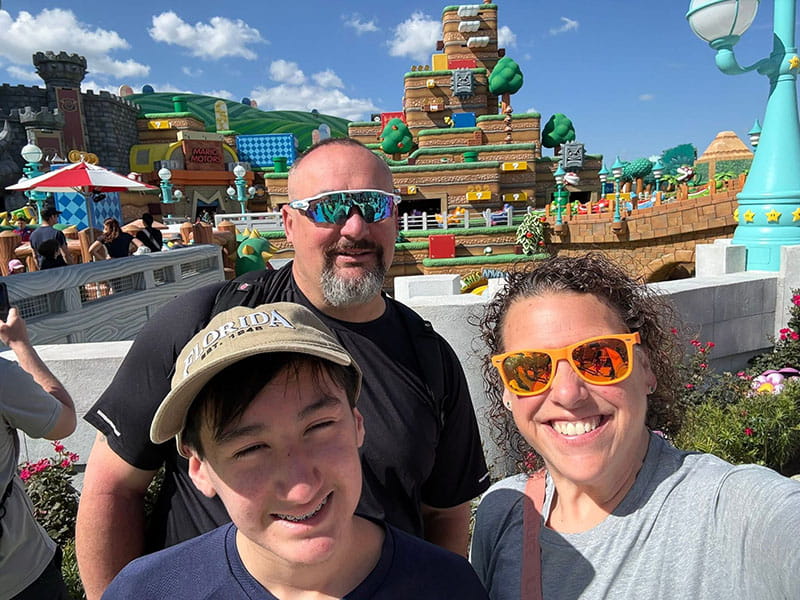
By changing what she eats and exercising more regularly, Tia has lost nearly half her body weight, dropping from 335 pounds to 170. Her commitment to making healthier choices stems from wanting to be there for Aidan, who is now a teenager.
Tia also has reevaluated the stressors in her life. She has a fulfilling new job as a teacher assistant and is no longer “nitpicking about things.”
Sharing her story to help others
By the time Tia recovered enough to socialize, it seemed like everywhere she went, folks knew about her heart attack. That’s what happens when you’ve spent your life in a town of about 23,000 people. She appreciated their concern and patiently answered questions.
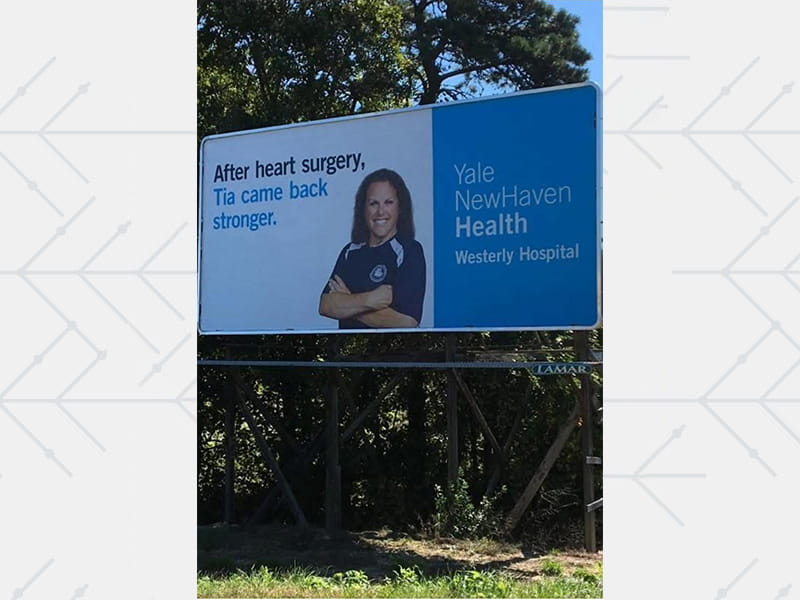
Even more people began seeking her out after a hospital featured her on local billboards as a heart attack survivor.
Her go-to line: “Listen to your body, and if you think something is wrong, don’t wait.”
Tia has followed her care team’s orders and hasn’t shoveled snow since her heart attack. That included remaining indoors during a record-breaking blizzard.
“I was out five different times in 24 hours to keep up with it,” Jeremy said. “No way is Tia touching a shovel.”
Tia recognized that something wasn’t right – and getting medical help – made all the difference. But not every heart emergency is as clear. Knowing the signs of heart attack and cardiac arrest – and how to perform CPR – can save lives. Learn more at cpr.heart.org.
Stories From the Heart chronicles the inspiring journeys of heart disease and stroke survivors, caregivers and advocates.