What to Know About Smoking, Nicotine and Vaping
Quick Facts About Nicotine and Health
- Nicotine is addictive and can harm the heart, brain and lungs. Teens are more vulnerable to nicotine’s effects on the developing brain.
- Most people who use nicotine want to quit, and support is available to help them.
- Stopping nicotine reduces the risk of heart disease and stroke, and science-based public policies can help discourage use and prevent addiction.
Are vapes worse than cigarettes? Is smoking better than vaping?
Neither smoking nor vaping is safe. While the tobacco industry markets vapes and other products as smoking alternatives, no tobacco product should be considered safe or healthier. Rather than weighing product options, consider that the strongest evidence shows stopping tobacco and nicotine use altogether offers the greatest benefit for long-term health.
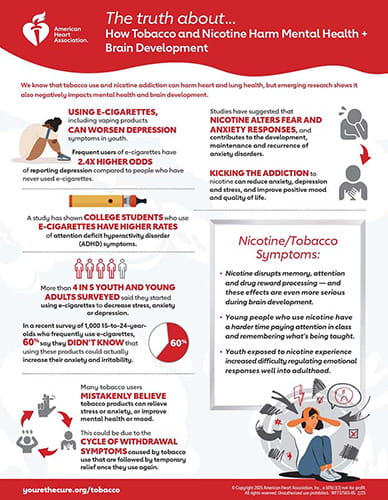
Both vapes and cigarettes deliver nicotine and other chemicals and additives which are harmful to the heart, blood vessels, brain, lungs and other parts of the body. E-cigarettes, nicotine pouches and other commercial tobacco products can also harm mental health by increasing anxiety, depression, and attention difficulties, especially in young people.
Some people use e-cigarettes and cigarettes together as an attempt to reduce cigarette use. This dual or poly use exposes users to a wider range of toxins and can lead to even greater nicotine dependence.
Is nicotine bad for you? Is nicotine a drug?
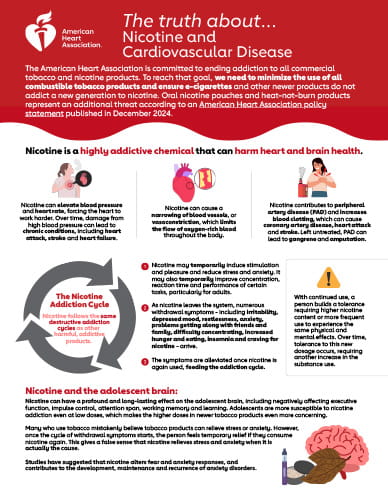
Nicotine is a highly addictive drug and has serious effects on the body. Nicotine products that do not produce smoke still pose serious health risks. Some e-cigarettes and nicotine pouches contain higher levels of nicotine than combustible cigarettes, and the way they are often used throughout the day make them even more addictive. If you use nicotine, you are not alone and support is available.
Nicotine itself is known to:
- Increase heart rate
- Raise blood pressure
- Narrow blood vessels
- Disrupt brain functions like memory and attention
- Contribute to anxiety and depression
Over time, these effects can place extra strain on your heart and brain, increasing your risk of conditions like heart attack or stroke. If you use nicotine, you are not alone.
Nicotine is a highly addictive chemical that can harm heart and brain health.
 (link opens in new window)(link opens in new window)(link opens in new window)
How do smoking and vaping affect mental health?
Smoking, vaping, and other nicotine products can affect mental health by creating a repeating cycle of dependence, withdrawal and temporary relief. This can lead to mood swings and increased anxiety. While many people think nicotine relieves stress, that feeling is short-lived. Often, nicotine temporarily eases withdrawal symptoms before the cycle starts again.
Nicotine can affect how the brain responds to stress, fear and anxiety. Over time, this cycle may make people feel more:
- Anxious
- Irritable
- Stressed
- Depressed
- Dependent on nicotine to feel better
Kicking the nicotine habit can improve mental health. Stopping smoking or vaping can help reduce anxiety, depression and stress and improve overall mood and quality of life.
The Truth about Tobacco and Mental Health (PDF)(link opens in new window)(link opens in new window)(link opens in new window)(link opens in new window)
We know that tobacco use and nicotine addiction can harm heart and lung health, but emerging research shows it also negatively impacts mental health and brain development.
What chemicals are in vape aerosol?
Vaping does not produce simple water vapor, as the tobacco industry would have you believe.
Vapes actually emit an aerosol that consists of a variety of harmful particles produced by toxic chemicals and additives. Most vapes contain nicotine, a highly addictive chemical. Other toxic chemicals in vapes, including heavy metals, have been linked to heart and respiratory diseases and cancer.
Scientists are still learning about the long-term health effects of vapes. We do know there are harmful substances found in e-cigarettes and vapes that can cause serious health problems. Vape aerosol may contain harmful substances, including:
- Acrolein: Toxic chemical that can damage DNA and cause cancer.
- Heavy metals: Harmful metal particles that enter the aerosol when heated.
- Diacetyl: Flavoring chemical that can harm the lungs when inhaled.
- Benzene: Car exhaust chemical that can cause blood problems and cancers.
- Flavoring chemicals: Additives that are safe to eat but harmful to inhale.
What are nicotine pouches?
Oral nicotine pouches are smokeless products placed between the gum and lip inside the cheek. They are often marketed as alternatives to smoking or vaping because they do not produce smoke or aerosol, but smokeless does not mean risk-free. Many nicotine pouches are sold in brightly colored packaging, come in flavors that appeal to youth, and contain high levels of nicotine.
Nicotine is a highly addictive drug and has serious effects on the body. Nicotine pouches can harm your teeth and gums, disrupt brain functions such as memory and attention, raise blood pressure and narrow blood vessels, and contribute to anxiety and depression. Some people also experience side effects such as nausea when using nicotine pouches. Support is available to help you quit nicotine, which can benefit both your physical and mental health.
Is weed unhealthy for you? Is marijuana addictive?
Cannabis, commonly called marijuana or weed, can affect the heart and blood vessels, especially when it is smoked or inhaled. As marijuana use becomes more common and legal in some states, many people have questions about how it affects health, including the heart and blood vessels.
Studies have shown that in U.S. states where cannabis has been legalized, an increase in hospitalizations and emergency department visits for heart attacks has been observed.
Smoking or inhaling marijuana has been linked to effects on the heart, including chest pain, heart rhythm changes, and, in some cases, more serious events like heart attacks.
If you use marijuana, it is important to:
- Only use legal, regulated products.
- Pay close attention to dosing, especially with edibles.
- It may feel hard but talk openly with your healthcare professional about the impact it can have on your health.
The goal isn’t judgment—it’s helping you stay informed and safe.
How do I quit vaping? How do I quit smoking?
Quitting can feel like a big step, but it often starts with something small, like deciding you’re ready to try.
Many people find it helpful to create a simple plan:
- Choose a quit day
- Think about whether you want to stop all at once or gradually
- Identify situations, emotions or routines that trigger use
- Find an evidence-based program to help you quit to improve your chances of success
- Build in support from people you trust
What matters most is finding an approach that works for you. There is no single path that works for everyone and there are several science-based programs, treatments and support that significantly increase the chances of quitting successfully.
You can find support you can access anytime through the Truth Initiative’s EX Program, a free resource designed to help people quit smoking, vaping, or using other nicotine and tobacco products, including cigarettes, e-cigarettes, and nicotine pouches. The program offers digital tools and 24/7, evidence-based support, with guidance from experts and people who have successfully quit.
Why is quitting so hard? How long is nicotine in your system?
If quitting feels hard, that doesn’t mean you’re failing. Nicotine is highly addictive and keeps the brain stuck in a cycle of cravings, withdrawal, and temporary relief, which can make stress, anxiety and mood symptoms feel worse. Nicotine itself can stay in your system for about two hours, but that does not mean the effects it has on your body wear off quickly. After you stop smoking or vaping, nicotine and its byproducts can stay in your system for longer, and withdrawal symptoms can begin within hours and feel the strongest during the first few days.
There is no “right way” to quit. Some people stop all at once, some gradually cut back and some use nicotine replacement products or medications. Support makes a huge difference, whether it comes from family, friends, a health care professional.
Many resources are free, including the national quitline (1-800-QUIT-NOW), which offers confidential coaching. The Truth Initiative’s EX Program is another free resource that helps people quit smoking, vaping, or using other commercial nicotine and tobacco products, including cigarettes, e-cigarettes, and nicotine pouches. The program provides digital tools and 24/7, evidence-based support, with guidance from experts and people who have successfully quit.
What helps people quit vaping or smoking? Do quit smoking medications work?
Many people find medications or nicotine replacement therapy helpful as part of their quit plan. A pharmacist you see regularly can help you choose the right options and use them effectively.
There is an important difference between FDA-approved nicotine replacement therapy and the nicotine products manufactured by the tobacco industry. Nicotine replacement therapy is designed to reduce withdrawal symptoms and help you quit. In contrast, products such as e-cigarettes, vapes, and nicotine pouches are sold by industry to sustain or even increase nicotine addiction. Stopping smoking or vaping can help reduce anxiety, depression, and stress while improving overall quality of life.
It is a misconception, often promoted by the tobacco industry, that e-cigarettes and vaping are safe or a good alternative to combustible cigarettes. Understanding the full health impact of tobacco products has taken decades of research, and the same is true for newer products. While e-cigarettes and vapes may differ from traditional cigarettes and cigars, they still carry health risks, and the long-term effects are not yet fully known.
How do I stop smoking, vaping, or using weed while pregnant?
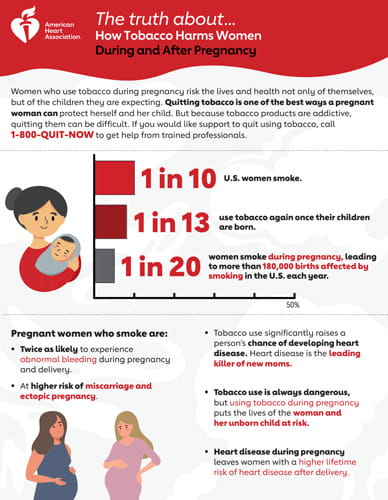
If you’re pregnant, stopping tobacco, nicotine and/or cannabis use can make a meaningful difference for both you and your baby. Avoiding nicotine during pregnancy helps protect your baby’s development, growth and long-term health. An important first step is to talk honestly with your health care professional at every prenatal visit. They can help you find support and connect you with programs designed specifically for pregnant women who want to quit tobacco, nicotine or cannabis use.
Nicotine exposure can affect a baby’s growth and development before and after birth, and can increase risk of:
- Difficulty feeding
- Hearing and eyesight problems
- Breathing challenges that can last into childhood and adolescence
- Developmental delays, including obstacles to gaining language, thinking and movement skills
- A greater chance of having physical birth defects such as cleft lip, cleft palate or both
Quitting can be overwhelming, but you do not have to do it alone. Getting support, medical or otherwise, can help you quit.
The Truth about Tobacco and Pregnancy (PDF)
Quitting tobacco is one of the best ways a pregnant woman can protect herself and her child.
How do I help someone quit vaping or smoking? Should I throw away my friend’s vape?
Supporting someone else can be tricky. While it’s natural to want to step in, especially if you are worried about their health lp, how you approach it matters.
Understanding that nicotine is highly addictive, that it can worsen anxiety and mood over time and that it can harm heart and brain health can help people successfully quit.
Listening, asking questions, and offering encouragement often go further than pressure or frustration. Let them know you’re on their side.
While taking away a person’s commercial tobacco or nicotine product might come from a place of concern, it can strain trust. Support tends to work better than control.
A more helpful approach may include:
- Ask if they have ever thought about quitting.
- Remind them you are here to offer support.
- Understand nicotine is very addictive and someone trying to quit can be irritable.
Nicotine is one of the most addictive substances available. It can rewire the brain’s reward system, creating a strong cycle of dependence that makes quitting extremely difficult. This is especially concerning for young people, as nicotine exposure during adolescence can lead to long-term changes in brain development, affecting memory, attention and impulse control. In addition, nicotine can harm heart health.
The American Heart Association offers helpful resources for parents and schools to discuss vaping and tobacco risks with teens, and also tips for understanding and supporting someone trying to quit.
What are the benefits of quitting smoking and vaping?
More energy, better breathing and a longer, healthier future are just some of the benefits of quitting commercial tobacco and nicotine product use. Quitting smoking, vaping and pouch use can improve your health within minutes and continue to benefit your heart, lungs and brain over time.
As your body adjusts, the benefits can continue to build over time. Quitting vaping or smoking will lead to:
- Improved lung function
- Better circulation
- Lower risk of heart-related conditions
- Easier breathing
- More energy over time
Quitting reduces exposure to nicotine and toxic chemicals, protecting your heart, lungs and overall health. Stopping commercial nicotine products use also supports better mental health by reducing anxiety, depression, and stress while also improving mood and quality of life.
What happens when you quit smoking or vaping and how long until you feel better?
Your body begins to recover sooner than many people expect. Within 20 minutes of quitting, your blood pressure and heart rate begin to drop from the spike caused by nicotine.
- Within minutes: Heart rate and blood pressure begin to drop.
- Within days: Harmful carbon monoxide levels in blood return to normal.
- Over weeks and months: The lungs start to heal – making it easier to breathe, reducing coughing and lowering the risk of infection.
- Over time: The risk of heart disease, stroke and multiple cancers is lower.
How quickly you feel better can vary from person to person, but every step away from commercial tobacco and, vaping and nicotine products can help protect your heart, lungs and overall health.
How long do nicotine withdrawal symptoms last?
Nicotine withdrawal symptoms can begin within hours of quitting and are often the strongest in the first few days. Withdrawal symptoms like cravings or irritability can happen early on, but they usually ease with time. As the nicotine withdrawal cycle ends, stress, irritability, anxiety, and depressed mood can decrease over time.
If you’re going through nicotine withdrawal, what you are feeling is real. It can help to remember that what you’re feeling is temporary and it’s part of your body getting healthier.
Does quitting reduce heart disease and cancer risk?
Yes! Over time, quitting can significantly lower your risk for heart disease and cancer.
There is still a lot to be learned about the long-term impact of newer tobacco and nicotine products including vapes and nicotine pouches, but science has shown that when you stop exposure to these chemicals that damage your heart, blood vessels and DNA, your body begins to heal. Blood pressure and circulation improve, inflammation decreases and cells repair. Over time, this significantly reduces your risk of heart attack, stroke and multiple cancers.
Commercial tobacco and nicotine use harms heart and lung health. Quitting nicotine also improves mental health and emotional well being.
How does quitting affect mood, stress, and mental health over time?
Quitting nicotine can support better mental health over time by helping break the repeating cycle of cravings, withdrawal and temporary relief. Many people notice less stress, anxiety and irritability as their body adjusts and nicotine dependence decreases.
- Nicotine can often alter the body’s fear and anxiety responses and contribute to the development and recurrence of anxiety disorders, which can worsen mood and stress over time.
- When nicotine use stops, this withdrawal cycle ends, helping stabilize emotional responses and reduce ongoing irritability and anxiety.
- As a result, people who quit often experience improved emotional well being and better overall mental health as their dependence decreases.
Why is vaping dangerous for teens?
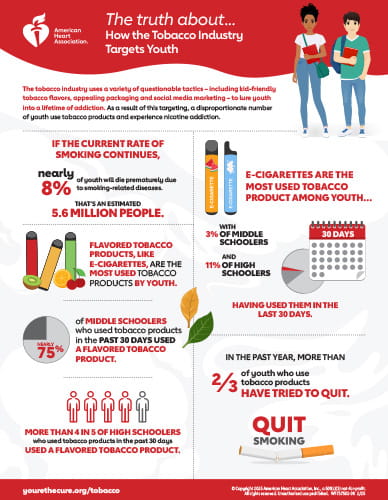
Vaping poses health risks to people of all ages. It is especially dangerous for teens because nicotine can affect the developing brain and increase the risk of addiction. These products are affordable for teens, and the tobacco industry targets youth with flavored products, appealing packaging, and social media marketing. These tactics can encourage teens to try vaping and increase their risk of a lifetime of nicotine addiction. The long-term health risks are serious. Exposure during teen years affects:
- Memory
- Attention
- Decision-making
Helping teens and families understand the risks of vaping is an important step toward preventing nicotine addiction and protecting long-term health.
The tobacco industry uses a variety of questionable tactics – including kid-friendly tobacco flavors, appealing packaging and social media marketing – to lure youth into a lifetime of addiction. As a result of this targeting, a disproportionate number of youth use tobacco products and experience nicotine addiction.
 (link opens in new window)(link opens in new window)(link opens in new window)
What should I do if I catch my teen vaping?
If you find out your child is vaping or using nicotine products, it may help if you start with curiosity instead of punishment.
Nicotine is highly addictive and teen brains are still developing. Nicotine can worsen anxiety, depression and attention issues. Helping your teen quit can support both their physical and mental health.
Consider asking them questions, such as:
- What made you want to try vaping?
- What do you think vaping or nicotine products do?
- Do you feel like it would be easy or hard to stop?
- What kind of support would help you?
From there, you can guide them toward healthier choices without shame or blame. It may also help to talk to a health care professional, or use a program to help them quit.
Flavors, attractive packaging and social media marketing help make vaping products appealing to youth.
You, and your child, can find support anytime through the Truth Initiative’s EX Program, a free resource designed to help people quit smoking, vaping, or using other nicotine and tobacco products. The program offers digital tools and 24/7, evidence-based support, with guidance from experts and people who have successfully quit.
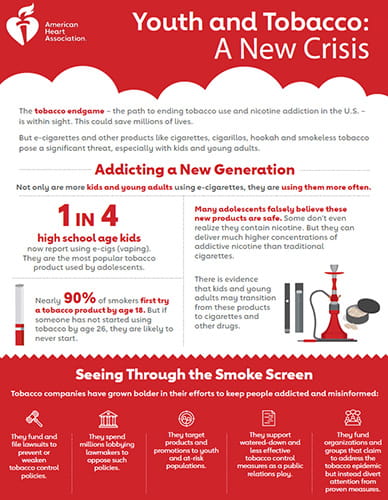
Youth and Tobacco: A New Crisis
Not only are more kids and young adults using e-cigarettes, they are using them more often.
Why are flavored vapes being restricted?
Flavored vapes are being restricted because they are especially attractive to kids and teens and increase the risk of nicotine addiction at a young age. Research shows that fruity, minty, and sweet flavors are the most popular among youth because they make vaping taste better and seem less harmful by masking nicotine’s harshness.
The tobacco industry has a documented history of designing and marketing flavored products to appeal to young people. Through colorful packaging, advertising, and social media marketing, flavored vapes are promoted in ways that encourage experimentation and regular use among teens. For many young people, these flavors can make it easier to try vaping — and harder to stop, as this early exposure can lead to addiction during a critical period of brain development. Nicotine use in youth can affect attention, learning, mood, and impulse control and increases the likelihood of long-term tobacco use.
What policies protect youth from vaping, smoking, and nicotine use?
Policies that protect youth from vaping, smoking, and nicotine use focus on reducing access, limiting product appeal, and countering strategies used by the tobacco industry to attract young people.
Young people are especially vulnerable to nicotine addiction, and tobacco industry products are designed and marketed in ways that attract youth. This includes flavors, modern designs, and messaging that make these products seem harmless or low-risk, increasing the likelihood that young people will start using them.
To address this, policies restrict or prohibit flavored products, enforce minimum age laws, and set clear rules for how and where products can be sold and advertised. Strong enforcement helps prevent illegal sales and ensures consistent protections across communities. Prevention and cessation programs also help young people avoid or quit nicotine use.
Together, these strategies reduce exposure to youth-oriented products and tobacco industry marketing. These policies are designed to stop addiction before it starts and support healthier outcomes for young people.
Why can’t I smoke or vape in public spaces?
Smoking and vaping are not allowed in many public spaces because these rules are designed to protect everyone in shared environments, not just the person using the product.
When smoking or vaping is allowed indoors, it exposes others to secondhand smoke and aerosol, which can carry harmful substances. In enclosed or shared spaces, this exposure can affect both patrons and employees.
Public restrictions also help reduce how visible and normalized smoking and vaping are, especially for young people. Limiting use in public spaces can make it less likely that these behaviors are seen as routine or low-risk.
Policies that create smoke-free indoor environments are most effective when they apply consistently across workplaces and public settings. By reducing exposure and setting clear expectations for shared spaces, these rules help support healthier conditions and reduce preventable health risks at the community level.
What policies help protect people from harms of tobacco and nicotine?
Everyone deserves the opportunity to live a long, healthy life, but tobacco and nicotine products still undermine that future because they remain widely available and appealing—especially to young people. Decisions about tobacco use aren’t just personal; they are shaped by the environments and policies around us.
The good news is that proven, population-level solutions work. Smoke-free laws protect clean air and reduce harmful exposure. Higher tobacco taxes make products less accessible, especially for youth, and encourage quitting. Investments in cessation programs give people the tools and support they need to overcome addiction. Ending the sale of flavored products reduces their appeal, while retail licensing limits where tobacco is sold and helps enforce age restrictions.
Together, these policies help prevent addiction, support quitting, and reduce preventable disease—showing how communities can create healthier environments for everyone.
Read more: Tobacco Control Policies: 5 Ways We Can Reduce Tobacco Use and Protect Health
What should smoke-free laws include?
The Heart Association and other leading public health organizations advocate for 100% indoor smoke-free environments to help protect heart and lung health and support healthier communities. To be most effective, smoke-free air laws should include:
- Comprehensive protections for all indoor workplaces and public spaces
- No preemption of local smoke-free ordinances
- No exemptions for hardship, opting out or ventilation systems
- No exemptions for casinos, gaming facilities, bars or private clubs
- Strong smoke-free policies in multi-unit housing, especially where vulnerable groups may be exposed
Can you take an e-cigarette on a plane?
You may be allowed to carry a vape in your carry-on bag, but you cannot use it on the plane. In many public places, including airplanes, smoking and vaping are not permitted for everyone’s safety. Rules against smoking or vaping in public are designed to protect everyone - not just the person using the product. Secondhand smoke and aerosol from cigarettes and vapes expose others to substances that also affect their health.
Allowing indoor smoking and vaping in venues such as bars, casinos, lounges, and music venues not only exposes patrons to the harmful effects of secondhand smoke and aerosol but also poses a significant risk to employees who work in these establishments.
Numerous studies have shown that exposure to secondhand smoke increases the risk of cardiovascular diseases, stroke, respiratory illness and cancer.
Secondhand smoke kills more than 41,000 people each year, with about 34,000 people dying from heart disease and more than 7,300 people dying from lung cancer.
Protecting the health and safety of both patrons and employees should be a top concern for every community.
Are e-cigarettes regulated for safety?
E-cigarettes and nicotine products are regulated, but not all products on the market have gone through the regulatory process and are being sold illegally.
The rules and regulations around vaping, e-cigarettes, tobacco and nicotine products continue to change.
Tobacco retail licensing is an important part of regulations for protecting public health and ensuring tobacco products are sold responsibly and kept out of the hands of youth. Tobacco retail licensing programs are designed to be cost-effective, can be funded through the fees collected, and can ultimately reduce the burden and costs of health care.
Effective programs also support crime prevention and community health by reducing illegal sales and promoting responsible business practices.
Strong policies on commercial tobacco and nicotine products help protect public health by reducing use, preventing youth initiation and supporting people in their journey to quit. These measures lead to fewer tobacco-related diseases, lower health care costs and healthier communities for everyone.
How does science guide tobacco, nicotine, and vaping laws?
Scientific research is the foundation for policy guidance and recommendations for advocates, community leaders and policy makers. Tobacco and nicotine policies are guided by science that shows how these products harm the body, how addiction develops, and what strategies reduce use and protect others from secondhand smoke and aerosol. By combining medical research, real-world data, and proven public health solutions, these policies are designed to protect people—especially youth—and improve health for entire communities. You can learn more here about policy positions of the American Heart Association.
As new commercial tobacco and nicotine products come onto the market researchers will continue to investigate their short- and long-term health effects. The American Heart Association urges more research on the health effects of tobacco and nicotine products to inform public education efforts, tobacco prevention and cessation programs and public policies to reduce and prevent tobacco and nicotine use.
Implementing smoke-free policies can have positive economic benefits.
- Promoting smoke-free environments can attract a broader customer base, including non-smokers and families, who may avoid establishments where smoking or vaping is allowed.
- Studies have shown that smoke-free laws do not significantly impact patronage or revenue in hospitality venues and may even result in cost savings due to reduced cleaning and maintenance expenses.
How can I get involved in advocacy?
Take the pledge to support tobacco control policies
Tobacco and nicotine products get in the way of a healthier future because they harm nearly every organ and remain too easy to access—especially for young people. When these products are widely available, heavily marketed, or flavored to appeal to youth, more people start using them, leading to preventable disease and loss.
This isn’t just about individual choice—it’s about the conditions shaping those choices. Stronger policies can reduce exposure, prevent addiction, and support quitting.
Across the country, proven solutions are protecting health and saving lives:
- Smoke-free laws to reduce exposure
- Higher tobacco prices to prevent youth addiction
- Quit programs to support success
- Flavor restrictions to reduce appeal
- Retail licensing to limit access
These changes happen when people speak up. Be part of the movement by joining Heart Powered.
