Catalyzing CAC Testing to Transform Heart Health
For Your Heart. For Your Future.

Additional donation options: |
|
|---|---|
| Crypto(link opens in new window) | Stock(link opens in new window) |
| QCD/IRA(link opens in new window) | DAF(link opens in new window) |
When making an online crypto, stock,
QCD/IRA or DAF gift, please ensure you add
"CAC Initiative" in the Gift Designation
section of your transaction. (See example)

Heart disease is preventable — but early risk can be invisible.
Too often, the consequences are devastating.
Coronary Artery Calcium (CAC) testing can identify plaque build-up before symptoms appear. Unfortunately, CAC testing is often underused by clinicians and unfamiliar to patients Many people are missing the chance for early detection and treatment.
Our vision is to build a future where adults understand their cardiovascular risk early enough to change their trajectory.
Now Is The Time
Your support drives a groundbreaking national initiative led by the American Heart Association to help identify cardiovascular risk earlier so action can be taken before heart disease progresses. Our comprehensive approach will advance the science, build quality improvement pathways that support the appropriate use of CAC testing, and raise awareness with the public, providers and key decision makers. Together, these efforts will create a healthcare system where more adults know their risk — and have a clear path forward.
By integrating appropriate CAC testing into personalized preventive care, we aim to help uncover early plaque buildup in heart arteries and empower individuals with clear, actionable information before symptoms arise.
Your Impact - A National Shift Toward Early Detection and Prevention
- Launch real-world efforts to expand appropriate use of CAC testing in clinical practice.
- Identify what encourages—or prevents—people from getting recommended testing.
- Use data and technology to better identify who can benefit most from CAC testing.
- Support clinicians with tools and training to make CAC testing part of evidence-based, appropriate care.
- Help people understand their heart risks and what actions to take next.
- Advance policies that support proven, evidence-based care.
Result: Earlier detection, better treatment, and stronger preventative care.
|
This national initiative leverages a once-in-a-generation alignment of science, technology, and field readiness to make early detection the standard of care. |
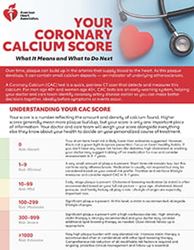
Your Coronary Calcium Score: What it Means and What to do Next
Your score is a number reflecting the amount and density of calcium found. Higher scores generally mean more plaque buildup, but your score is only one important piece of information. Your doctor and care team will weigh your score alongside everything else they know about your health to decide on your personalized course of treatment.